If you played tennis seriously a decade ago and want to come back, your biggest frustration will be your serve. Advanced tennis coaching programs designed for returning players focus on reactivating muscle memory, rebuilding kinetic chain efficiency, and restoring serve speed through biomechanics analysis, progressive overload drills, and sport-specific conditioning. The right program can help you regain 10-15 mph of lost serve speed within three to six months, but only if the coaching matches your current physical state and playing history.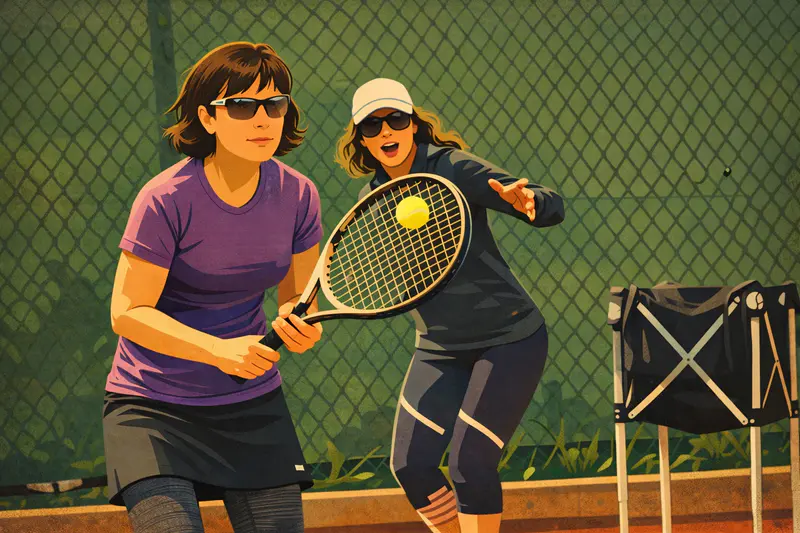
Quick Answer: Advanced Tennis Coaching for Returning Players
Your serve degrades fastest during time away because it relies on the most complex kinetic chain in tennis
Advanced coaching for returners prioritizes technique correction over teaching from scratch, since your neural pathways still exist
Expect to invest $75-$150/hour for private serve-focused coaching, or $300-$800 for intensive weekend programs
Look for coaches with USPTA Professional or PTR certification AND specific experience coaching adult returners
Consistency should be your first priority; speed rebuilds naturally once the motion is clean
Most returning players see meaningful serve improvements in 8-12 sessions over 2-3 months
TL;DR
Your muscle memory is still there. Advanced tennis coaching for returners reactivates existing patterns rather than building new ones, cutting your learning curve significantly.
Serve speed drops roughly 15-25% after extended breaks, based on estimates from coaches who track returning player baselines on TeachMe.To.
Biomechanics-based coaching produces the fastest results for players with prior competitive experience.
Private lessons outperform group clinics for serve-specific work, though group formats work well for match play and mental conditioning.
Budget $1,200-$3,000 for a meaningful 3-month comeback program that combines private coaching, fitness work, and practice sessions.
The #1 mistake returning players make: jumping straight to power before rebuilding consistent mechanics.
What Makes Advanced Tennis Coaching Different for Returning Players
Advanced tennis coaching for returning players is structured instruction that treats the student as a former athlete whose technique, muscle memory, and competitive instincts need reactivation, not creation. Unlike beginner tennis lessons, these programs assume you already understand stroke mechanics, court geometry, and match strategy, and they focus on correcting compensations developed from years away and rebuilding the physical foundations that time has eroded.
The distinction matters more than most people realize. A beginner learns a serve from zero. You're fighting something harder: a body that remembers the motion imperfectly and fills gaps with compensations. Your shoulder rotation might be 80% of what it was. Your toss placement probably drifted. And your legs, which generate roughly 47% of serve power according to biomechanics research from the USTA, have likely lost significant explosiveness.
Good advanced tennis coaching starts with an honest audit of where your body and technique are now, not where they were in 2016. That means video analysis from the first session, a frank conversation about physical limitations (especially shoulder and lower back health), and a periodized plan that rebuilds your serve in the right sequence.
One thing that separates a strong comeback coach from a generalist: they understand that your mental game is probably more disrupted than your technique. You remember being good. You remember hitting aces. The gap between that memory and your current reality creates frustration that derails progress faster than any technical flaw. A coach experienced with adult returners anticipates this and builds early wins into the program structure.
Why Serve Speed and Consistency Matter Most for Tennis Comebacks
The serve is the only shot in tennis where you have complete control. No opponent influence, no reactive pressure. And yet, it's the skill that atrophies most dramatically during time away.
Why? Because the tennis serve is the sport's most biomechanically complex movement. It requires coordinated sequencing of the legs, hips, trunk, shoulder, elbow, and wrist in a precise kinetic chain. Research published in the British Journal of Sports Medicine has shown that serve velocity depends on the efficiency of energy transfer through this chain, not just raw arm strength. When you stop playing for years, the timing of that sequence degrades even though the individual muscle groups remain functional.
For recreational and competitive club players, the serve is also the highest-leverage skill for winning matches. First serve percentage correlates strongly with hold percentage. If your first serve lands at a decent pace, you're likely to hold serve in most club-level matches. Drop it below 50%, and you're fighting uphill every service game.
Here's what returning players typically experience with their serve:
Speed loss: estimates from coaches who track baseline assessments suggest returning players lose roughly 15-25% of their peak serve speed
Consistency collapse: first serve percentage often drops to 30-40% (compared to a functional target of 55-65%)
Toss instability: the most common single fault point, and the easiest to fix
Reduced pronation: wrist action gets guarded, especially if the player has any history of elbow or shoulder discomfort
This is why serve-focused tennis coaching programs exist. They address the skill that gives you the most return on investment for your comeback.
Types of Advanced Tennis Coaching Programs Available
Not all tennis coaching programs are built for the same player. Here's how the main formats compare, with honest tradeoffs for each:
Cost ranges are estimated based on publicly listed rates across major US metro areas and may vary by location and coach experience level. For a deeper breakdown, our guide on tennis lesson pricing in 2026 covers rates by format and region.
Biomechanics-Based Serve Coaching
This is the gold standard for returning players who want measurable serve speed gains. These programs use high-speed video (typically 240+ fps), sometimes combined with motion capture sensors, to identify exactly where your kinetic chain breaks down.
A typical session starts with a warm-up serve set while the coach records from multiple angles. You'll then review footage together, comparing your current motion to either your historical footage (if available) or an efficient reference model. The coach isolates one or two specific corrections per session.
Common findings in returning players include: early trunk rotation (losing lag), insufficient knee bend at trophy position, and collapsed wrist at contact. Each of these can cost 5-10 mph on its own.
Biomechanics coaching is not ideal for players who just want to have fun hitting. It requires focused, repetitive drill work, and progress can feel slow in the first few sessions before compounding rapidly.
Mental Game and Match Strategy Coaching
Your arm remembers how to hit a serve. Your brain remembers the pressure of a 30-40 service game. But the connection between those two memories has frayed.
Mental game coaching for returning players focuses on rebuilding competitive confidence and point construction, not the visualization exercises you might associate with sports psychology. It's practical: serving routines between points, breathing protocols during changeovers, and structured approaches to different game situations.
This format works best alongside technical coaching, not as a standalone. Most coaches integrate mental elements into regular sessions rather than offering them separately.
Integrated Fitness and Tennis Technique Programs
If you're over 35 and returning after a long break, your serve speed problem might not be technical at all. It might be physical. Rotational power, shoulder stability, and core endurance all decline with age and inactivity, and they're all critical for serving.
Integrated programs combine tennis-specific conditioning (rotational med ball throws, resistance band work for the rotator cuff, plyometric leg training) with on-court technique sessions. The American College of Sports Medicine recommends that adults returning to explosive sports after extended breaks follow a progressive loading protocol to avoid injury, and quality coaching programs bake this into their structure.
These programs are the most expensive option, but for players with physical limitations or injury prevention concerns, they produce the safest and most sustainable results.
How Much Advanced Tennis Coaching Programs Cost
These estimates assume coaching in a mid-to-large US metro area. Prices in smaller markets or through platforms with lower overhead tend to run 15-30% less. For comparison, our full breakdown of the average cost of tennis lessons covers both beginner and advanced pricing tiers.
What to Look for in an Advanced Tennis Coach
Evaluation Checklist for Serve-Focused Coaching:
Certification level: USPTA Professional (not just Associate) or PTR Master Professional. Understanding what USTA-adjacent certifications actually mean is important, since there's no single "USTA certified" designation.
Playing background: Former collegiate player or higher, ideally with a strong serve in their own game.
Adult coaching experience: At least 3 years working specifically with adult returners, not just juniors.
Video analysis capability: Can they record and break down your serve frame by frame? If not, their feedback will be limited to what they see in real time.
Injury awareness: Do they ask about your shoulder history, any elbow issues, and current fitness level before designing your program?
Clear progression plan: Can they articulate what you'll work on in sessions 1-4, 5-8, and 9-12? Vague "we'll see how it goes" is a red flag.
Strong POV: The biggest mistake returning players make is choosing a coach based on proximity alone. A generalist coach 5 minutes from your house will produce worse results than a serve specialist 20 minutes away. Travel time is a minor cost compared to months of unfocused lessons that don't address your specific serve deficiencies.
How to Assess Your Current Serve Before Starting Coaching
Before your first lesson, establish a baseline. This gives your coach a starting point and gives you a way to measure progress.
Measure your current serve speed. Use a radar gun app (several free options exist for smartphones) or borrow a pocket radar. Hit 20 first serves and record the average speed. This is your baseline number.
Track your first serve percentage. Out of 20 serves, how many land in the service box? Record this as a percentage. Most returning players fall between 30-45%.
Film yourself from two angles. Set up your phone behind the baseline (centered) and from the side (perpendicular to the baseline). Record 10 serves from each angle.
Watch your footage for three specific things: (a) where your toss peaks relative to your hitting shoulder, (b) whether your knees bend before your racquet drops behind your back, (c) whether your chest faces the net or the side fence at contact.
Note any physical discomfort. Where do you feel strain? Shoulder, elbow, lower back, or knee pain during serving tells your coach which physical limitations to work around.
Write down your goal. "I want to serve 100 mph" is less useful than "I want to hold serve consistently in 4.0-level matches." A specific goal shapes the coaching plan.
Expected Timeline and Results from Advanced Coaching
Realistic expectations for returning players in a structured program:
Weeks 1-4: Technique audit and correction. Serve speed may actually decrease slightly as you break compensatory habits. First serve percentage should start climbing.
Weeks 5-8: Speed begins returning as corrected mechanics become more natural. Most players regain 60-70% of their lost serve speed in this window.
Weeks 9-12: Integration phase. Serving under match-like pressure, maintaining technique during fatigue. This is where consistency gains solidify.
Months 4-6: For committed players practicing 2-3 times per week between sessions, total serve speed recovery of 10-15 mph above starting baseline is realistic.
Factors that accelerate progress: prior competitive experience, current physical fitness, willingness to do off-court conditioning. Factors that slow progress: unaddressed shoulder or elbow issues, fewer than two practice sessions per week, and (honestly) ego. Players who accept temporary regression during the correction phase improve faster than those who fight it.
How to Practice Advanced Serve Techniques Between Coaching Sessions
What you do between lessons matters more than the lessons themselves. Here's a practical weekly framework:
3x per week: Serve practice (30 min each). Start with 10 shadow swings focusing on your coach's correction. Then hit 30 first serves to targets (split the service box into quadrants). Track your percentage.
2x per week: Fitness work (20-30 min). Rotational med ball throws (3 sets of 8), resistance band external rotations (3 sets of 12), and bodyweight squats or lunges for leg drive.
1x per week: Video self-check. Film 10 serves from behind and compare to your baseline footage. Are the corrections holding?
For specific solo tennis drills that build consistency without a partner, we've published a separate guide.
Common Mistakes Returning Players Make When Choosing Coaching
Mistake 1: Choosing a generalist coach over a serve specialist.
Why it's wrong: Serving is a specialized skill. A coach who's great at teaching forehands to beginners may not understand the biomechanics of a 110+ mph serve or how to diagnose a kinetic chain breakdown.
Better approach: Ask specifically about their serve coaching methodology and how many adult returners they've worked with.
Mistake 2: Skipping the fitness assessment.
Why it's wrong: If your shoulder external rotation has decreased by 20 degrees since you last played, no amount of technique work will restore your serve speed safely.
Better approach: Get a sports-focused physical assessment before starting intensive serve training. The American Physical Therapy Association can help you find sports-focused practitioners.
Mistake 3: Chasing speed before rebuilding consistency.
Why it's wrong: Trying to serve hard with degraded mechanics reinforces bad patterns and increases injury risk.
Better approach: Spend the first 4-6 weeks at 70% effort, focusing entirely on clean motion and placement. Speed follows mechanics.
Mistake 4: Expecting your 2016 body to perform like your 2016 body.
Why it's wrong: You're a decade older. Your range of motion, recovery time, and explosive power have all changed.
Better approach: Let your coach adjust your technique to your current physical reality. Sometimes a slightly modified motion produces better results than trying to replicate what worked ten years ago.
How to Find Advanced Tennis Coaching with TeachMe.To
Here's how to use TeachMe.To to find a coach matched to your specific comeback needs:
Go to teachme.to and select Tennis.
Filter by experience level. Choose coaches who list advanced coaching and adult students as their focus areas.
Read coach bios for serve-specific language. Look for mentions of video analysis, biomechanics, or serve development (not just generic "all strokes" descriptions).
Check credentials. Coaches on TeachMe.To list their certifications, so you can verify USPTA or PTR status directly.
Book a single assessment session first. Use it to evaluate whether the coach understands your comeback-specific challenges before committing to a package.
Compare coaches by price, location, and availability using the platform's search tools. Most metro areas have multiple advanced coaches within a reasonable drive.
This workflow takes about 10 minutes and gives you a shortlist of qualified coaches, which beats spending weeks calling local clubs and getting vague answers about instructor qualifications.
Frequently Asked Questions About Advanced Tennis Coaching for Returning Players
Q: How long does it take to regain serve power after 10 years off?
A: Most returning players with prior competitive experience recover significant serve speed within 3-6 months of structured coaching and consistent practice (2-3 times per week minimum). The first month focuses on mechanics; speed returns in months 2-4 as corrected technique becomes automatic.
Q: Should I focus on speed or consistency first?
A: Consistency, every time. A 90 mph serve that lands 60% of the time is far more valuable in match play than a 110 mph serve that lands 35% of the time. Speed builds naturally once your motion is clean and repeatable.
Q: Can I improve serve technique without changing my entire swing?
A: Yes. Good coaching for returners preserves what works and fixes what doesn't. You're likely making 2-3 specific compensatory errors, not 15. Targeted corrections keep your familiar motion while removing the inefficiencies.
Q: What's the difference between coaching a returner vs. a beginner?
A: Returners have existing neural pathways for tennis movements. Coaching focuses on reactivation and correction rather than creation. This means faster progress on technique but sometimes harder mental adjustment, since you remember being better than you currently are.
Q: How often should I take advanced lessons?
A: For serious serve improvement, once per week is the minimum, with two practice sessions between lessons. Twice per week with a coach (for 6-8 weeks) accelerates early progress significantly. Our guide on lesson frequency vs. results breaks down the tradeoffs in detail.
Q: Is video analysis worth the extra cost?
A: For serve work specifically, absolutely. The serve happens too fast for any coach to catch every detail in real time. High-speed video reveals issues invisible to the naked eye, especially in the wrist lag and contact zone. If a coach offers video analysis, prioritize them over one who doesn't.
Q: What equipment changes might I need for modern serve techniques?
A: If your racquet is 10+ years old, you'll benefit from a modern frame. Current racquets are generally lighter with larger sweet spots, which helps with both power and control. Polyester string has also become standard for players seeking spin on serve. Ask your coach for a specific racquet recommendation based on your stroke style and physical condition.
Key Takeaways: Getting Back to Competitive Tennis Through Advanced Coaching
Your muscle memory is your biggest asset. Advanced tennis coaching reactivates what's already there, making your comeback faster than you might expect.
Serve consistency before serve speed. This principle should guide your first 4-8 weeks of coaching and practice.
Choose a coach with specific serve expertise and adult returner experience, not just the nearest available instructor.
Invest in a baseline assessment (serve speed, consistency percentage, video from two angles) before your first session so you can measure real progress.
Budget realistically. A meaningful 3-month comeback investment runs $1,200-$3,000 for most players, depending on format and frequency.
Physical preparation matters as much as technical work, especially for players over 35.
Browse tennis coaches by price, certification, and specialty at teachme.to to find an advanced instructor near you who specializes in serve development for returning players.
Find a Tennis Coach Near You
Ready to get started? Browse local tennis coaches and book your first lesson:
Los Angeles · New York · San Francisco · Houston · Seattle · Toronto · Boston · Dallas · See all cities →