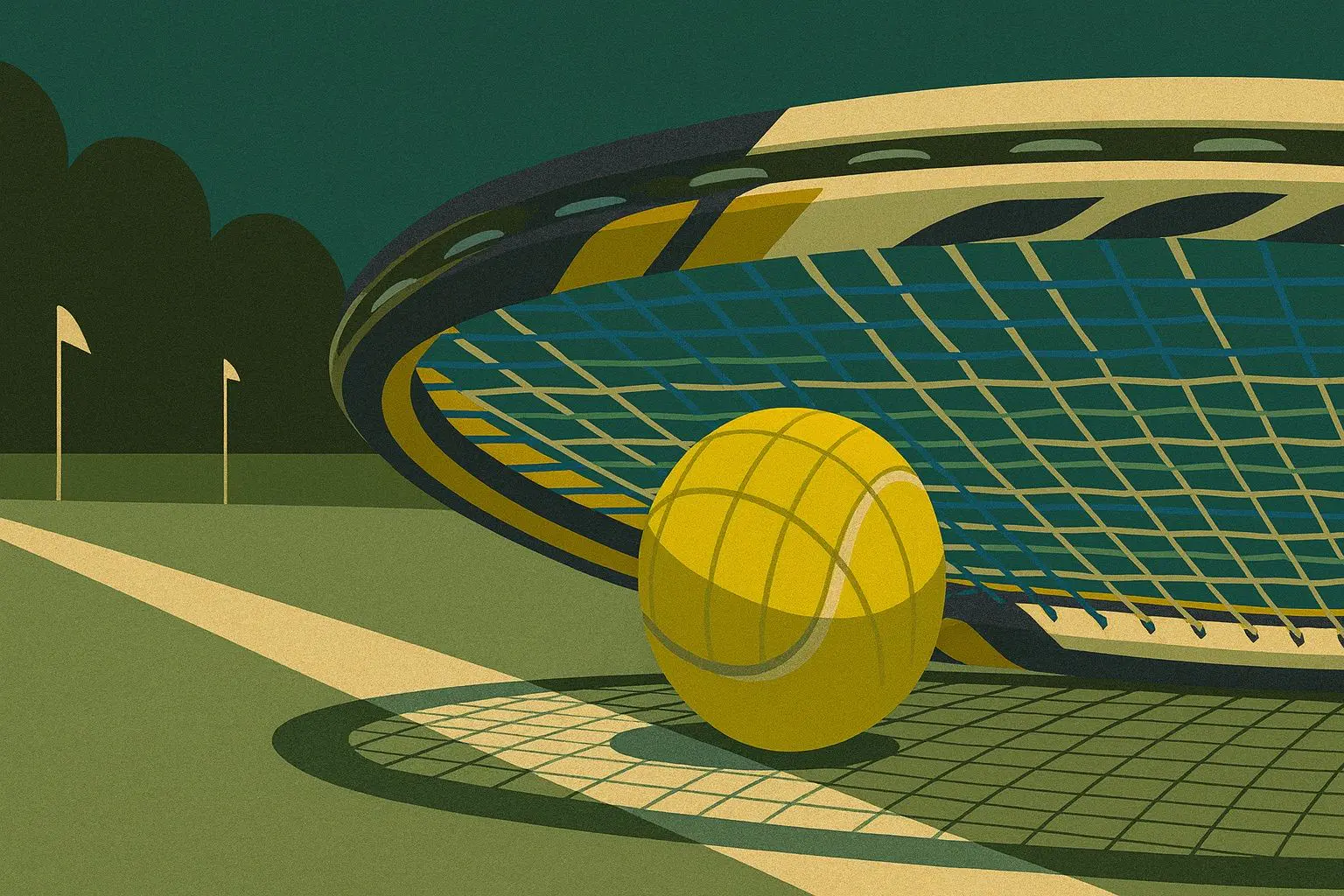
You’ve decided you want to learn tennis. You’ve watched the pros on TV, you’ve got a racquet, and you’re filled with a burning desire to hit that perfect, satisfying forehand. There’s just one tiny problem… you don’t have a court. And your friends who play are always busy.
It’s a classic beginner’s dilemma. How can you possibly get better at a sport if you can’t even get on a court to play it?
Here’s the secret: you absolutely can. Some of the most important work in tennis happens off the court. By practicing at home, you can build a solid foundation of technique, muscle memory, and fitness. This means that when you do finally step onto a court with a coach, you’ll be miles ahead of the game.
Think of it like learning an instrument. You practice scales and chords at home so you’re ready to play a song in band practice. These at-home tennis drills are your scales. They’re simple, effective, and all you need is a bit of space, a wall, and the motivation to improve.
The Power of At-Home Practice
Practicing tennis by yourself, away from the pressure of a real game, is a beginner's superpower. Here’s why it’s so effective:
Zero Judgment: Worried about looking silly or missing every shot? Not a problem! At home, you can swing, miss, and experiment freely. It’s a pressure-free zone dedicated to one thing: your improvement.
Massive Repetition: The key to learning any new motor skill is repetition. At home, you can hit a ball against a wall or practice your swing hundreds of times in a short session, building muscle memory much faster than you would in a one-hour lesson.
Focus on Fundamentals: Without having to worry about running around a court or winning a point, you can slow down and concentrate entirely on the fundamentals—your grip, your stance, and the path of your swing.
Your Most Reliable Hitting Partner: The Wall

Find a sturdy brick wall at a school, a concrete backboard at a park, or even the side of your garage. This is your new best friend and the ultimate training partner. It never gets tired and always sends the ball back.
1. Foundational Forehands & Backhands
This is the most essential wall drill. It teaches you rhythm and helps you feel the ball on your racquet strings.
The Goal: Develop a consistent, rhythmic rally with yourself, focusing on clean contact.
How to Do It: Stand about 15-20 feet from the wall. Drop the ball and hit a gentle forehand, aiming for a spot on the wall a few feet high. Let the ball bounce once on the way back before you hit it again. Don’t swing for the fences! Focus on a smooth, controlled motion. Once you can rally 10 times in a row with your forehand, switch to your backhand.
2. Rapid-Fire Volleys
Volleys are all about quick hands and reflexes. The wall is the perfect tool for sharpening them.
The Goal: Improve your hand-eye coordination and volley technique.
How to Do It: Stand much closer to the wall, about 5-8 feet away. Using a short, punching motion (no big backswing!), volley the ball against the wall without letting it bounce. Keep your feet active and your eyes on the ball. See how many you can hit in a row. This drill builds the confidence you need at the net.
No Wall? No Problem! Drills for Any Open Space
You don't even need a wall to make huge strides in your game. A driveway, a backyard, or an empty patch of grass is your personal training ground.
3. Shadow Swinging: Perfecting Your Form
This is arguably the most important at-home drill for beginners. It costs nothing, requires no equipment other than your racquet, and is used by pros like Roger Federer to maintain flawless technique.
The Goal: Engrain the correct swing path for every stroke into your muscle memory.
How to Do It: Stand in front of a mirror or set up your phone to record you. Without a ball, slowly and deliberately go through the motions of your forehand, backhand, and serve. Watch yourself closely. Is your body turning? Is your racquet dropping below the ball? Are you finishing your swing over your shoulder? Performing 20 perfect shadow swings is better than hitting 100 sloppy shots.
4. The Toss: The Key to the Serve
A consistent serve starts with a consistent toss. You can master this critical component without ever hitting a ball.
The Goal: Develop a reliable and accurate ball toss.
How to Do It: Stand in your serving stance. Hold the ball in your non-dominant hand. Without swinging, practice tossing the ball straight up so that it would land just in front of your lead foot if you let it drop. A great toss doesn't spin and reaches its peak height just above where you'd make contact. Do this 50 times a day, and your serve will thank you later.
5. Grip Strength & Control
A firm but relaxed grip is essential for controlling the racquet.
The Goal: Build forearm strength and familiarity with different tennis grips.
How to Do It:
Grip Switches: Simply sit and practice switching from a forehand grip (like you're shaking hands with the racquet) to a backhand grip. The faster and more natural this becomes, the better prepared you'll be for a real rally.
Squeezes: Squeeze a tennis ball or a grip strengthener for 10-15 seconds at a time to build endurance in your forearm muscles.
6. Footwork Foundations
Great tennis is played with your feet first. You can practice fundamental tennis movements in a very small space.
The Goal: Improve your agility, balance, and readiness to move.
How to Do It:
The Split-Step: This is the little hop you take right as your opponent hits the ball. Practice it! From a standing position, take a small hop and land on the balls of your feet in a wide, athletic stance. This simple move primes your body to explode in any direction.
Cone Weaves: Set up a few shoes or water bottles in a line and practice shuffling sideways and running around them, staying on the balls of your feet.
7. Ball Bouncing Drills
These simple drills improve your hand-eye coordination and feel for the ball.
The Goal: Get comfortable controlling the ball on your racquet strings.
How to Do It: Try to bounce the ball on your strings, alternating between the forehand and backhand sides. See if you can walk around your yard while doing it. It’s like learning to dribble a basketball, but for tennis.
The Next Step: Turning Practice into Performance
These at-home drills are fantastic. They will build your confidence, coordination, and the fundamental mechanics of your strokes. You’ll develop a real feel for the game before you even play a point.
But here’s the crucial next step: getting expert feedback.
A wall can’t tell you that you’re dropping your wrist on your forehand. Shadow swinging in a mirror won’t explain why your serve toss keeps going behind your head. At-home practice builds the raw skills, but a professional coach teaches you how to use them correctly. They provide the personalized guidance needed to correct bad habits before they become permanent and show you how to transition your skills onto a real court.
Think of it this way: your at-home work is like studying the textbook. Your first lesson with a coach is like showing up for the lab. It’s where you apply the theory and make it real.
When you feel ready to take that next step, TeachMe.To makes it easy to find a vetted, professional tennis coach in your area. You can show them the skills you’ve been working on, get instant feedback, and start your tennis journey with a massive head start. Combining your dedicated at-home practice with expert instruction is the fastest and most effective way to become the player you want to be.
Find a Tennis Coach Near You
Ready to get started? Browse local tennis coaches and book your first lesson:
Los Angeles · New York · San Francisco · Houston · Seattle · Toronto · Boston · Dallas · See all cities →