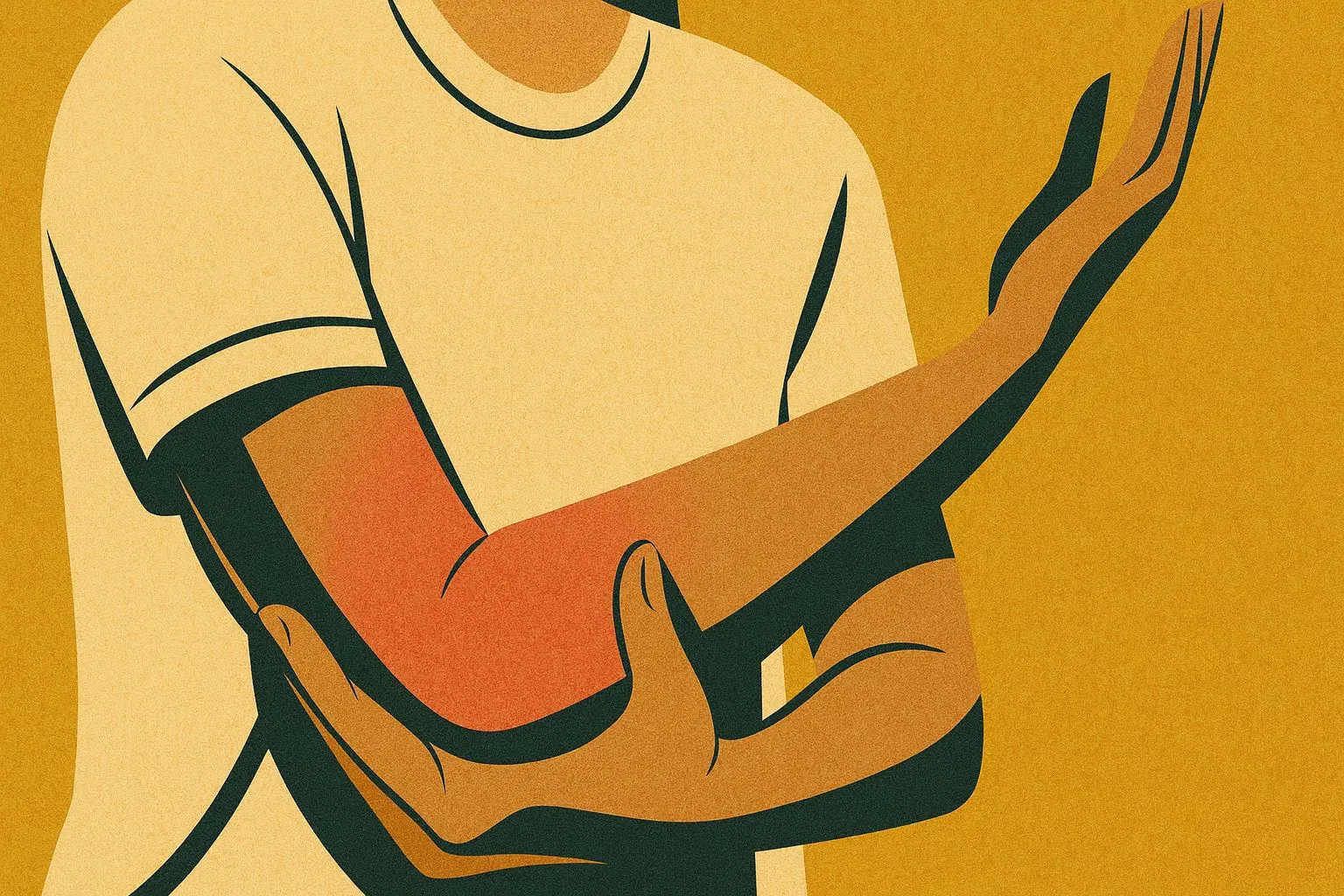
The sun is out, the court is free, and you’re in the middle of a fantastic rally. You step into a backhand, snap your wrist for that perfect cross-court angle, and BAM—a sharp twinge shoots up your arm. Just like that, the perfect tennis day is clouded by the dreaded thought of an injury.
If you’re an intermediate player, you know the deal. You’ve moved past the beginner phase of just trying to get the ball over the net. Now you’re chasing consistency, adding power, and refining your spin. You play a couple of times a week, maybe even in a local league. But this increased court time comes with a price: your body starts talking back. A creaky knee here, a sore shoulder there.
Let’s be real: nothing sidelines your progress and passion faster than an injury. The good news? Most of these common tennis ailments aren’t random bolts of bad luck. They’re often the result of repetitive stress, muscle imbalances, or small technical flaws.
And that means they are almost entirely preventable.
This guide is your new playbook for staying healthy on the court. We’ll break down the most common injuries that plague players like you and give you actionable, no-nonsense strategies to keep you playing the sport you love, pain-free.
Part 1: The Usual Suspects - The Top 5 Tennis Injuries
Let's get up close and personal with the injuries that haunt the club courts. Understanding why they happen is the first step to making sure they don't happen to you.
1. The Infamous Tennis Elbow
This is the poster child of tennis injuries, but here’s a secret: it often has less to do with your elbow and more to do with your technique and timing.
What It Is: Inflammation or tiny tears in the tendons that connect your forearm muscles to the outside of your elbow. That sharp pain you feel when you shake hands, lift a coffee mug, or hit a backhand? That’s it.
Why It Happens in Tennis: For intermediate players, it's almost always linked to the backhand. A late contact point forces you to flick your wrist instead of rotating your body. Gripping the racket too tightly, using a stiff frame with polyester strings, or having weak forearm muscles all contribute to overloading that small tendon.
How to Prevent It:
Technique First: Focus on making contact with the ball out in front of your body. Let your hips and shoulders do the work—your arm is just along for the ride. If you have a one-handed backhand, consider getting a lesson to ensure your mechanics are sound.
Check Your Gear: A racket that's too heavy or strung too tight can send a lot of shock up your arm. Consider switching to a softer string (like multifilament) or lowering your string tension by a few pounds. Ensure your grip size is correct; a grip that’s too small forces you to squeeze harder.
Strengthen Up: Simple exercises like wrist curls (palms up) and reverse wrist curls (palms down) with a light dumbbell can work wonders for building forearm resilience.

2. The Grumbling Shoulder (Rotator Cuff Issues)
Your serve is your biggest weapon... until it becomes your biggest source of pain. The repetitive, high-velocity overhead motion of serving is incredibly demanding on the shoulder.
What It Is: Your rotator cuff is a team of four small muscles that stabilize your shoulder joint. Overuse can lead to inflammation () or impingement, where the tendons get pinched.
Why It Happens in Tennis: It’s all about the serve and the overhead. Thousands of reps without proper mechanics or conditioning can fatigue and damage these small stabilizer muscles. A common mistake is "muscling" the serve with just your arm instead of using the kinetic chain—driving power from your legs, through your core, and finally out through your arm.
How to Prevent It:
Serve from the Ground Up: Your power comes from your leg drive and core rotation. Film your serve in slow-motion. Are you using your legs to push off the ground? Is your core rotating powerfully before your arm comes through?
Shoulder Prehab: Don't wait for pain to start. Incorporate simple resistance band exercises into your routine. External rotations, internal rotations, and face pulls are fantastic for strengthening the rotator cuff and the supporting muscles in your upper back.
Don't Overdo It: If you're playing a long match, be mindful of how many "second serve practice" bombs you hit. A bucket of 100 serves after a three-set match is a recipe for a sore shoulder.
3. Jumper's Knee
Tennis is a game of explosive starts, stops, and changes of direction. Your knees often bear the brunt of these powerful movements.
What It Is: Inflammation of the patellar tendon, which connects your kneecap to your shinbone. It usually presents as an ache or sharp pain right below the kneecap, especially when jumping or lunging.
Why It Happens in Tennis: Every time you lunge for a wide ball, jump for an overhead, or slam on the brakes to change direction, you’re loading that tendon. Weak glutes and quads force the tendon to absorb more of the impact than it should.
How to Prevent It:
Build Your Leg Armor: A solid leg-strengthening program is non-negotiable. Squats, lunges, and glute bridges build the primary muscles that protect your knees. Stronger muscles act as better shock absorbers.
Mind Your Footwear: Playing in running shoes is a huge mistake. Tennis shoes are designed for lateral stability. They provide the support needed to prevent your foot from rolling and putting stress up the chain to your knee. Replace them when the tread and cushioning wear out.
Land Softly: When you practice movement drills, focus on landing quietly and absorbing the force through your muscles, not by jarring your joints.
4. The Unstable Ankle (Ankle Sprains)
That dreaded moment when you’re scrambling for a drop shot, plant your foot, and it just… rolls. Ankle sprains are acute injuries that can happen in a split second.
What It Is: Stretching or tearing the ligaments on the outside of your ankle.
Why It Happens in Tennis: The sport is all about aggressive lateral movement. A misstep on an uneven surface, a quick stop, or sliding on a clay court can easily lead to a roll.
How to Prevent It:
Improve Your Balance (Proprioception): The better your body knows where it is in space, the faster it can react to prevent a roll. Practice standing on one foot while you brush your teeth. Try single-leg balance exercises on a cushion or a BOSU ball to challenge your stability.
Agility Drills: Use a jump rope or an agility ladder to improve your footwork and coordination. Quick feet are stable feet.
Proper Shoes are a Must: Again, court shoes! Their rigid side-to-side support is designed specifically to prevent this type of injury.
5. The Achy Lower Back (Lumbar Strain)
Your back connects your powerful lower body to your upper body. It’s the center of rotation for your groundstrokes and serve, and it can take a beating if your core is weak.
What It Is: A strain or spasm in the muscles of the lower back, often caused by overuse or improper loading.
Why It Happens in Tennis: The constant rotation and extension—especially on the serve—can stress the lower back. This is amplified when players have a weak core and tight hips, forcing the lumbar spine to do more work than it's designed for.
How to Prevent It:
Make Your Core a Fortress: A strong core isn't about having a six-pack. It's about stability. Planks, bird-dogs, dead bugs, and Pallof presses are your best friends. A stable core transfers energy efficiently and protects your spine.
Hip Mobility: Spend five minutes after every match stretching your hips. Tight hip flexors can pull your pelvis out of alignment and put extra strain on your lower back.
Rotate, Don't Crunch: On your serve, focus on thoracic (upper/mid-back) rotation and hip mobility rather than excessively arching your lower back.
Your Universal Prevention Playbook
Okay, we've covered the specifics. Now, let's zoom out. These are the golden rules that will protect you from almost every injury on the list.
The Non-Negotiable Warm-Up: Walking onto the court cold is asking for trouble. Ditch the old-school static stretching (holding a stretch for 30 seconds). Before you play, your body needs a dynamic warm-up to increase blood flow and activate your muscles. A 5-minute routine is all you need: leg swings (forward and sideways), torso twists, walking lunges, and high knees.
The Cool-Down You Shouldn't Skip: After you play is the time for static stretching. Your muscles are warm and pliable. Spend a few minutes stretching your hamstrings, quads, hips, chest, and shoulders. This helps improve flexibility and aids recovery.
Listen to Your Body (Seriously): There's a huge difference between the satisfying ache of muscle soreness and the sharp, persistent signal of joint or tendon pain. Pushing through real pain is a hero complex that will only lead to a longer, more frustrating recovery. Learn to take a rest day.
Hydrate and Fuel Up: Your muscles and connective tissues are made mostly of water. Being dehydrated makes them less pliable and more prone to injury. Fueling properly before a match also ensures your muscles have the energy to perform without fatiguing prematurely.
It’s a Marathon, Not a Sprint
The best ability is availability. All the forehand drills in the world won’t help you if you’re stuck on the couch nursing an injury.
Viewing injury prevention as a skill—just like your volley or your slice serve—is a total game-changer. It’s the proactive, intelligent work you do off the court that allows you to fully enjoy your time on it. By strengthening your body, refining your technique, and listening to its signals, you're not just preventing injuries; you're investing in a lifetime of enjoying this amazing sport.
Now go out there and play smart. Your body will thank you for it.