
•
Learn Tennis 🎾 near El Paso
•
These coaches teach at top ranked spots and have great lesson fulfillment & student reviews.

Former college player who loves to teach, focusing on the technical and mechanical parts of the game!
"Excellent tennis coach! Manny was able to quickly identify how to improve my daughter’s technique. Highly recommend.



We help you find the best tennis coach for your needs. Filter by skill level, group size, and location. Browse our list of tennis coaches that meet your criteria and watch their intro videos to determine if the coach is the right match for you. Our tennis coaches are vetted, reviewed, and rated to make your decision easier. If you're having trouble finding the best tennis lessons near you, reach out to our lessons coordinator by clicking the "Have any questions?" button at the top right of the page.
Unlike other websites, TeachMe.To lets you schedule your tennis lesson time and location online in seconds. We make the whole process seamless. Other websites for finding El Paso tennis lessons and coaches make it hard to book and have very little information on pricing and scheduling. Not with us: we make it easy to find the right date, time, and place to learn tennis.
Get in touch with your tennis coach immediately with the Student App. It's totally free and available on iPhone and Android. Our app is the one-stop shop for managing your tennis lessons on our platform. Communicate with your tennis coach, get notified about new messages, view and manage upcoming tennis lessons near you, track your progress, and get access to support services, all in one place.
Private tennis lessons in El Paso average $48 for a week of lessons, with 17 vetted coaches available. Every session is private — 1-on-1 by default, or with your invited group — tailored to your level and goals, at a location and time that work for you.
Tennis lessons in El Paso happen at 5 locations across the city, from Coronado High School Tennis Courts to lesser-known neighborhood spots. Bookings open up across weekdays, evenings, and weekend mornings — and if you have a preferred location, your coach meets you there.
Private tennis lessons in El Paso average $48 for a week of lessons. Booking a lesson package brings the per-lesson rate down, and one-off single lessons are also available — what you pay depends on your coach's experience and the session length you choose.
Private tennis lessons in El Paso are built around your goals. Whatever you want to improve, a coach can focus each session on it. Here are the areas coaches in El Paso work on most.
Build dependable forehands and backhands with depth and spin. El Paso coaches groove your strokes and footwork so they hold up in long rallies.
Add power, placement, and a reliable second serve, then neutralize big serves on the return. A coach in El Paso rebuilds the most important shots in the game.
Get comfortable finishing at the net with clean volleys, overheads, and approach shots. Tennis coaches in El Paso sharpen your hands and positioning up front.
Move better, recover faster, and set up every shot with the right steps. El Paso tennis coaches drill court coverage, balance, and recovery.
Win more matches by building points, reading opponents, and playing the percentages. Coaches in El Paso coach the tactical side of tennis, not just technique.
Looking for tennis coaching for kids in El Paso? We match kids and teens — from first-timers to high-school and club players — with coaches who specialize in junior development. Private kids tennis lessons run at the same weekly rate as adult lessons.
Tennis lessons for kids and teensEvery coach who works with kids goes through identity and background screening before being matched with young students, and their safety vetting is shown on their profile — so you can book with confidence.
Coaches in El Paso teach juniors from as young as 5 through high-school and competitive athletes, tailoring each session to your child's age, level, and goals — whether that is first-time fundamentals, building confidence, or tryout and team prep.
Parents are welcome to stay and watch — many do, especially with younger kids — but it is never required. Either way, your coach shares progress and what to practice between lessons.
Coach Marelise
tennis coach
Assessment & Baseline Evaluation Focus: Identify technical precision, tactical habits, and physical readiness. Goals: • Evaluate strengths, weaknesses, and preferred playing style. • Establish benchmarks for speed, accuracy, and endurance. Structure: 1. Warm-Up: High-intensity dynamic drills (court sprints, resistance bands, mini tennis). 2. Stroke Assessment: • Rally from baseline with depth and spin control. • Evaluate forehand, backhand, volleys, and overheads. 3. Serve & Return Analysis: • Test flat, slice, and kick serves. • Assess return positioning and reaction speed. 4. Pattern Play Evaluation: • Cross-court control → down-the-line change-up. 5. Short Competitive Set: • Play to 4 games to observe decision-making under pressure. 6. Feedback & Training Plan Overview.
Coach Marelise
tennis coach
Assessment & Baseline Evaluation Focus: Identify technical precision, tactical habits, and physical readiness. Goals: • Evaluate strengths, weaknesses, and preferred playing style. • Establish benchmarks for speed, accuracy, and endurance. Structure: 1. Warm-Up: High-intensity dynamic drills (court sprints, resistance bands, mini tennis). 2. Stroke Assessment: • Rally from baseline with depth and spin control. • Evaluate forehand, backhand, volleys, and overheads. 3. Serve & Return Analysis: • Test flat, slice, and kick serves. • Assess return positioning and reaction speed. 4. Pattern Play Evaluation: • Cross-court control → down-the-line change-up. 5. Short Competitive Set: • Play to 4 games to observe decision-making under pressure. 6. Feedback & Training Plan Overview.
Coach Emmanuel
tennis coach
Students need to bring enthusiasm and eagerness to learn!
Coach Marelise
tennis coach
Please be dressed appropriately as we’ll be active. Tennis shoes is a requirement. Thank you.
Coach Marelise
tennis coach
When I’m working with kids — even if I’m teaching the same core tennis skills — my approach, pacing, and communication shift a lot from how I’d coach adults. The key is to keep it simple, keep it moving, and keep it fun while still reinforcing proper technique. Here’s how I adapt: 1. Adjust the Environment • Court Size: Use smaller courts (red, orange, or green ball court dimensions) so kids rally sooner and feel successful faster. • Equipment: • Lighter racquets suited to their height and strength. • Low-compression balls (red, orange, green) to slow the game and lower bounce height. • Targets & Visual Aids: Cones, flat markers, hula hoops for aiming — kids respond better to visual goals than verbal ones. 2. Simplify Communication • Short Instructions: 1–2 key points max per drill (e.g., “Turn your shoulders” or “Hit in front”). • Demonstrate More, Talk Less: Kids copy movement better than they process long explanations. • Positive Framing: Replace “Don’t drop your racquet head” with “Keep your racquet up high like a superhero sword.” 3. Build Engagement & Fun • Game-Like Drills: Wrap technique into challenges — e.g., “Hit the cone” or “Can we get 5 in a row?” • Mini-Competitions: Races, accuracy games, and team challenges keep energy high. • Role Play: Give creative themes (“Pretend you’re a ninja when you split step” or “Hit the ball over the mountain”). 4. Keep Lessons Dynamic • Short Segments: Rotate activities every 5–8 minutes to match their attention span. • Movement First: Avoid long lines — have multiple stations or feed quickly so kids are always active. • Progressive Challenges: Start easy, then add small challenges (smaller target, faster ball). 5. Focus on Development Beyond Technique • Coordination & Agility: Include off-court activities like ladder drills, catching games, and reaction ball bounces. • Sportsmanship & Confidence: Praise effort, not just results — encourage high-fives, “good shot” habits. • Self-Discovery: Ask guiding questions — “What happens when you hit earlier?” — so they learn to problem-solve. 6. Manage Energy & Behavior • Set Clear Expectations: Start each lesson with 2–3 simple rules (e.g., “Listen, try your best, have fun”). • Reward Good Habits: Stickers, stamps, or “Player of the Day” keep kids motivated. • Read the Room: If attention drops, switch to a quick game before returning to technique.
tennis coach with the most lessons taught in El Paso
Coach Emmanuel has taught
98 lessons
The location with the most coaches teaching tennis lessons at
Coronado High School Tennis Courts
Average coach player rating
5.0
44 total ratings
and here are the coaches with top player ratings:
Average length of time coaches in El Paso have been teaching for
14.27 years on average
How many coaches teach tennis in El Paso
17 coaches
Average cost of a tennis lesson in El Paso
$48 per lesson
Photo coming soon!
Coronado High School, Champions Place, El Paso, TX, USA
6.0 miles away • 12 tennis coaches teach here
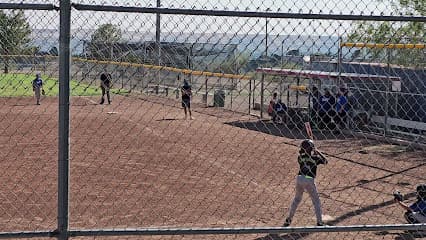
6600 Cloudview Dr
6.3 miles away • 5 tennis coaches teach here
Photo coming soon!
6944 Marble Canyon Dr, El Paso, TX 79912
8.2 miles away • 5 tennis coaches teach here