You're in your 30s, 40s, maybe your 50s, and you've never swung a golf club with any real intention. Maybe a colleague invited you to a scramble and you felt lost. Maybe you watched a Sunday broadcast and thought, "I could do that." Here's the truth: you absolutely can. Every year, thousands of adults learn golf as adult beginners and discover a sport that fits their life better than anything they played in high school. This guide covers everything you need to know, from finding the right coach to walking onto a course with confidence.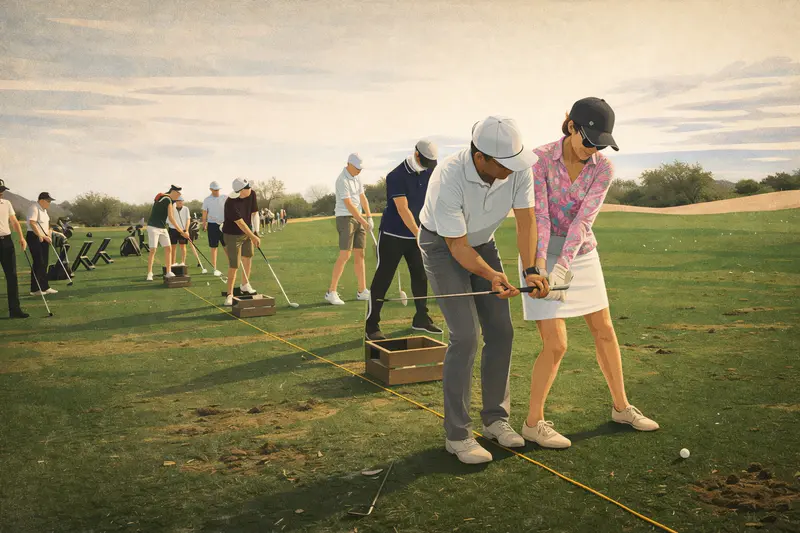
Why It's Never Too Late to Start Playing Golf as an Adult
The biggest thing stopping most adults from picking up a club isn't physical ability. It's the belief that they've missed the window. That golf is a sport you had to start at age eight, with a patient father and a backyard chipping green. That's simply not true.
Golf is one of the few sports where a 55-year-old beginner can compete meaningfully within a year. The handicap system exists specifically to level the playing field between players of wildly different skill levels. And unlike basketball or soccer, the physical demands are manageable for virtually any body type or fitness level.
The Reality: Most Golfers Start as Adults
According to the National Golf Foundation's 2024 participation report, a record 47.2 million Americans played some form of golf that year. The largest growth segment? Adults aged 25 to 44 who had never played before. The average age of a new golfer in the U.S. is 32, not 12.
As we covered in our record-breaking year for golf in America report, golf participation has climbed 38% compared to pre-pandemic levels. Much of that growth comes from adults who picked up the sport for the first time.
Larry Nelson, a three-time major champion, didn't touch a golf club until age 21. He was on the PGA Tour by 26. You don't need to aim for the Tour. But the point stands: starting late is no barrier to becoming genuinely good.
Physical Considerations and Adaptations
Golf doesn't require you to sprint, jump, or absorb contact. It asks for controlled rotation, balance, and hand-eye coordination. If you can swing a broom, you can swing a golf club.
That said, adult bodies come with considerations that kids don't face. Tight hips, stiff shoulders, and lower back sensitivity are real. A good instructor will adapt your swing to your body rather than forcing you into a textbook position designed for a flexible 20-year-old. Many adult beginners find that a shorter backswing with better tempo produces straighter, more consistent shots than trying to rotate like Rory McIlroy.
If you have specific physical limitations, mention them to your coach before the first lesson. Golf is remarkably adaptable.
Life-Changing Benefits of Learning Golf as an Adult
The reasons to start playing golf go far beyond the scorecard. For adults, the benefits tend to compound across health, mental wellness, and professional life.
Physical Health and Fitness Benefits
A typical 18-hole round covers 4 to 5 miles of walking. Even riding in a cart, you're still standing, swinging, and moving for three to four hours. Research published by the British Journal of Sports Medicine found that golfers have a 40% lower mortality rate than non-golfers, with a life expectancy increase of roughly five years.
You won't get the cardio intensity of running, but golf provides sustained, low-impact movement that's easier on joints and more sustainable across decades of life.
Mental Health and Stress Relief
Golf forces you to be present. You can't think about your inbox mid-swing and expect anything good to happen. That single-point focus, combined with hours spent outdoors in green spaces, functions as a form of active meditation.
"Golf is the closest game to the game we call life. You get bad breaks from good shots; you get good breaks from bad shots. But you have to play the ball where it lies." — Bobby Jones
A 2023 study from the University of Edinburgh confirmed that regular golfers report significantly lower levels of anxiety and depression compared to non-golfers of the same age and demographic profile. The combination of outdoor time, social interaction, and gentle physical exertion creates a uniquely effective wellness cocktail.
Social and Professional Networking Opportunities
Here's something nobody tells beginners: golf is one of the most powerful networking tools available to working adults. A survey by Forbes found that 90% of Fortune 500 CEOs play golf, and 80% say they've built meaningful business relationships on the course.
But it's not just for executives. Golf communities form naturally at municipal courses, driving ranges, and local leagues. You'll meet people from every profession, age group, and background, all connected by a shared obsession with getting a small white ball into a slightly less small hole.
Essential First Steps: Getting Started the Right Way
If you want to learn golf as an adult without wasting time or money, follow a clear sequence. Skipping steps is how people develop bad habits that take months to undo.
Before Your First Lesson: Basic Preparation
You don't need to study golf theory before your first lesson. But a few small preparations go a long way:
Watch one round on TV. Just one. Notice the pace, the etiquette, the flow of a hole from tee to green. Our anatomy of a golf hole guide breaks down every part of the course in plain English.
Wear athletic clothing and sneakers. You don't need golf shoes yet. Avoid jeans and sandals.
Set one specific goal. "I want to be able to play 9 holes with friends by September" is infinitely better than "I want to get good."
Budget for 4 to 6 lessons minimum. One lesson is an introduction. Four to six lessons build a foundation.
Beginner Equipment Essentials (Without Breaking the Bank)
Do not spend $2,000 on clubs before your first lesson. This is the most common mistake new adult golfers make.
Start with rentals or a used set. Your golf coach can help you decide when it's time to invest in better equipment based on your swing and commitment level.
Finding the Right Golf Instructor: Your Path to Success
The single best decision an adult beginner can make is investing in a qualified instructor. YouTube videos can't see your swing. Your buddy's tips might reinforce your bad habits. A real coach accelerates your progress by months, sometimes years.
What Makes a Great Adult Golf Instructor
Teaching adults is fundamentally different from teaching kids. Children absorb physical movements intuitively. Adults need to understand why a change works before their body commits to it. The best adult golf instructors:
Explain the mechanics behind each adjustment, not just what to do but why it matters
Adapt to physical limitations instead of forcing a one-size-fits-all swing model
Set structured milestones so you can measure progress between lessons
Balance patience with directness, because adults don't need coddling, they need clear feedback
Red flags include instructors who try to overhaul your entire swing in one session, refuse to explain their reasoning, or push expensive lesson packages before your first meeting.
Where to Find Qualified Golf Coaches
You have several options, each with tradeoffs:
Local golf courses and driving ranges often employ teaching pros, though availability can be limited and scheduling rigid.
Private instructors offer flexibility but can be hard to vet without a platform or referral.
Online platforms like TeachMe.To let you search, compare credentials, read reviews, and book lessons with local coaches in minutes.
The advantage of a platform over a cold call to your local course is transparency. You can see a coach's experience, teaching philosophy, pricing, and reviews from other adult beginners before you commit.
Questions to Ask Potential Instructors
Before booking your first session, ask:
What's your experience teaching adult beginners specifically?
How do you structure the first 4 to 6 lessons for someone with no experience?
Do you provide any follow-up notes or practice plans between sessions?
What's your cancellation and rescheduling policy?
Can we start at a driving range rather than on the course?
Good coaches welcome these questions. Dismissive ones aren't worth your time or money.
TeachMe.To: Connecting Adult Learners with Expert Golf Coaches
TeachMe.To was built to solve a specific problem: finding a vetted, local instructor shouldn't require a dozen phone calls and three dead-end Google searches. The platform connects you with over 5,000 coaches across golf, tennis, pickleball, and other sports.
How TeachMe.To Works for Golf Lessons
The process takes about two minutes:
Visit teachme.to and select golf.
Enter your location and browse local instructors.
Read coach profiles, including certifications, teaching style, reviews, and pricing.
Book a lesson at a time and location that works for you.
Show up, learn, and leave a review to help future students.
Pricing for beginner golf lessons on the platform typically ranges from $50 to $150 per hour, depending on your city, the coach's credentials, and the lesson format. That's competitive with (or below) what most golf courses charge for comparable instruction. For a deeper breakdown of pricing, see our golf lesson cost guide.
Success Stories: Adults Who Transformed Their Game
One TeachMe.To instructor, Blaise Johnson, recently hit 1,000 lessons taught on the platform. A significant portion of his students are adult beginners in their 30s through 60s. His approach? Meet students where they are physically and mentally, then build from there.
Coach George Clayton, a former Division I basketball player, didn't pick up golf until later and shot 112 his first time out. Today he teaches full-time on TeachMe.To, specializing in helping adults who are starting from scratch.
Your First Golf Lessons: What to Expect and How to Maximize Success
Walking into your first lesson with realistic expectations is half the battle. You will not hit beautiful shots on day one. That's fine. Nobody does.
Typical Lesson Structure and Progression
Most adult beginners can go from "never held a club" to "can enjoy a casual 9-hole round" in six to eight weeks of weekly lessons paired with one to two practice sessions per week.
Common Adult Learning Challenges and Solutions
Adults tend to overthink. Children just swing. Your analytical mind is an asset for course management and strategy, but it can paralyze your swing if you're mentally cycling through 14 checkpoints before every shot.
The fix? Trust the process. Focus on one thing per swing, not five. Your coach will prioritize corrections. Follow their lead.
Time is the other big constraint. Most adults can't practice three hours a day. That's okay. Thirty focused minutes at the range twice a week beats three scattered hours once a month.
Building Your Golf Fundamentals: The Adult Advantage
Golf Swing Basics Tailored for Adult Bodies
Your coach will likely start with a grip and setup that accounts for your flexibility, not a Tour player's. A slightly stronger grip, a wider stance, and a three-quarter backswing are common and effective starting points for adult beginners. These adjustments produce solid contact without requiring gymnast-level flexibility.
The best swing for you is the one that produces consistent contact and keeps you injury-free. It doesn't have to look like what you see on TV.
Course Management and Golf IQ
Here's your secret weapon as an adult learner: you already know how to think strategically. Course management (choosing the right club, aiming for safe spots, avoiding unnecessary risk) is where adults consistently outperform younger players with more raw talent.
A beginner who hits 150 yards straight will beat a beginner who hits 220 yards into the trees every time.
Overcoming Common Adult Golf Learning Obstacles
Time Management for Busy Adults
You don't need four free hours to practice. Try these time-efficient strategies:
Lunch break putting: 15 minutes on a practice green sharpens feel faster than an hour hitting drivers
Weekly 30-minute range sessions: Focus on one skill per session (irons Monday, chipping Thursday)
Playing 9 holes instead of 18: Takes 90 minutes, gives you real course experience
Dealing with Frustration and Setting Realistic Goals
Golf will humble you. You'll hit five great shots followed by one that makes you question every life decision. This is normal. Even Tour pros hit bad shots.
Set process goals rather than outcome goals. "I will practice my putting grip for 20 minutes this week" is within your control. "I will break 100 this month" depends on a dozen variables you can't predict yet.
Frequently Asked Questions About Adult Golf Learning
Q: Is 40, 50, or 60 too old to start learning golf?
A: No. Golf is one of the most age-friendly sports in existence. Players regularly compete into their 70s and 80s. If you can walk and swing your arms, you can learn golf. Many of TeachMe.To's most dedicated students started in their 50s and 60s. The key is finding an instructor who adapts the swing to your body rather than demanding you move like a 25-year-old.
Q: How long does it take adults to learn golf?
A: With weekly lessons and regular practice, most adults can play a comfortable 9-hole round within 6 to 8 weeks. Reaching a consistent score under 100 for 18 holes typically takes 6 to 12 months. Your pace depends on practice frequency, athletic background, and coaching quality.
Q: How much do adult golf lessons cost?
A: Private adult golf instruction typically runs $50 to $150 per hour. Group lessons cost $20 to $50 per person. Location, instructor credentials, and facility type all affect pricing. Our detailed golf lesson pricing guide breaks down costs by city and format.
Q: Can I learn golf without lessons?
A: Technically, yes. Practically, it's a slow and frustrating path. Self-taught golfers almost always develop swing habits that limit their progress and can cause injury. Even 3 to 5 lessons with a qualified instructor will save you months of trial and error. Think of it as an investment that pays dividends every time you play.
Q: What's the best way to practice golf as a beginner adult?
A: Start at a driving range, not a golf course. Spend your first few weeks hitting balls with your 7-iron and pitching wedge only. Add 15 to 20 minutes of putting practice each session. Once your coach clears you for course play, start with 9-hole executive courses (shorter holes, less intimidating, faster pace).
Q: How do I find beginner-friendly golf courses?
A: Look for executive courses, par-3 courses, and municipal courses in your area. These tend to be shorter, less expensive, and more welcoming to new players. Avoid private clubs and championship-length courses until you're comfortable with your game. Your instructor can recommend specific courses near you.
Golf is waiting for you. It doesn't care how old you are, what shape you're in, or whether you've ever touched a club. All it asks is that you show up willing to learn. Find a local golf coach on TeachMe.To and take that first step. Six months from now, you'll wonder why you waited so long.
Find a Golf Coach Near You
Ready to get started? Browse local golf coaches and book your first lesson:
Los Angeles · San Francisco · Miami · Houston · San Diego · Austin · Toronto · Dallas · See all cities →