When my neighbor's daughter joined her first competitive soccer team, she struggled with confidence despite having solid technical skills. Her parents hired a female trainer who'd played Division I soccer. Within three months, the change was remarkable—not just in her footwork, but in how she carried herself on the field. The difference wasn't magic. It was representation.
Finding the right soccer trainer for your daughter means looking beyond credentials and hourly rates. The coach who helps her master a step-over matters less than the one who teaches her to trust her instincts when she's the only girl in a pickup game. This guide walks through what actually matters when choosing a female soccer trainer, from licensing requirements to personality fit, so you can make a decision that accelerates both skill and confidence.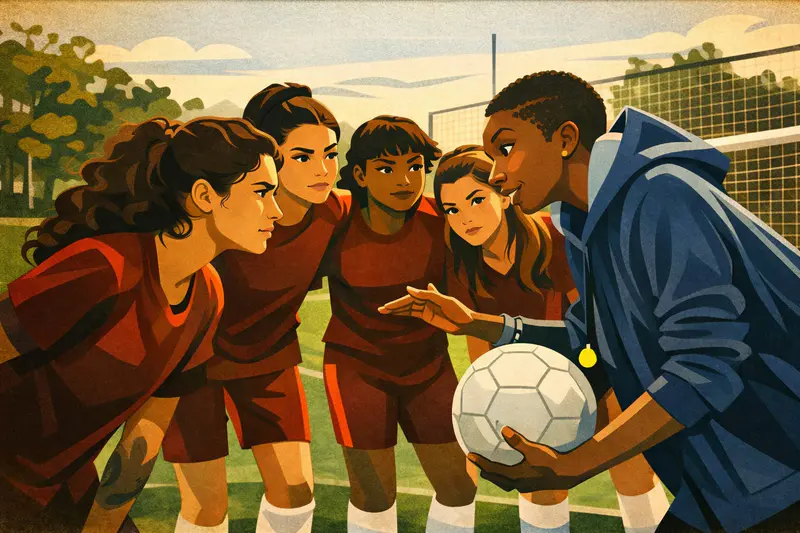
Why Female Soccer Coaches Make a Difference for Girls
Role Models and Representation
Female coaches provide something highlight reels can't: proof that women belong in leadership positions in soccer. Only 25% of youth sports coaches were female in 2020, making representation scarce when girls need it most. When your daughter sees a woman directing training sessions and commanding respect, she absorbs a different message about her own potential.
Female coaches create inclusive environments where young girls can see themselves reflected in leadership roles, which directly impacts self-confidence and motivation. This matters beyond soccer—94% of women in C-suite positions played sports growing up, with more than half competing at the collegiate level.
Communication Style Advantages
Girls and boys process coaching feedback differently. Girls tend to want personal relationships with coaches and prefer those who communicate openly and empathetically, rather than responding to aggressive or harsh coaching styles. They thrive in cooperative environments and see individual success as collective achievement.
Female athletes perform better when they have honest, open, and respectful communication with their coach. Girls are also better at reading emotions than boys, making them particularly sensitive to a coach's tone and body language. A female trainer who understands these dynamics can adjust her approach to match how your daughter actually learns.
Building Confidence in Young Female Athletes
The confidence gap hits hard during adolescence. Girls drop out of sports at a rate six times greater than boys by age 14, often due to self-doubt rather than lack of interest. Female coaches who've navigated these same pressures bring firsthand understanding to training sessions.
They know when to push and when to rebuild. They recognize that a missed shot might trigger different internal dialogue in a 13-year-old girl than in her male teammates. This awareness creates supportive learning environments where girls feel safe taking risks and making mistakes—essential ingredients for skill development.
Understanding Soccer Coach Qualifications
US Soccer Licensing Levels Explained
The United States Soccer Federation operates the official coaching education system, dividing programs into grassroots and professional tracks. Your coaching journey starts with a free 20-minute Introduction to Grassroots Coaching video through the US Soccer Learning Center.
Grassroots modules cost $25 each and cover topics for recreational coaches working with beginner to intermediate players ages 6-19. These modules suit parent volunteers and entry-level coaches. For more serious instruction, the licensing ladder climbs through D, C, B, A Youth, and Pro licenses, with costs ranging from $200 to $10,000 depending on the level.
The D License costs $200-400 and requires 40 hours of training over five days. It's designed for coaches working with U6-U19 teams in participation-focused environments. The C License runs $1,000-2,000 and takes 4-5 months, requiring a D License for at least six months as a prerequisite.
Essential Certifications and Background Checks
Licensing alone doesn't make a coach safe or qualified. All coaches must undergo thorough background checks and safety training before receiving their soccer coaching certificate. This includes an annual background check through authorized vendors and a 90-minute SafeSport course, followed by annual 15-minute refreshers.
Coaches also need concussion education with three years of CDC-approved training. These requirements aren't optional extras—they're mandatory components of the coaching pathway. When evaluating potential trainers, verify they've completed these safety certifications, not just technical coursework.
What Credentials Matter for Youth Players
For recreational youth coaching, a D License provides adequate preparation. The D License suits coaches working with U6-U19 teams focused on participation and enjoyment rather than elite competition. If your daughter plays club soccer at a competitive level, look for trainers with C or B Licenses.
The B License costs $1,200-1,800 and requires 96 hours over several months, with prerequisites including a C License held for one year plus three years of total coaching experience. This level suits advanced competitive coaching at elite club levels, high schools, and college programs. Don't pay B License rates for a beginner who needs fundamentals—match the credential to your daughter's actual development stage.
Private Lessons vs. Group Training: Which Is Right?
Benefits of One-on-One Soccer Training
Private one-on-one soccer lessons cost about $40 to $100 per hour in the U.S., with pricing varying by coach experience and location. That premium buys undivided attention. Private coaching allows personalized instruction with aspects of attention, motivation, feedback, and expertise that group settings can't match.
A college coach observed: "I have seen tremendous growth in my player's positional understanding through 1 on 1 coaching interaction...confidence is the biggest accelerator of development." Private training lets players repeat essential drills until skills become second nature, without waiting for teammates to catch up or holding back faster learners.
Advantages of Small Group Sessions
Small group soccer lessons average about $35 to $65 per hour per student for groups of typically 2-5 kids. The cost savings matter, but the real advantage is social learning. Girls develop teamwork, communication, and responsibility by working together and learning from each other's mistakes.
Group training also removes the pressure cooker intensity of one-on-one sessions. Some players perform better when they're not constantly in the spotlight. Group lessons are more cost-effective than private lessons while still providing more focused attention than regular team practices.
Combining Both Approaches for Optimal Development
Many coaches recommend a combination of group and private training if budget allows. Use private sessions to fix specific technical weaknesses—a weak left foot, poor first touch, or hesitant shooting. Use group training to practice applying those skills in game-like situations with defenders and teammates.
This blended approach prevents the isolation that comes from always training alone. Always being with a coach does not let the player develop the motivation, accountability, discipline, and personal relationship with the game that playing independently can foster. Balance is key.
How Much Do Soccer Lessons Cost?
Average Private Lesson Pricing
Private sessions range $40-100 per hour depending on coach experience and location. Entry-level coaches like high school or college players earning extra money typically charge at the lower end. Highly experienced coaches with advanced credentials can charge $200+ per hour for specialized training.
Location drives significant price variation. Expect higher rates in major metropolitan areas and lower rates in smaller cities or rural areas. Specialty training like goalkeeper-specific coaching often costs more than general field player instruction due to the specialized skill set required.
Group Training and Camp Costs
Small group lessons cost $35 to $65 per student for semi-private training with 2-5 players. This represents meaningful savings compared to private instruction while maintaining small ratios that allow for individual feedback.
Soccer camps range from $200 to over $1,000 per week depending on program level and whether boarding is included. Day camps at the lower end provide good value for recreational players. Elite residential camps at the higher end offer immersive training environments with college-level facilities and coaching staffs.
Package Deals and Subscription Options
Most coaches or academies offer multi-lesson packages with discounts for buying in bulk. A 10-lesson package might reduce the per-session cost by 10-15% compared to single-session rates. This commitment benefits both parties—you lock in pricing, and the coach secures consistent income.
What to Look for in a Female Soccer Trainer
Playing and Coaching Experience
Choose a trainer with several years of experience and a robust client roster. Ask about her playing background—did she compete in college or professionally? While elite playing experience doesn't automatically translate to teaching ability, it provides technical credibility and firsthand knowledge of high-level competition.
Coaching experience with girls' teams specifically matters more than general coaching tenure. A trainer who's spent five years working with girls ages 10-14 understands their developmental needs better than someone with ten years coaching adult men. Ask how many girls she currently trains and request examples of player improvements.
Teaching Philosophy and Communication Style
Watch the trainer in action before committing. Observe training sessions to see how they train and motivate their students. Does she demonstrate skills herself or just describe them? How does she correct mistakes—with encouragement or criticism? Does she adjust her approach when a player struggles, or repeat the same instruction louder?
Ask about her coaching philosophy directly. Some trainers prioritize technical perfection, others emphasize tactical understanding, and still others focus on building confidence through small wins. None of these approaches is inherently better, but one will match your daughter's needs and personality better than the others.
Personality Fit and Rapport With Your Daughter
The connection between player and trainer is critical for success. A highly credentialed coach who doesn't click with your daughter will produce worse results than a less experienced trainer who earns her trust and enthusiasm. Your daughter should look forward to training sessions, not dread them.
Schedule a trial session and watch the interaction carefully. Does your daughter ask questions freely? Does she smile and show energy? Does the trainer remember details from previous conversations? These soft factors predict training outcomes more reliably than resume credentials.
Reviews and References
Select a coach with excellent online reviews. Look for specific feedback about working with girls, not just generic praise. Reviews mentioning improved confidence, better communication, or patient teaching style signal the qualities that matter for young female athletes.
Ask for references with contact information for current and past clients. Speak with parents whose daughters are similar ages and skill levels to yours. Ask what they'd change about the training if they could, and whether they'd hire the same coach again knowing what they know now.
How to Find Female Soccer Trainers in Your Area
Using TeachMe.To's Platform
TeachMe.To features verified instructors with reviews, background checks, and a simple booking system. The platform delivered 61,312 lessons in the previous year and maintains a TrustScore of 4.8 with 601 reviews on Trustpilot. This verification process removes the guesswork from coach selection.
The platform's filtering system lets you search specifically for female trainers in your area, view their credentials and experience, read reviews from other parents, and book trial sessions directly. TeachMe.To sells lesson packs backed by a 100% satisfaction guarantee, reducing financial risk while you evaluate fit.
The simple booking interface eliminates the back-and-forth of scheduling. You can see real-time availability, book sessions that fit your schedule, and manage payments through the platform. This convenience matters when you're juggling multiple kids' activities and work commitments.
Other Search Methods and Resources
Ask team coaches, local clubs, and parent networks for recommendations. Word-of-mouth referrals from parents who share your values and goals often yield better matches than online searches. Other parents can provide unfiltered feedback about communication style, reliability, and results.
Consider approaching high school coaches or local college players if budget is tight. Some parents find trainers outside their kid's club who aren't club coaches, which can provide fresh perspectives and avoid potential conflicts of interest.
Platforms like CoachUp and Dribbler also offer verified coaches with background checks. Dribbler maintains a 4.9/5 average rating verified by thousands of parents and offers a 100% money-back guarantee if you aren't satisfied with your first lesson.
Questions to Ask Potential Coaches
Start with basics: What is your soccer background? What certifications do you hold? How many years have you coached girls specifically? Ask about their training methodology and success stories with similar-aged girls.
Dig deeper into approach: How do you handle a player who's struggling with confidence? What's your communication style with parents? How do you measure progress? What happens if my daughter and you don't click?
Practical logistics matter too: What's your cancellation policy? Do you offer makeup sessions for weather or illness? Where do you conduct training? What equipment should my daughter bring?
Scheduling Trial Sessions
Most platforms and independent coaches offer trial lessons to assess compatibility before committing to packages. Use this session to evaluate both technical instruction and interpersonal dynamics. Your daughter's enthusiasm after the session tells you more than any credential on a resume.
Watch how the trainer structures the session. Does she start with assessment to understand current skill levels? Does she explain the purpose of each drill? Does she provide specific, actionable feedback rather than generic praise? These details reveal teaching quality.
Age-Appropriate Training for Girls
Starting Soccer: Ages 3-7
Children can start playing soccer as early as 3 years old for informal play, focusing on basic skills like kicking and dribbling. At this age, the primary focus should be fun, creative, and imaginative programming that supports physical, social, cognitive, and emotional growth.
From ages 6 to 7, children can begin learning fundamentals through structured programs. Most soccer camps and structured programs accept children starting at age 6-7, when they can better understand group instructions and manage emotions. Keep expectations realistic—attention spans are short, and skill development happens slowly.
Skill Building: Ages 8-13
Competitive play typically starts at age 8, allowing for more advanced training and teamwork development. Ages 9-11 are considered optimal years to begin focused soccer skills training, with players developing foundational skills that guide their entire development.
Ages 10-13 represent a pivotal developmental period for young soccer players, with significant physical, mental, and technical changes occurring. This window is ideal for intensive skill work because players have the coordination to execute techniques but haven't yet developed bad habits that are harder to break later.
Advanced Development: Ages 14-18
Training at ages 14-18 aims to maximize player performance in all aspects of the game. Technical work becomes advanced, incorporating complex situations requiring quick and precise decision-making. Players can train with greater intensity and volume, with specific training to increase strength, speed, power, and anaerobic endurance.
At this stage, training should match competitive aspirations. Players pursuing college soccer need different preparation than those playing for fitness and fun. Be honest about goals so the trainer can structure sessions appropriately.
Benefits of Soccer Training for Young Girls
Girls who play sports have higher levels of confidence and self-esteem, lower levels of depression, and more positive body image. These psychological benefits extend well beyond the field, affecting academic performance and social relationships.
High school female athletes are 92% less likely to get involved with drugs and 80% more likely to graduate compared to non-athlete counterparts. The discipline, goal-setting, and time management required for sports training transfer directly to academic success.
The professional benefits persist into adulthood. 85% of women who played sports say the skills they developed were important to success in their professional careers, with findings even higher among women in leadership roles (91%) and women making $100,000+ (93%). Soccer teaches teamwork, resilience, and competitive drive—exactly the skills that translate to workplace success.
Frequently Asked Questions
How much do private soccer lessons cost?
Private one-on-one soccer lessons typically cost $40-100 per hour, with the range varying based on coach experience and location. Entry-level coaches like college players charge at the lower end, while highly experienced coaches with advanced credentials can charge $200+ per hour. Small group lessons (2-5 players) average $35-65 per student per hour, offering a more budget-friendly option.
What credentials should a youth soccer trainer have?
At minimum, look for coaches who have completed US Soccer Grassroots modules or hold a D License for youth recreational coaching. For competitive training, C License holders have completed 4-5 months of training for intermediate coaching, while B License coaches are qualified for elite club-level instruction. All coaches should have completed background checks, SafeSport training, and concussion education as required safety certifications.
Why choose a female coach for my daughter?
Female coaches serve as role models and provide representation in leadership roles, which is vital for girls' self-confidence and motivation. Girls tend to prefer coaches who communicate openly and empathetically, developing personal relationships beyond just the game. Female athletes perform better when they have honest, open, and respectful communication with their coach—something female trainers often provide more naturally based on shared experiences.
Should I start with private or group lessons?
Private lessons allow for personalized, one-on-one attention focusing on individual player needs and can accelerate skill development. Group training is more cost-effective and helps develop teamwork, social skills, and communication abilities. Many coaches recommend a combination of both if budget allows, as this provides balanced development. Consider starting with group classes for beginners to build fundamental skills, then adding private lessons for specific skill refinement.
At what age should my daughter begin soccer training?
Children can start informal soccer play as early as 3 years old, focusing on basic skills like kicking and dribbling. Most soccer camps and structured programs accept children from age 6-7, when they can better understand group instructions. Competitive play typically starts at age 8, allowing for more advanced training and teamwork development. Ages 9-11 are considered optimal years to begin focused soccer skills training.
How do I verify a coach's background and qualifications?
Use platforms like TeachMe.To, CoachUp, or Dribbler that verify instructors through background checks and provide parent reviews. You can verify US Soccer licenses directly through the US Soccer Learning Center. Always ask to see proof of SafeSport certification and concussion training completion. Request references from current and past clients, and speak with parents whose daughters are similar ages and skill levels to yours.
Find a Soccer Coach Near You
Ready to get started? Browse local soccer coaches and book your first lesson:
Houston · Los Angeles · Dallas · See all cities →
Conclusion: Finding the Right Trainer With TeachMe.To
Finding the right female soccer trainer for your daughter requires balancing credentials with chemistry, experience with teaching style, and cost with value. The technical skills matter, but the relationship matters more. A trainer who builds confidence while building footwork creates lasting impact that extends far beyond soccer.
TeachMe.To streamlines this search by providing verified female coaches with transparent reviews, confirmed background checks, and simple booking. The platform's 100% satisfaction guarantee removes financial risk while you evaluate fit. With verified instructors, parent reviews, and guaranteed satisfaction, TeachMe.To eliminates the guesswork from coach selection.
The right trainer will challenge your daughter while supporting her, push her limits while respecting her boundaries, and teach soccer skills while building life skills. Start your search today, schedule trial sessions with multiple coaches, and trust your daughter's instincts about who makes her excited to train. That enthusiasm predicts success more reliably than any credential or hourly rate.