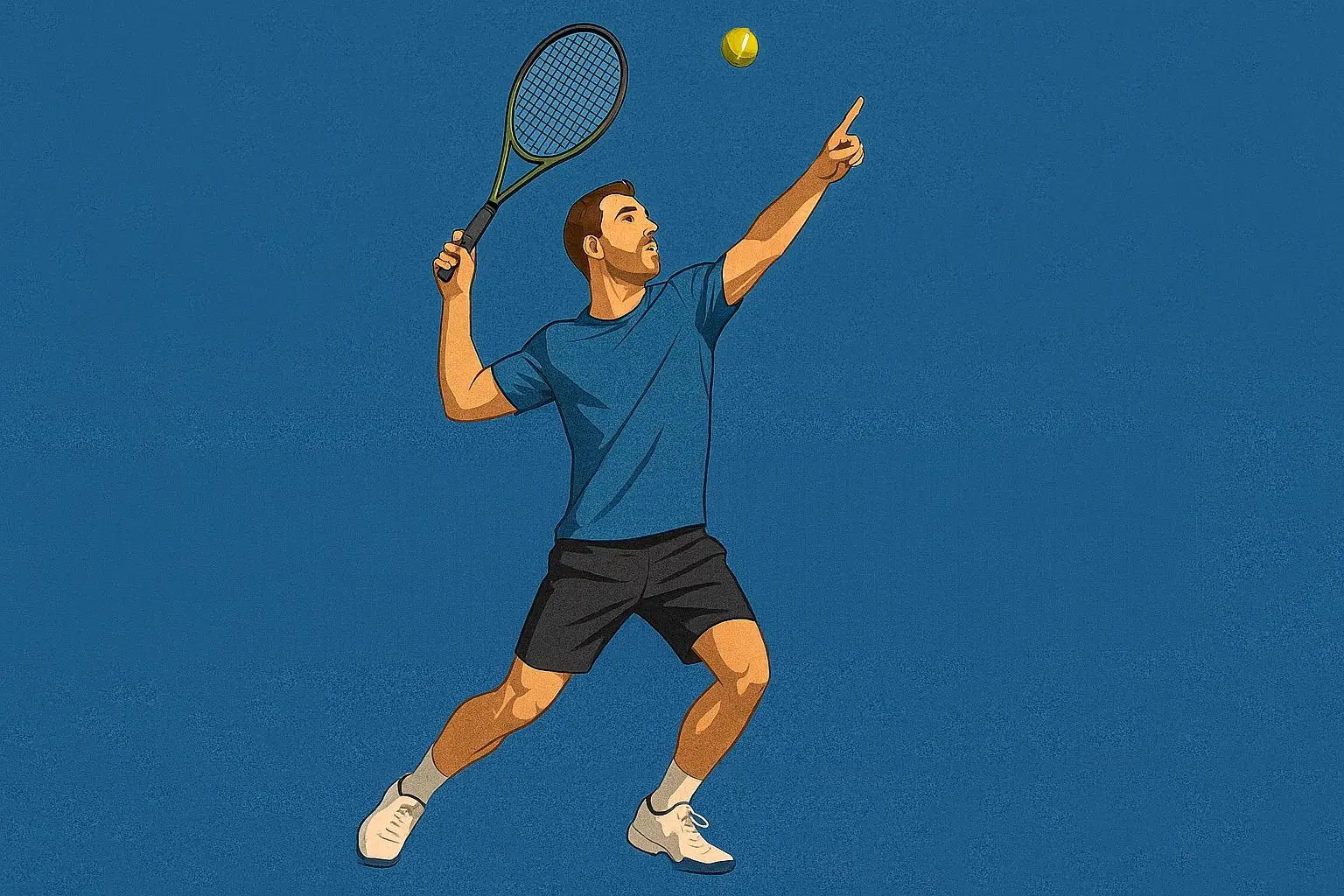
Ever had an opponent throw up a high lob that makes you think, “Uh oh, here we go”? For many beginners, the tennis overhead smash is one of the most intimidating shots. A ball soaring above your head can cause panic, but learning to smash that overhead is absolutely worth it. Not only is it a thrilling way to win a point, but if you can’t hit a confident overhead, opponents will figure it out and lob you to death!
Get a Grip: The Right Grip for Overheads
First things first: grip. When you’re setting up for an overhead, make sure you’re using a continental grip (the same grip you’d use for serves and volleys). Using the continental grip is essential for a proper overhead. Coaches will tell you it’s basically mandatory. This grip lets you snap your wrist for power and also control the angle of the smash.
Also, hold the racket with a relaxed firmness. If you squeeze the handle too tightly, you’ll stiffen up and lose the smooth swing and wrist snap that generate power. On the flip side, don’t hold it like a live bird either, or the racket might twist in your hand.
Footwork & Positioning: Get Under the Ball
Once you see your opponent launch a lob, don’t stand there admiring the scenery, start moving your feet! The key is to get yourself underneath the ball in time. This means using quick footwork to move back without losing balance. Instead of frantically backpedaling straight backward, turn your body sideways and sidestep or run back with a crossover step.
While you’re moving into position, remember to point your non-racket hand up at the ball. Why point? It helps in three big ways: it makes you turn sideways, it keeps you aligned with the ball’s flight, and it aids your balance. Think of your non-dominant hand as the guide. Pointing at the ball forces your eyes to stay on it and your body to stay aligned underneath.
Try to get slightly behind the drop point of the ball. It’s usually better to err a step or two too far back than to be caught with the ball dropping behind you. You can always step forward into the smash, which is much easier than having to desperately reach back last-second. So give yourself a bit of extra cushion when judging the lob, especially if you’re not 100% sure where it’s coming down.
And what if the lob is really high or the sun is in your eyes? Sometimes it’s okay to let the ball bounce and then play the overhead. In fact, if a blazing sun is overhead, letting a lob bounce can give you a better angle to see and hit it, and you can still put it away after the bounce. Just remember: if you let it bounce, the ball will likely bounce high and somewhat slower, you still need to move quickly and hit it overhead. Use this option if you’re completely out of position or blinded; otherwise, try to take it out of the air to finish the point. The more you practice footwork, the less you’ll need the bounce safety net.
One more positioning tip: anticipate the lob. Often, opponents will lob when you’re dominating at net or when they’re on the run. If you smell a lob coming, do a quick split-step and be ready to spring backward.
The Swing: Like a Serve Above Your Head
The good news about overheads is that the swing is almost the same as your serve.
Trophy stance: As you track the lob and get under it, coil your body like you would for a serve. Turn sideways to the net. Your racket hand should draw back into that “backscratching” position (racket dropping behind your back, elbow bent). Your legs are bent a bit, weight loaded on your back foot.
Explode upward: Once you’re set, drive with your legs and uncoil your body upward into the shot. Transfer your weight from your back leg to front. Swing up to the ball and reach high. Contact the ball with a fully extended arm, ideally slightly in front of your body. Don’t swing just downward, swing up and through.
Snap and pronate: Ever hear of wrist snap on the serve? The overhead has it too. It’s not a delicate drop-shot kind of snap; it’s a powerful pronation of your forearm and wrist as you strike the ball. Your shoulder, forearm, and wrist all rotate to uncoil into the hit, so that at contact your racket face is squarely behind the ball. This motion is what really smashes the ball.
Eyes on the prize: Keep watching the ball! This sounds obvious, but many people mess up overheads because they glance at their target or opponent too early. Don’t. Keep your eyes locked on that ball until it hits your racket.
Follow-through and recovery: After hitting the overhead, follow through just like a full serve swing – your racket can come down across your body or to the side. A complete follow-through means you didn’t hold back.
Common Mistakes (and How to Fix Them)
Even with the basics in mind, a few common errors can creep in. No worries, here are the typical overhead “oops” moments and how to prevent them:
Mistake 1: Not moving your feet (being a statue). The lob goes up and you freeze, or take one lazy step and reach. Fix: As soon as you see a lob, react! Turn sideways and hustle back with small quick steps. Keep adjusting until you’re comfortably under the ball.
Mistake 2: Using the wrong grip. If you try to hit an overhead with a forehand (eastern) grip you’ll have a hard time controlling the ball. Fix: Switch to the continental grip for overheads, always. It allows the natural motion needed to keep the ball in play with power.
Mistake 3: Hitting too softly or timidly. You get under the lob perfectly... then you just pat it back over the net. Fix: If you’re in position, go for it! You don’t need to crush it 100 mph, but hit the overhead with some authority and placement.
Mistake 4: Not watching the ball (looking away). This bears repeating: if you take your eye off the ball, even a moment too soon, you might whiff or frame the shot off your racket frame. Fix: Keep your eyes on that ball until it’s a few feet away from your strings.
Mistake 5: Backpedaling instead of turning. We mentioned this, but it’s a common pitfall. If you retreat by backpedaling, you’re likely to lose balance or be too slow. Fix: The moment you recognize a lob, turn sideways. Use a drop step with your lead foot and crossover steps to run back if it’s deep.
Mistake 6: Attempting crazy backhand overheads. Lobs to your backhand side are tough. There is such a thing as a backhand overhead, but even advanced players avoid it when possible. Fix: Whenever you can, pivot and reposition so you can hit the overhead with your forehand. It might mean taking extra steps, but it’s worth it.
Mistake 7: Panicking and giving up on the shot. Sometimes beginners see a lob and just freak out, they might let it bounce and then swat awkwardly, or not swing at all and just hope for the best. Fix: Stay calm and remember your fundamentals: turn, move your feet, and make your best swing. Even if you’re not perfectly positioned, try to execute the proper overhead form.
Practice and Drills: Getting Better at Overheads
Nobody becomes an overhead expert overnight. The secret is practice, and a little bit of smart practice goes a long way. Here are some tips to improve your smash:
Start with easy lobs: If you’re new to overheads, have a partner (or coach) feed you shallow lobs first. For example, stand a bit inside the service line and have them toss or hit easy lobs that go just a few feet above your reach. This way, you can practice your technique without needing a lot of movement. As you get comfortable putting those away, have them gradually increase the lob height or depth.
Footwork drills: Practice that sideways turn and crossover step without the ball, too. You can do a shadow drill where you imagine a lob to one side: split step, turn, point up, and shuffle back, then simulate the swing. Do this to both your forehand and backhand sides.
Use targets: Once you can hit overheads in the court consistently, challenge yourself with targets. For instance, set up cones near the deep corners or along the baseline and try to smash the ball toward them.
Practice with serves: Interestingly, practicing your serve can help your overhead, and vice versa. Both strokes use similar mechanics. Next time you’re practicing serves, imagine each toss is a lob and you’re “smashing” it.
Repetition is key: Overheads are often neglected in practice. But try to get in a little overhead practice each time you play. Even 5-10 solid overheads every session will build your confidence.
Finally, keep it fun. One day, you’ll actually look forward to that feeling when an opponent throws up a lob, because you’ll think “Sweet, smash time!” The more you practice, the more natural it becomes.
Ready to Smash It?

Overheads might start out as a beginner’s nightmare, but with these tips and some practice, they’ll soon become a source of confidence. You’ve got the knowledge – now it’s all about putting in the reps and not being afraid of the sky-high ball. And if you want a bit of extra help mastering your overhead (or any tennis shot), there’s no substitute for hands-on coaching. You can get personalized advice and practice in a live setting by booking a lesson with a qualified tennis coach through TeachMe.To. A coach can feed you endless lobs, give you instant feedback on your form, and help you fast-track the improvements in your smash. If you need a guide on how much tennis lessons cost, check this out.
So, next time someone pops up a lob, you’ll know exactly what to do, get in position, reach up, and SMASH it with confidence. Good luck and happy smashing out there!