You’ve got your paddle, found a court, and you're ready to play. You grab a ball, start a rally, and... thwack. It cracks. Or maybe it feels like you're hitting a marshmallow, with a bounce so low it barely clears the net. If this sounds familiar, you’ve discovered a fundamental truth of the sport: the pickleball itself is a crucial piece of your equipment.
Choosing the right ball isn’t just for the pros. It can dramatically change how the game feels, how you control your shots, and, most importantly, how much fun you have. For beginners and intermediate players, navigating the world of different holes, colors, and brands can feel overwhelming.
Don't sweat it. This guide will break down everything you need to know to find your perfect match, ensuring your next game is a great one.
The Great Divide: Indoor vs. Outdoor Pickleballs
The single most important decision you'll make when buying a pickleball is choosing between an indoor and an outdoor ball. They might look similar, but they are engineered for completely different environments.
Outdoor Pickleballs: Built for Battle
If you’re playing on a dedicated outdoor pickleball court, a converted tennis court, or even your driveway, you need an outdoor ball.
What they are: Outdoor balls are made from a harder, smoother, and more durable plastic. They feature a higher number of smaller holes—typically around 40.
Why they’re designed this way: The heavy, hard plastic helps the ball resist the wind, which is a constant factor in outdoor play. The smaller, drilled holes contribute to a truer, more predictable flight path even in a breeze. This design also provides a consistent, lively bounce on rough surfaces like asphalt and concrete.
How they play: Outdoor balls are generally faster and harder off the paddle. This speed makes for a quicker-paced game. However, their hardness also makes them more prone to cracking, especially in cold weather (below 50°F or 10°C).
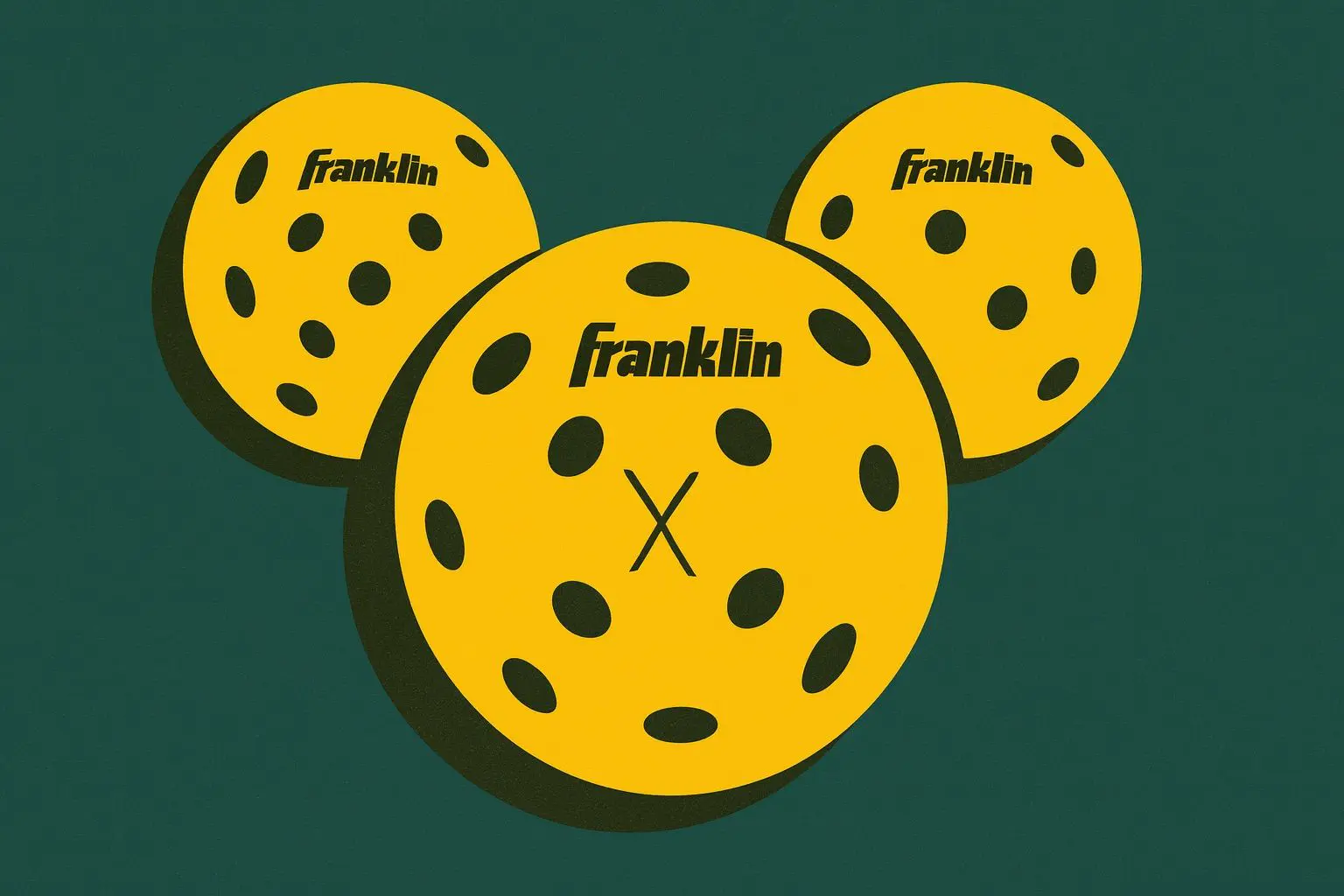
Popular Outdoor Ball: The Franklin X-40 is a widely recognized standard for outdoor play and is the official ball for many major tournaments.
Indoor Pickleballs: Tamed for the Court
Playing in a gymnasium or a dedicated indoor facility? An indoor ball is your best friend.
What they are: Indoor balls are made from a softer, more pliable plastic. They have fewer, but larger, holes—usually around 26.
Why they’re designed this way: Since wind isn't a factor, indoor balls don't need the same heavy construction. The softer plastic is designed to grip smooth indoor surfaces like wood or polyurethane, preventing skidding and providing a more consistent bounce. The larger holes create more drag, slowing the ball down for a more controlled game.
How they play: The game with an indoor ball feels softer, quieter, and a bit slower. This makes them fantastic for beginners learning to control their shots and for players who enjoy longer, strategic dink rallies. They are much less likely to crack than their outdoor counterparts.
Can you use them interchangeably?
While you technically can, you really shouldn't. An indoor ball used outside will be carried away by the slightest gust of wind, and its soft bounce will feel dead on a hard court. Conversely, an outdoor ball used indoors will feel like a rock, skid unpredictably on the smooth floor, and create a lot of noise. Sticking to the right ball for your environment is key.
Beyond Indoor vs. Outdoor: What Else Should You Consider?
Once you've picked the right type of ball for your court, a few other factors can help you narrow down your choice.
Does the Ball Color Matter?
Yes, it absolutely does! The goal is simple: visibility. You need to see the ball clearly against the court color, the background, and in the current lighting.
The Classics (Yellow & Neon Green): These are the most popular colors for a reason. They provide a high contrast against most blue and green courts and are generally easy to track in both bright sun and overcast conditions.
Orange & Pink: These can be great alternatives, especially if you find yellow hard to see or if the background (like fall foliage) makes yellow balls blend in.
White: Often used indoors, white balls can be very effective against dark court surfaces or backgrounds. However, they can get lost against white lines or a bright, sunlit sky outdoors.
Pro Tip: If you're playing at a new court, it’s a good idea to bring a couple of different colored balls. What works perfectly on your home court might disappear at another location.
The Seal of Approval: Understanding USAPA Sanctioning
As you shop, you'll see "USAPA Approved" or "USA Pickleball Approved" on many packages. What does that mean?
USA Pickleball (formerly USAPA) is the official governing body for the sport in the United States. For a ball to be approved for sanctioned tournament play, it must meet strict criteria for size, weight, bounce height, hardness, and hole design.
For Beginners: You don’t need to worry about this. Any ball will do while you're learning the ropes.
For Intermediate Players: If you're starting to play in leagues or are thinking about entering your first tournament, it’s a good idea to start practicing with approved balls. This ensures you’re used to the feel and performance of the equipment you'll be required to use in a competitive setting. You can find the full list of approved balls on the official USA Pickleball website.
A Quick Word on Durability and Temperature
Pickleballs don’t last forever. Their lifespan is affected by your style of play, the court surface, and especially the weather.
Cold Weather: As mentioned, outdoor balls become brittle in the cold and are much more likely to crack. If you’re a dedicated winter player, look for balls specifically designed for cold weather or be prepared to go through more of them.
Hot Weather: In extreme heat, balls can become softer. This will result in a lower, less lively bounce and a slower game.
When to Replace a Ball: It's time for a new ball when you see a visible crack (even a hairline one) or when the ball goes "out-of-round." To check if a ball is round, spin it on a flat surface. If it wobbles, it's lost its shape and its flight will be unpredictable.
Putting It All Together: Your First Purchase
Feeling more confident? Let's recap.
First, choose your environment. Are you playing inside or outside? This is the most important step.
Next, pick a visible color. Start with yellow or neon green, as they are reliable in most conditions.
Don't stress about USAPA approval at first. As you progress, you can start using tournament-approved balls to get a feel for them.
Experiment! Don't be afraid to buy a few different brands to see what you like best. One player might love the hard, fast feel of a Dura Fast 40, while another prefers the consistency and durability of a Franklin X-40. Finding your personal preference is part of the fun.
While this guide provides a solid foundation, the best gear advice often comes from experience. If you're looking to fast-track your skills and get personalized recommendations on everything from paddles to balls, consider connecting with a coach. A great instructor can analyze your playing style and guide you toward the equipment that will truly elevate your game.
Now you have the knowledge to walk into a store or browse online with confidence. Go find the right ball, get out on the court, and enjoy the game!
