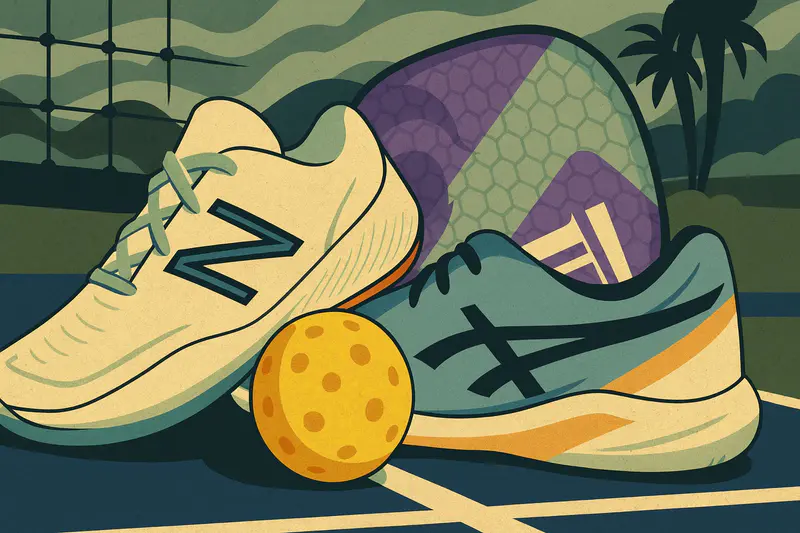
If you’re just starting your pickleball journey—welcome! You’ve picked up one of the fastest-growing and most fun sports out there. You’ve got your paddle, your balls, and you’re ready to hit the court.
But wait. Before you lace up those comfy running shoes and dash into your first game, we need to have a serious chat.
That plush, perfectly cushioned footwear that makes your morning jog feel effortless? It's actually a risk when you play pickleball. Using the wrong shoes—especially running shoes—can lead to painful injuries and sideline you right when you’re starting to fall in love with the game.
Let’s break down exactly why your favorite sneakers are secretly setting you up for a foot or ankle disaster, and what you should be wearing instead.
Why Pickleball is a Shoe Killer (and Why Running Shoes Fail)
Pickleball might look simple, but the movement on the court is intense and highly specific. This isn't tennis, and it's definitely not jogging. It's a game of quick, explosive, and often unexpected movements.
Running Shoes: Built for One Direction
Running shoes are engineered for one thing: forward motion.
Heel-to-Toe Rocker: They often have a high, soft heel and a curved sole design that encourages your foot to roll smoothly from back to front, propelling you forward. This is great for a run, but terrible for a sudden stop or a diagonal step on the court.
Pillowy Cushioning: The thick, plush soles you love absorb impact when you hit the pavement. On a hard pickleball court, that softness is actually unstable. When you try to pivot quickly, your foot will sink slightly into the soft foam, slowing your reaction time and increasing the risk of rolling your ankle.
Zero Lateral Support: This is the most critical difference. Running shoes are designed with flimsy, breathable mesh uppers because you’re not moving side-to-side. They offer virtually no support to stop your foot from sliding off the sole when you make a hard, sudden lateral movement (side-to-side shuffle).

Court Shoes: Built for Multi-Directional Movement
Pickleball shoes (or dedicated court shoes like tennis or volleyball trainers) are designed for the stop-start, side-to-side demands of the sport.
Running Shoes (Built for Forward) | Court Shoes (Built for All Directions) |
Soft, high, unstable sole. | Low-to-the-ground profile for stability and court feel. |
Minimal upper support. | Reinforced upper and side cages for lateral stability. |
Deep treads only in the front/back. | Non-marking sole with a dense, multi-directional tread pattern. |
Designed for shock absorption (vertical). | Designed for stability and quick pivoting (horizontal). |
In short, your running shoes are a forward-motion machine. Pickleball requires a stability machine.
The Hidden Risks: Injuries Caused by the Wrong Shoes
If you wear shoes that lack lateral support and stability, you are significantly increasing your risk of common pickleball injuries. This is especially true for beginners who might not have perfected their footwork yet.
1. The Ankle Roll (The Big One)
When you lean over to hit a dink near the kitchen line or dash to the side to intercept a ball, your weight shifts rapidly. Without a rigid shoe upper and a wide, stable sole base, your foot will slide over the sole and your ankle will roll. This often leads to a sprain, which can keep you off the court for weeks.
2. Plantar Fasciitis and Foot Fatigue
Running shoe cushioning might feel great initially, but they often lack the dense mid-foot support needed for the continuous jumping and pounding on a hard court surface. This can lead to stress, fatigue, and eventual issues like plantar fasciitis (heel and arch pain).
3. Knee and Hip Stress
Because running shoes are softer and higher off the ground, they give your foot more movement than the hard court does. This instability forces your knees and hips to compensate for the imbalance, leading to unnecessary stress on your joints with every rapid stop and start. Over time, this can turn into chronic pain.
Your Action Plan: What to Look for in a Great Pickleball Shoe
Finding the right shoe doesn't have to be complicated or expensive, but it does need to meet a few key criteria.
1. Lateral Stability is King
Reinforced Uppers: Look for shoes with sturdy leather, synthetic material, or thick plastic caging around the sides of the toe box and mid-foot. This is what keeps your foot centered over the sole during those crucial side shuffles.
Low Profile: The closer your foot is to the court, the lower your center of gravity, and the more stable you are. Avoid shoes with excessively thick or high heels.
Wide Base: The sole should flare out slightly at the base, especially at the ball of the foot, giving you a strong "footprint" to stabilize quick stops and pivots.
2. Non-Marking Outsole
Most pickleball is played on dedicated pickleball courts (often resurfaced tennis courts or smooth concrete). You need a dense rubber sole that provides excellent grip without leaving scuff marks. Look for the label "non-marking sole" when you buy.
3. Durability (Especially the Toe)
If you’re a beginner who tends to drag your toes when lunging (it happens!), look for shoes with a "toe bumper" or extra-thick rubber wrapping up and over the front of the shoe. Pickleball is tough on footwear, so investing in a durable shoe is worth it in the long run.
The Beginner’s Gear Budget: Where to Save, Where to Spend
As a beginner, you don't need a $200 elite shoe, but your footwear is the one place where you should budget for quality. Think of it as insurance for your body!
The Best Place to Start: Look for multi-purpose "court shoes" (sometimes labeled for tennis, volleyball, or even racquetball). They all share the crucial lateral support that your running shoes lack.
Ask a Coach: A private coach is an excellent way to accelerate your skills and is a great investment. They can also watch your footwork and recommend specific shoes or brands that cater to your movement style. (You can easily find a qualified coach on TeachMe.To!)
Save Money on Lessons: You can often save money by purchasing multi-session packages from a coach or by opting for group lessons instead of private ones, as they are a cost-effective way to learn foundational skills.
By setting aside the running shoes and choosing a stable, supportive court shoe, you are making the best possible investment in your long-term pickleball enjoyment and safety. Don't let a sprained ankle be the reason you stop playing!
Lace up the right gear, practice those crucial dink shots, and get ready to have a blast on the court!
Ready to up your game safely? Head over to TeachMe.To to find a vetted local pickleball coach who can help you master the footwork required to play confidently in your new shoes!