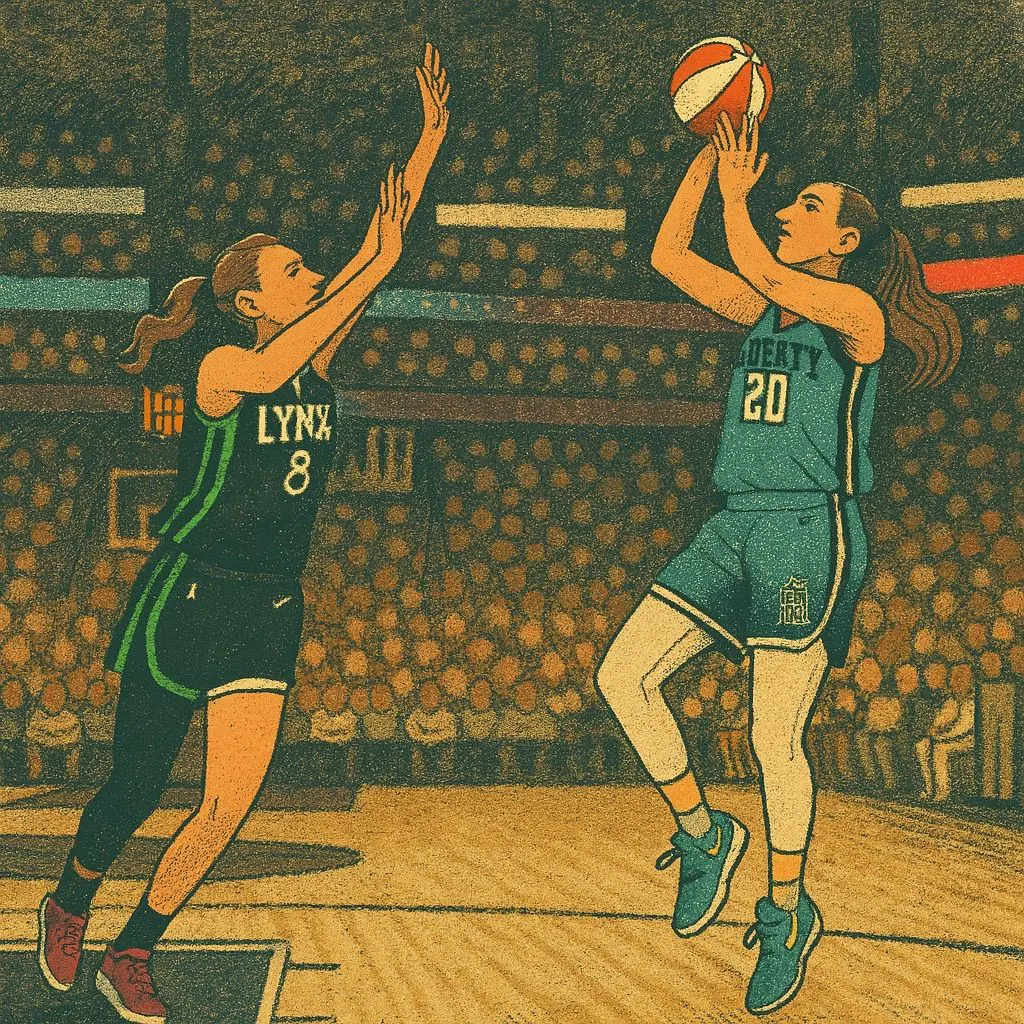
The buzz around women’s basketball is louder than ever, and a lot of that has to do with the recent surge in WNBA popularity. In the past couple of years, the WNBA has gone from a niche corner of professional sports to breaking TV records and packing arenas. Even if you haven’t followed the league closely, you might have noticed highlights popping up on your social media feed or friends talking about the latest superstar lighting it up on the court. So, what’s changed? Let’s dive into how the WNBA’s newfound popularity is fueling greater interest in female hoops at all levels, from pro courts to playgrounds.
WNBA on the Rise: Record Viewership and Packed Arenas
For anyone still thinking the WNBA isn’t drawing eyes, think again. The league is literally having its best years in decades. In 2024, the WNBA delivered its most-watched season in 24 years. Across ABC, ESPN, CBS, and other channels, more than 54 million viewers tuned in at some point during the season. To put that in perspective, games on ESPN averaged 1.19 million viewers, a whopping 170% increase from the previous year. And it’s not just TV; arenas are buzzing too. The 2024 season saw the league’s highest total attendance in 22 years, with crowds nearly 50% larger than the year before. Several games even sold out 20,000-seat arenas, smashing single-game attendance records.
What’s driving this spike? A perfect storm of factors. First, there’s better visibility, more games are being shown on major networks, so casual fans are stumbling onto WNBA action without having to dig around on obscure channels. Second, media coverage and marketing have improved. The league and its partners are actively promoting star players and big matchups. For example, the WNBA All-Star Game in 2024 was on ABC and drew 3.4 million viewers, up 305% from the previous year’s All-Star. It turns out when you put women’s basketball on the big stage, fans show up.
Then there’s the social media factor. The WNBA has been crushing it online, nearly 2 billion video views on social platforms in 2024. Highlights like buzzer-beaters, crafty assists, and even off-court moments are going viral, reaching younger audiences. In short, the WNBA is suddenly “cool” to follow, and that online hype is translating into real-world interest, TV ratings, ticket sales, merchandise, you name it. (Speaking of merchandise, WNBA jersey and apparel sales jumped 601% in 2024, which means a lot more people rocking WNBA hoodies and player jerseys on the street.)
Star Power: New Icons Fueling the Hype
Nothing sells a sport like superstar players, and the WNBA’s recent boom owes a lot to a new generation of iconic athletes capturing fans’ imaginations. A few years ago, names like Sabrina Ionescu, A’ja Wilson, and Breanna Stewart were starting to gain traction. Now they’re practically household names for sports fans. These stars are charismatic, insanely talented, and they’ve been actively engaging with fans, whether it’s Sabrina Ionescu shattering the 3-point contest record or A’ja Wilson celebrating a championship with her Las Vegas Aces. They’ve helped prove that women’s basketball can produce big personalities and jaw-dropping highlights just like any other major league.
College Star Power

But perhaps the biggest jolt of star power came from the college ranks. The past two NCAA women’s seasons introduced us to phenoms like Caitlin Clark and Angel Reese, who became must-see TV during March Madness. These players brought millions of new eyeballs to women’s hoops. (We’ll talk more about the NCAA in a moment, but trust us, it was huge.) When the WNBA drafted these college stars, a whole wave of their fans followed along to the pro league. For instance, after dazzling in college, Caitlin Clark was drafted #1 by the Indiana Fever in 2024, and her replica jersey sold out the very next day. In her rookie season, Clark didn’t disappoint: she racked up record stats (like the most assists by a rookie and fastest to 100 three-pointers) and instantly lifted interest in her team. Similarly, Angel Reese, a breakout collegiate champion, made her WNBA debut and brought with her a massive following of fans who had watched her iconic college moments.
The influence of these young stars can’t be overstated. In fact, the WNBA’s early 2024 TV ratings spiked largely thanks to the “rookie class” hype. In the first week of the 2024 season, ESPN viewership was averaging over a million per game, up 226% from the previous year’s start, and a lot of that was people tuning in specifically to watch newly drafted phenoms play their first pro games. One much-hyped debut (featuring a top rookie matchup) drew 2.1 million viewers, the most for any WNBA game on ESPN up to that point. Clearly, star power sells.
What’s also interesting is who’s watching. It’s not just longtime women’s basketball fans anymore; it’s new demographics. One of the biggest jumps in WNBA viewership recently has come from girls aged 12 to 17. Young girls are seeing these amazing athletes on TV and thinking, Wow, this is awesome. They’re buying the jerseys, following players on TikTok, and begging their parents to take them to games. The role-model effect is real, today’s WNBA stars are directly inspiring the next generation of players and fans.
And let’s not forget the veterans who paved the way. In 2022, legends like Sue Bird and Sylvia Fowles had farewell tours that brought out huge crowds, showing the appreciation for the trailblazers of the league. Bird’s final season, for example, saw record attendance for Seattle and countless tributes, a reminder that these pioneers built the foundation that today’s popularity is built on. As Sue Bird herself noted, women’s basketball is “thriving” and no longer asking for legitimacy, it’s earning it.
College Basketball Boom: March Madness Making History
The WNBA’s rise hasn’t happened in isolation, it’s part of a bigger surge in women’s basketball interest that’s visible at the college level too. If you needed proof, just look at the past two NCAA Women’s March Madness tournaments. In 2023, the national championship game (LSU vs. Iowa) drew 9.9 million TV viewers, the most ever for a women’s college game at the time. That alone was an eye-opener, doubling the previous year’s audience. But then came 2024, which blew even that record out of the water. The title game between Iowa and South Carolina attracted 18.9 million viewers and peaked at an astonishing 24.1 million during the climax. To put that in context: the women’s final in 2024 outdrew the men’s final by nearly 4 million viewers (for the first time ever). In fact, it was the most-watched basketball game at any level (college or pro) in the U.S. since 2019. Yes, you read that right, a women’s college game had more eyeballs than any recent NBA Finals game or men’s March Madness matchup.
It’s hard to overstate how game-changing this is. Suddenly, women’s college players and games were dominating sports headlines. Fans were live-tweeting plays, debating calls, and even engaging in fiery post-game discussions. These athletes became cultural icons overnight, trending on TikTok and getting shoutouts from pro athletes and celebrities. And naturally, all that college excitement flowed into the WNBA when many of these stars went pro. The momentum carried over, college fans wanted to see how their favorite players would fare in the WNBA, keeping those TV ratings high and giving the league a steady stream of fresh fan interest.
Importantly, the excitement around college women’s hoops isn’t just about a few star players, it’s lifting the sport across the board. Schools that never used to get much attention are seeing attendance bumps and newfound community interest. For example, one mid-major program, Northern Kentucky University, reported noticeable increases in crowd sizes in 2023-24, especially whenever there were youth groups or promotions tied to women’s games. Their marketing staff directly credits the “Caitlin Clark effect,” noting how Clark “put women’s basketball on the map” and inspired young girls in the area, many of whom showed up to NKU games wearing Clark’s Iowa jersey or Fever gear. It’s a ripple effect: a superstar at the national level can spark interest even for local teams that those kids might not have paid attention to before.
And the college surge isn’t just at game time, it’s also visible in off-court buzz like merchandise and social media. The NCAA women’s tournament had its merchandise sell out in some cases, and social media mentions for the women’s Final Four were through the roof. Plus, corporate sponsors are finally seeing the light and investing more in women’s college programs, which means better facilities and marketing, all of which help raise the profile of the game. The line between NCAA and WNBA fandom is blurring into one big support for women’s basketball overall, which is something really new and exciting to see.
Grassroots Growth: From Playgrounds to Pros
One of the coolest outcomes of the WNBA and NCAA basketball boom is how it’s igniting grassroots interest in the sport. More girls (and boys) at the youth level are picking up a basketball, joining teams, and dreaming a little bigger now because they see a future in the sport. In fact, recent data shows that girls’ participation in youth sports is at its highest in at least a decade, even as boys’ participation has declined somewhat. The visibility of women’s hoops is a big factor here. Young girls who watch a WNBA game or the Women’s Final Four can now genuinely picture themselves out there someday, and that’s hugely motivating.
Basketball in particular is having a moment among youth sports. Coming out of the pandemic, basketball became the most-played sport for American kids, with nearly 1 in 4 youth playing it in 2022 and total participation up 15% compared to 2019. Unlike some sports that saw drops, basketball participation actually increased, adding millions of new young players. Part of that is because basketball is relatively accessible (you just need a ball and a hoop), but it’s also because kids see their heroes on TV and want to be like them. When WNBA players like Candace Parker or Nneka Ogwumike host youth clinics, or college champs cut down the nets on national TV, it lights a spark in little kids watching. Suddenly, it’s not just about watching the stars, it’s about joining in the fun.
Communities and organizations are capitalizing on this interest with grassroots initiatives. The WNBA and partners have launched programs with brands (like a multiyear partnership with New Balance) to grow the women’s game at the grassroots level, holding clinics, funding youth leagues, and improving access to facilities. Colleges are doing their part too: during the Horizon League women’s championship in 2023, the league brought in 3,000 local schoolkids for a special “School Day” game event, giving many of them their first taste of a live college basketball atmosphere. They even set up stations to teach kids about the sport. This kind of outreach is building a pipeline of future players and fans. As one Horizon League official put it, “It’s not a moment. It’s a movement,” emphasizing that they want to nurture this groundswell so it isn’t just a flash in the pan.
And let’s talk about role models at the grassroots. WNBA figures have become much more visible in local communities. It’s not unusual now for WNBA stars to have their own basketball camps or for WNBA teams to partner with local schools. For instance, when the Indiana Fever’s front office leaders (like Basketball Operations President Kelly Krauskopf) speak at community events, it sends a powerful message to young girls that “we see you, and there’s a place for you in this sport.” The knock-on effect is more girls trying out for their school teams, more youth tournament entries, and even improved attendance at women’s high school games. All these little grassroots wins add up over time, feeding the top of the funnel with passionate talent and fans.
Not Just a Moment, A Movement
The consensus among athletes, coaches, and even business analysts is that we’re in the midst of a women’s basketball renaissance, not a fleeting trend. The WNBA’s commissioner has talked about expansion and investment, and indeed the league is already gearing up to add new teams for the first time in over a decade (hello, Bay Area and Toronto!). That means more roster spots for players, more cities with a hometown team to cheer for, and generally a broader footprint for the league. It’s a sign that the powers that be are confident this surge of interest is here to stay. Likewise, NCAA programs are getting more TV coverage and better marketing, ensuring that the next crop of stars will be even more well-known by the time they go pro.
Players themselves feel the sea change. Washington Mystics center Shakira Austin captured it well when she noted that last year saw “peaks in attendance, peaks in sales and tickets,” proving that people are dedicated to the sport and that the attention is only going to elevate further. The excitement is palpable, from the top levels down to the grassroots. As fans, we’re not just witnessing a more popular league, we’re witnessing a cultural shift in how women’s sports are perceived. Brands and sponsors are jumping onboard, broadcasters are realizing women’s games can draw big ratings, and young athletes are seizing opportunities that barely existed a generation ago. The narrative has shifted from “Will people ever care about women’s basketball?” to “This is something people care about right now, and it’s growing.”
For the indifferent observer who maybe wasn’t following along until now, consider this an invitation. There’s never been a more exciting time to tune into a WNBA game or catch the women’s Final Four. The quality of play is through the roof, the storylines are compelling, and the atmosphere at games (both in-person and among the TV audience) is electric. Don’t know where to start? You could pick a team (perhaps a dynasty like the Las Vegas Aces or an underdog on the rise) or follow a player whose story interests you (say, the charismatic Sabrina Ionescu or the ultra-competitive Caitlin Clark). You might just find yourself yelling at the screen during a close game or planning a trip to catch a game live.
And if all this inspiration has you or someone you know itching to shoot some hoops yourself, go for it! There are more opportunities than ever for girls and women to get involved in basketball, whether it’s joining a local league, playing at school, or even booking a one-on-one lesson with a coach. In fact, platforms like TeachMe.To can connect you with personal basketball trainers for a 1:1 session, which is a great way to learn the ropes or take your skills to the next level. 🏀 Even if you’re just playing pick-up at the park, you’ll be part of the growing community that’s fueling the future of women’s basketball.
The bottom line? The WNBA’s rise in popularity isn’t happening in a vacuum, it’s lifting the entire women’s basketball landscape. From higher TV ratings and game attendance to more kids saying “I want to play ball,” the impact is everywhere. What once was considered a sideshow is now center stage, and it’s incredibly rewarding to watch. So don’t miss out on the movement. Tune in, cheer loud, play hard, and who knows, you might just witness the next chapter of sports history in the making, as women’s basketball continues to soar to new heights.
Ready to get in the game? Whether as a fan or a player, there’s never been a better time. Grab a ticket to a WNBA game, catch the next NCAA women’s matchup on TV, or lace up and hit the court yourself. The future of women’s basketball is being written right now, and everyone’s invited to be a part of the story.