The difference between making the roster and watching from the sidelines often comes down to what happens between seasons. While your competition spends the off-season running pickup games and hitting the gym without direction, a structured training plan transforms raw athleticism into measurable performance gains.
The off-season represents your most valuable development window. Without the physical demands of weekly games and daily practices, your body can actually adapt to progressive training stress. This 8-12 week period allows you to address weaknesses, build strength reserves, and develop the explosive power that separates elite players from the pack.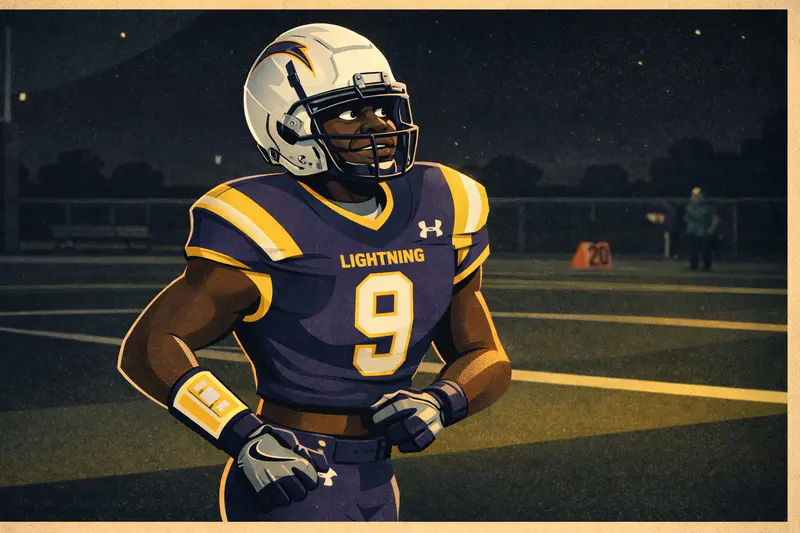
Understanding Off-Season Football Periodization
What is Periodization in Football Training?
Periodization divides your training year into strategic phases, each targeting specific physical adaptations. The framework operates across three time scales: macrocycles (your entire season), mesocycles (several weeks to months), and microcycles (individual training weeks).
This structure prevents the common mistake of training everything at once with equal intensity. Your body adapts best when you focus on specific qualities in sequence, building a foundation before layering on complexity.
The Three Training Phases Explained
The accumulation phase builds your base through higher training volumes and technical skill development. You'll perform more sets and reps at moderate intensities, establishing movement patterns and work capacity that support later phases.
Intensification follows, reducing total volume while cranking up intensity. This phase occurs in the weeks before training camp, preparing your nervous system for maximal efforts.
The realization phase applies your newfound strength and power to football-specific movements. You'll practice explosive actions that directly translate to on-field performance, timing this phase to peak right as organized team activities begin.
Typical Off-Season Timeline and Structure
Most programs run 8-12 weeks, though some extend to 16 weeks depending on your competitive level. A standard week includes three strength sessions, two speed or agility workouts, and two complete recovery days.
The NFL structures its off-season across nine weeks in three distinct phases. Phase One dedicates two weeks to meetings and conditioning, Phase Two adds three weeks of on-field drills, and Phase Three continues through the remaining weeks before training camp.
Speed Training: Improving Your 40-Yard Dash Time
Understanding 40-Yard Dash Mechanics
The 40-yard dash tests continuous acceleration rather than top-end speed. Unlike 100-meter sprinters who reach maximum velocity and maintain it, football players accelerate through the entire 40 yards with limited time in the max velocity zone.
Your 10-yard split reveals lower-body explosiveness and pure acceleration ability. The 20-yard split shows how long you can continue accelerating before transitioning to upright running mechanics. Both splits matter more for position evaluation than your final time alone.
Most NFL Combine athletes complete the 40-yard dash in 19-21 steps. Efficient stride patterns combined with powerful ground force application separate good times from great ones.
Key Acceleration Drills and Techniques
Your first three steps determine everything. Focus on applying "down force" by pushing the ground away from you rather than reaching forward with your feet. The goal is 3.5 steps to cover 5 yards and 6-7 steps for 10 yards.
Start position matters more than most players realize. Set your thumbs directly under your shoulders to maximize distance from the ground. Your shoulders should sit over or slightly behind your hands, creating the forward lean necessary for explosive acceleration.
Wall drills teach proper shin angles and body positions. Stand facing a wall in a sprint stance, then drive one knee up while maintaining forward lean. This simple drill ingrains the mechanics you need when the stopwatch starts.
Sprint Programming for Football Players
Train speed 2-3 times weekly, mixing acceleration work with lower-body power development. Athletes who focused primarily on acceleration rather than max velocity improved their Combine times by nearly two-tenths of a second, running mostly 10 and 20-yard sprints in training.
Your speed sessions should emphasize quality over quantity. Perform 6-8 sprints of 10-20 yards with complete recovery between reps. If your mechanics deteriorate or times slow, you're done for the day.
Combine sprint work with power exercises like bounds and hip-focused movements. This integrated approach addresses both technical execution and the physical capacity to apply force rapidly.
Common 40-Time Improvement Mistakes
Poor stance positioning kills acceleration before you take your first step. Many players set up too close to the line, preventing the forward shin angle necessary for powerful ground contact. Moving back a few inches trades starting position for mechanical advantage.
Neglecting lower-body strength development limits your force production capacity. You can perfect your technique, but without the raw strength to drive into the ground, your times plateau. Squat and deadlift variations build the foundation that speed work refines.
Comprehensive Strength Training Program
Essential Compound Movements
Center your program on squats, deadlifts, bench press, cleans, and snatches. These total-body movements develop coordinated strength across multiple joints and muscle groups simultaneously.
Box squats take stress off your knees while building tremendous leg power. Step up to the box, sit back until you're seated, then explode upward. This variation teaches you to generate force from a dead stop, directly applicable to football movements.
Single-leg exercises like split squats and single-leg deadlifts address imbalances while improving balance and coordination. Football demands stability on one leg constantly, whether you're cutting, jumping, or absorbing contact.
Hypertrophy Phase Training
Spend 4-6 weeks building muscle mass before transitioning to strength-focused work. This phase uses moderate loads (65-75% of your one-rep max) for 8-12 reps per set, accumulating enough volume to trigger muscle growth.
Your muscles need this foundation to support the heavier loads coming in later phases. Think of hypertrophy training as expanding your engine's displacement before tuning it for maximum horsepower.
Focus on controlled tempos and full ranges of motion. The goal isn't to move maximum weight but to create sufficient mechanical tension and metabolic stress for adaptation.
Strength Phase Progression
Transition to heavier loads and lower reps targeting maximal muscle fiber recruitment. You'll work in the 3-6 rep range at 80-90% intensity, training your nervous system to coordinate more muscle fibers simultaneously.
Rest periods extend to 3-5 minutes between sets. Your goal is complete recovery so each set receives maximum effort. This isn't conditioning work; it's neural adaptation training.
Strength gains come from both muscle growth and improved motor unit recruitment. Your brain learns to activate dormant muscle fibers, accessing strength reserves you already possess.
Power Development Phase
Apply your newfound strength explosively using 50-80% of your one-rep max. Power cleans, jump squats, and Olympic lift variations teach you to move loads quickly, the defining characteristic of athletic performance.
The key distinction: strength is force production, power is force production at speed. Football rarely allows you the luxury of slow, grinding movements. You need to generate maximum force in minimal time.
Perform each rep with maximum intent. Even if the bar moves slowly due to load, your effort should be explosive. This intent trains your nervous system for rapid force development.
Sample Weekly Strength Training Split
Day 1 emphasizes lower body with squats, Romanian deadlifts, and single-leg work. Day 2 targets upper body through bench press variations, rows, and overhead pressing. Day 3 combines full-body power movements like cleans, snatches, and plyometric exercises.
This structure provides 48-72 hours between sessions targeting the same muscle groups. Your body adapts during recovery, not during training, making rest days as important as work days.
Adjust volume and intensity based on your phase. Hypertrophy weeks might include 4-5 exercises per session with higher reps, while strength phases reduce exercises to 3-4 with heavier loads.
Position-Specific Training Protocols
Offensive and Defensive Line Training
Linemen require maximal strength combined with explosive power for rapid movement off the snap. Your training should emphasize heavy compound lifts enhanced with plyometric work to develop the unique combination of mass and athleticism your position demands.
Box squats and trap bar deadlifts build the leg strength necessary to move opposing players. Add depth jumps and box jumps to convert that strength into explosive first-step quickness.
Don't neglect conditioning specific to your positional demands. Linemen work in 4-7 second bursts with incomplete recovery between plays. Short, intense intervals with limited rest mimic game conditions better than long steady-state cardio.
Quarterback-Specific Development
Quarterback training starts from the ground up, focusing on balance and body control through proper biomechanics. Your throwing power originates in your hips and core, not your arm.
Footwork drills under center and in shotgun establish consistent mechanics. Practice your drop steps until they become automatic, allowing you to focus on reading defenses rather than thinking about your feet.
Hip mobility directly impacts your throwing mechanics and ability to maneuver in the pocket. Include 90/90 hip stretches, hip flexor work, and rotational exercises in your daily routine. Build stamina through position-specific conditioning since you're involved in every offensive play.
Wide Receiver and Defensive Back Training
Speed and agility define your position. Balance route-running footwork and release techniques with strength work emphasizing speed-strength over maximal loads.
Your strength training should support explosive movements without adding bulk that compromises speed. Focus on Olympic lift variations, plyometrics, and single-leg power exercises that develop force production without excessive muscle mass.
Dedicate significant time to position-specific skill work. Route running, release moves off the line, and catching drills at various angles translate more directly to performance than another set of squats.
Running Back and Linebacker Training
Your positions demand versatility: explosive power for short bursts, agility for directional changes, and balanced strength for contact situations. Combine power development through Olympic lifts with agility training and upper/lower body strength work.
Single-leg exercises prove especially valuable since you're constantly cutting, jumping, and absorbing contact on one leg. Bulgarian split squats, single-leg Romanian deadlifts, and lateral bounds should feature prominently.
Core stability work prevents injury and improves change-of-direction ability. Planks, Pallof presses, and anti-rotation exercises build the trunk stability necessary for violent directional changes.
Agility and Cone Drill Programming
Essential Cone Drill Patterns
The 5-10-5 shuttle tests your ability to change direction rapidly. Start at the middle cone, sprint 5 yards right, touch the line, sprint 10 yards left, touch that line, then sprint 5 yards back through the middle.
The T-drill combines forward sprinting, lateral shuffling, and backpedaling. Sprint 10 yards forward, shuffle 5 yards right, shuffle 10 yards left, shuffle 5 yards back to center, then backpedal to start. This pattern mimics defensive back movements.
The L-drill (3-cone drill) challenges your ability to change direction at high speed. Sprint 5 yards, touch the cone, return to start, sprint back to the first cone, circle around a second cone 5 yards away, then sprint back through the start.
Agility Training Frequency and Progression
Schedule agility work 2-3 times weekly with progressive intensity increases. Early in your program, focus on perfect technique at moderate speeds. As movement patterns solidify, increase speed while maintaining form.
Maintain a low center of gravity throughout directional changes. Your hips should stay below your shoulders, allowing you to generate force into the ground rather than standing upright and losing power.
Rest adequately between reps. Agility drills train your nervous system's ability to coordinate rapid movements. Fatigue compromises motor patterns, ingraining bad habits instead of building athletic capacity.
Position-Specific Agility Applications
Defensive backs need exceptional lateral quickness for coverage responsibilities. Emphasize shuffle patterns, hip turns, and backpedaling drills that replicate man and zone coverage movements.
Linemen benefit more from linear explosiveness and short-area quickness. Your agility work should focus on first-step quickness and the ability to redirect quickly within 5 yards rather than elaborate cone patterns.
Vertical Jump and Plyometric Training
Plyometric Training Benefits for Football
Plyometric training produces statistically significant improvements in vertical jump height: 4.7% for squat jumps, 8.7% for countermovement jumps, 7.5% for countermovement jumps with arm swing, and 4.7% for drop jumps. These gains translate directly to on-field performance.
Beyond jumping ability, plyometrics enhance sprint performance, change-of-direction capacity, and running economy. The explosive power you develop transfers to every athletic movement football demands.
Plyometric training improves your muscles' ability to generate maximum force in minimum time. This reactive strength proves critical for football's constant starting, stopping, and directional changes.
Key Plyometric Exercises
Depth jumps develop reactive strength by stepping off a raised platform and immediately exploding upward upon landing. Minimize ground contact time, teaching your muscles to produce force rapidly through the stretch-shortening cycle.
Box jumps target explosive power in your quads, glutes, and calves. Start with a sturdy box at knee height, explosively jump onto it, and land softly with bent knees. Focus on height and control rather than speed.
Tuck jumps require you to jump as high as possible while bringing your knees toward your chest. This high-impact drill improves power and rapid muscle contractions necessary for explosive movements.
Single-leg bounds increase leg strength, power, and explosive coordination. Drive off one leg, maximizing horizontal distance while minimizing ground contact time. This exercise directly transfers to sprinting mechanics.
Plyometric Programming Guidelines
Limit plyometric training to 2-3 weekly sessions with maximum 60 ground contacts per session. Volume is measured in foot contacts with the ground, not sets or reps.
Take 30 seconds recovery between individual exercises and two minutes between sets. Your fast-twitch muscle fibers need adequate rest to produce maximum power on each rep.
Warm up thoroughly before plyometric work. These high-intensity exercises demand full muscle activation and joint preparation to prevent injury and maximize performance.
Nutrition for Off-Season Athletes
Macronutrient Requirements for Football Players
Carbohydrates should comprise 50-60% of your total daily caloric intake as they fuel the high-intensity intermittent efforts football demands. Your glycogen stores directly impact training quality and recovery capacity.
Increase protein intake to approximately 2.0 grams per kilogram of body weight during the off-season to support muscle growth and address losses from the competitive season. Spread protein across 4-5 meals daily rather than concentrating it in one or two large servings.
Most players can meet protein requirements through whole foods rather than supplements. Chicken, turkey, lean beef, fish, eggs, and dairy provide complete amino acid profiles with additional micronutrients supplements lack.
Off-Season Eating Strategies
Apply the 80:20 guideline: eat for physiological needs 80% of the time and for enjoyment 20% of the time. This balance supports your training goals while maintaining dietary flexibility and mental health.
Adjust total caloric intake for reduced energy expenditure during the off-season. Without daily practices and weekly games, you'll gain unwanted body fat if you maintain in-season eating habits. Track your weight weekly and adjust portions accordingly.
Individualize your nutrition plan based on position, body composition goals, and training phase. Linemen building mass need different caloric intakes than defensive backs maintaining speed-to-weight ratios.
Hydration and Recovery Nutrition
Consistent hydration throughout the day supports performance better than chugging water immediately before training. Aim for pale yellow urine as a practical hydration indicator.
Post-training meals should include vegetables, lean protein, and whole grains to replenish glycogen stores and provide amino acids for muscle repair. Timing matters less than total daily intake, but eating within two hours of training optimizes recovery.
Recovery and Injury Prevention Strategies
Active Recovery Protocols
Light aerobic work, dynamic stretching, foam rolling, and mobility exercises accelerate recovery on off-days. These activities increase blood flow without creating additional training stress.
Foam rolling reduces delayed-onset muscle soreness and maintains flexibility through self-myofascial release. Spend 10-15 minutes targeting major muscle groups, holding pressure on tender spots for 30-60 seconds.
Walking, cycling, or swimming at conversational pace promotes recovery without compromising adaptation. Keep intensity low; you're enhancing circulation, not training cardiovascular capacity.
Sleep and Passive Recovery
Mandate 7-8 hours of sleep nightly as your foundational recovery strategy. Athletes who implement comprehensive recovery protocols including adequate sleep experience 40% fewer injuries and demonstrate superior performance metrics.
Sleep quality matters as much as duration. Establish consistent sleep and wake times, minimize screen exposure before bed, and keep your bedroom cool and dark. Your body repairs tissue and consolidates motor learning during deep sleep stages.
After high-intensity training, you need 48-72 hours for complete recovery. Plan your training week accordingly, avoiding back-to-back high-stress sessions targeting the same muscle groups or energy systems.
Injury Prevention Exercise Integration
Nordic curls build hamstring strength eccentrically, addressing the muscle group responsible for 37% of football injuries. Copenhagen planks strengthen your adductors, preventing groin strains that account for 23% of muscle injuries.
Core stability exercises like dead bugs, bird dogs, and Pallof presses improve trunk control during dynamic movements. A stable core transfers force efficiently between your upper and lower body while protecting your spine.
Performance Testing and Benchmarks
Key Athletic Tests for Football
Vertical jump measures lower-body explosiveness and power, critical for positions requiring quick bursts and leaping ability. Top performances often exceed 40 inches, though position-specific standards vary significantly.
The broad jump tests lower-body power and balance through horizontal displacement. This single effort reveals your ability to generate force and control your body through space.
The 3-cone drill challenges your ability to change direction at high speed, showcasing balance, coordination, and body control. Times under 7 seconds indicate elite agility for most positions.
Position-Specific Performance Standards
Establish realistic goals based on position-specific norms rather than comparing yourself to athletes playing different roles. A 4.4-second 40-yard dash matters for defensive backs but proves less relevant for offensive linemen who rarely run more than 10 yards on any play.
Track multiple metrics to build a comprehensive athletic profile. A linebacker needs balanced performance across strength, speed, and agility tests, while a wide receiver might prioritize speed and vertical jump over maximal strength.
Tracking Progress Throughout Off-Season
Test at three points: baseline before starting your program, mid-program around week 6, and post-program before returning to team activities. This schedule provides enough time between assessments to see meaningful changes while identifying necessary adjustments.
Use identical testing protocols each time. Variations in warm-up, rest periods, or measurement techniques compromise data validity. Consistent conditions reveal true adaptation rather than testing artifacts.
Document not just results but also how you felt during testing. Sometimes poor performance reflects inadequate recovery rather than failed programming. Context helps you interpret numbers accurately.
Creating Your Personalized 8-12 Week Plan
Week-by-Week Training Template
Weeks 1-4 emphasize hypertrophy with 4 sets of 8-12 reps at 65-75% intensity. Include a deload in week 4, reducing volume by 40-50% while maintaining intensity to allow accumulated fatigue to dissipate.
Weeks 5-8 shift to strength development with 4-5 sets of 3-6 reps at 80-90% intensity. Increase rest periods between sets and reduce total exercise volume. Schedule another deload in week 8.
Weeks 9-12 focus on power application using 3-4 sets of 3-5 reps at 50-80% intensity performed explosively. Integrate more plyometric work and position-specific drills as you approach team activities.
Adjusting for Your Position and Goals
Linemen should emphasize maximal strength development with higher training loads and longer rest periods. Your power-to-weight ratio matters less than absolute strength and explosive first-step quickness.
Skill position players need to balance strength development with speed maintenance. Reduce training volume during strength phases to prevent excessive fatigue that compromises sprint performance.
Assess your individual weaknesses honestly. If you're strong but slow, dedicate more training time to speed development. If you're fast but get pushed around, prioritize strength work.
When to Seek Professional Coaching
Complex Olympic lift variations require expert instruction to perform safely and effectively. Poor technique not only limits results but increases injury risk significantly.
Persistent plateaus despite consistent effort indicate the need for individualized programming. A qualified coach identifies limiting factors you might miss and adjusts variables systematically.
Athletes with injury histories benefit from professional guidance addressing movement compensations and structural imbalances. Generic programs can't account for your specific limitations and needs.
TeachMe.To connects you with experienced football coaches who provide personalized training plans, technique refinement, and accountability throughout your off-season development. Professional coaching transforms good intentions into measurable results.
Frequently Asked Questions
How long should an off-season football training program last?
Standard programs run 8-12 weeks, with some extending to 16 weeks depending on competitive level and available time before team activities resume. Structure your week with three strength sessions, two speed or agility workouts, and two complete recovery days.
What is the best way to improve 40-yard dash time?
Prioritize acceleration-focused training with 2-3 weekly speed sessions emphasizing 10-20 yard sprints rather than max velocity work. Combine sprint training with lower-body explosive strength development through squats, deadlifts, and Olympic lift variations. Athletes focusing primarily on acceleration rather than top-end speed have improved Combine times by nearly two-tenths of a second.
How should football players structure their off-season nutrition?
Target 50-60% carbohydrates for energy, approximately 2.0 grams of protein per kilogram of body weight for muscle development, and adjust total calories downward from in-season intake to account for reduced energy expenditure. Apply the 80:20 guideline, eating for physiological needs 80% of the time while allowing dietary flexibility 20% of the time.
What recovery strategies are most effective for football players?
Combine 7-8 hours of nightly sleep with active recovery sessions including light aerobic work, stretching, foam rolling, and mobility exercises. Athletes implementing comprehensive recovery protocols experience 40% fewer injuries and demonstrate superior performance metrics compared to those who neglect recovery.
What are the most important strength exercises for football players?
Center your program on squats, deadlifts, bench press, Olympic lifts (cleans and snatches), and single-leg variations. These compound movements develop coordinated strength across multiple joints and muscle groups simultaneously, building the foundation for football-specific power.
How can players improve their vertical jump for football?
Implement 2-3 weekly plyometric sessions including depth jumps, box jumps, tuck jumps, single-leg bounds, and squat jumps. Research shows plyometric training produces 4.7-8.7% improvements in vertical jump height depending on jump type, with gains transferring to sprint performance and change-of-direction ability.
What position-specific training do quarterbacks need?
Focus on footwork fundamentals under center and in shotgun, throwing mechanics emphasizing hip and core power generation, hip mobility for pocket movement, and stamina-building protocols beyond general strength work. Your training should address the biomechanics allowing maximum performance with minimum body stress.
How often should agility drills be performed during off-season?
Schedule agility training 2-3 times weekly with progressive intensity increases as movement patterns solidify. Maintain adequate recovery between sessions to allow your nervous system to adapt. Quality matters more than quantity; stop when technique deteriorates from fatigue.
Find a Football Coach Near You
Ready to get started? Browse local football coaches and book your first lesson:
Houston · Chicago · Dallas · See all cities →
Conclusion
The off-season separates players who hope for improvement from those who engineer it systematically. An 8-12 week structured training plan addressing strength, speed, agility, and recovery transforms your athletic capacity in ways random gym sessions never will.
Your competition is training. The question is whether they're following a proven progression or just going through the motions. This guide provides the framework; your consistency and effort determine the results.
For personalized coaching that adapts this framework to your specific position, weaknesses, and goals, connect with experienced trainers through TeachMe.To. Professional guidance accelerates your development and ensures you're maximizing every training session as you prepare for your best season yet.