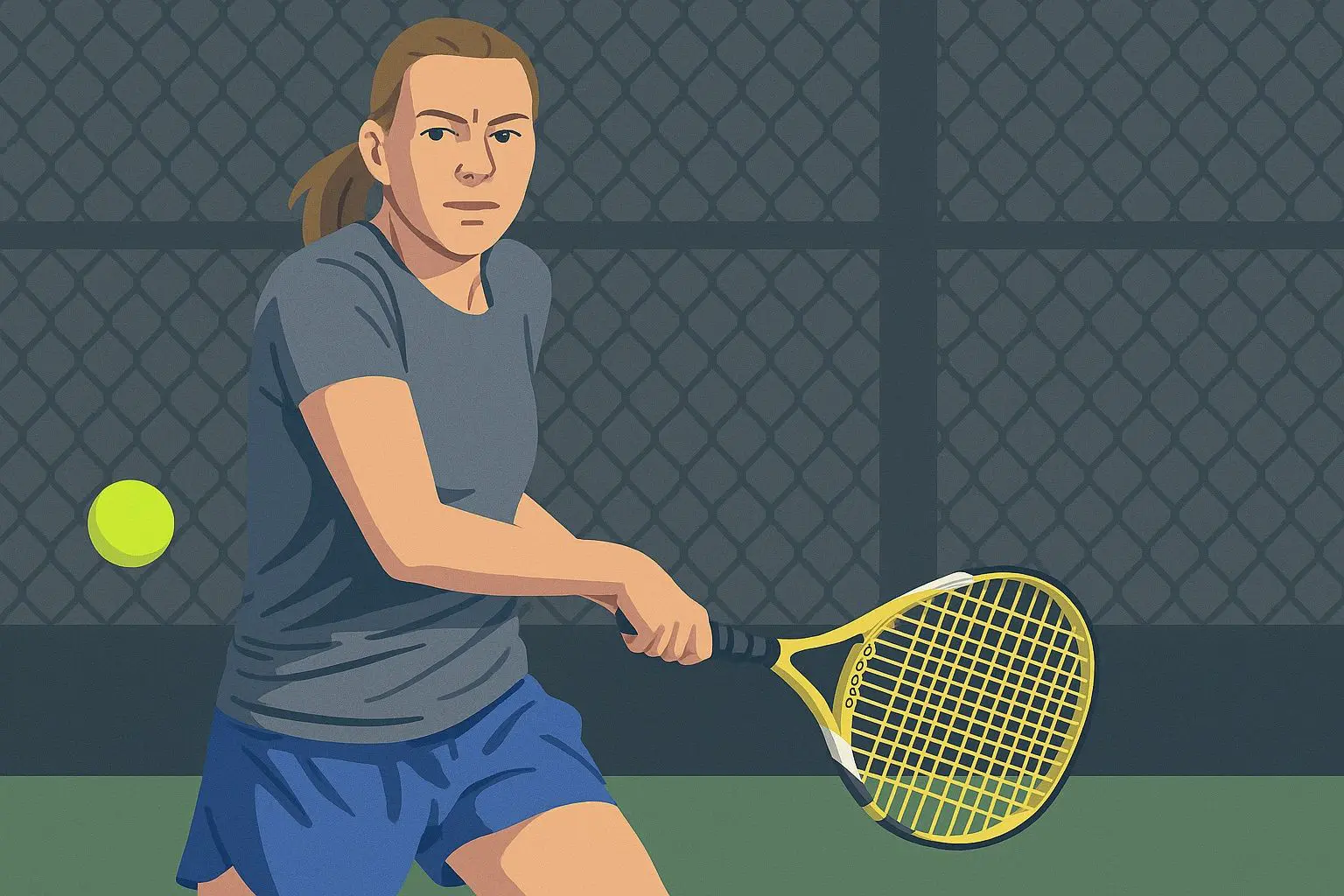
If you’re new to tennis, focus on consistency above all else. As coaches will tell you once you get on the court, rallying reliably – not ripping winners – is the foundation of early success. In tennis, the point often goes to the one who makes fewer mistakes, not the one who hits the most aces or winners. This article dives into why keeping the ball in play is the number one skill for beginners to learn.
Pros Emphasize Consistency and Patience

Andy Roddick once questioned improving his reliability: “My backhand is definitely a lot more solid and consistent. There were times when I couldn’t hit it into the ocean.” Even as a Grand Slam champion, Roddick knew consistency was a measure of progress. His humor highlights a truth: consistency doesn’t come easy, but it’s vital for improvement.
Other American stars echo this focus on steady play. Andre Agassi’s late-career resurgence was built on embracing patience. Under coach Brad Gilbert, Agassi learned to “focus on consistency and patience rather than trying to hit winners on every shot.” Instead of going for winners on every shot, he worked points until the right opportunity arose – a strategy that brought him back to #1 in the world.
The message from the pros is clear: consistency wins. As four-time major champion Jim Courier put it, “In tennis, you can’t control hitting a great shot every time, but you can control hitting a good shot every time.” Courier’s approach was to apply pressure through consistency and let the opponent self-destruct. Being able to hit solid shots repeatedly underpins so many champions’ games – and it should underpin yours as a beginner.
At the Start, Tennis Is a Game of Errors
Why such an emphasis on keeping the ball in play? Simply put, most points at the beginner and club level are decided by errors, not outright winners. Stats bear this out: coaching data shows that “unless you’re above a 5.0 level, the type of shot ending the most points will be an unforced error.” In fact,according to a study, recreational players often hit 2–3 times as many unforced errors as winners in a match. It's no surprise, then, that the player who misses less will usually win.
Consider these eye-opening stats and facts on rally outcomes:
- The vast majority of points end in errors: At pro tournaments, around 70% of points end with an error (forced or unforced) rather than a clean winner. For adult recreational players, errors account for roughly 75–80% of all points. That means out of 10 points, only 2–3 might be won by a winner – the rest are lost by someone making a mistake. Consistency capitalizes on this by “making the other player play one more ball” until they flub it.
- Rallies are short – someone misses: Even in pro tennis, about 70% of rallies are 4 shots or fewer. At beginner levels, rallies tend to be even shorter. How often have you seen two novices’ “rally” end after just one or two hits because someone nets the ball or sprays it long? Building rally consistency immediately puts you above many peers. As one coach put it, “winning points are more often the result of patient, consistent hitting” than of flashy shots. Chase consistency first, and points will swing your way by default when your opponent inevitably makes a mistake.
- “Consistency wins over everything.” It’s a common refrain among coaches that at the beginner/intermediate level matches are usually won by the player who makes fewer unforced errors. Prioritizing placement and reliability over power pays off. The real key at that level is keeping the ball deep and waiting for the opponent’s mistake.
In short, points are more often lost than won. Every time you keep a ball in play, you give your opponent a chance to mess up. Especially as a beginner, you’ll face fellow novices who haven’t grooved their strokes; consistency puts pressure on those shaky strokes. As five-time major champion** Billie Jean King famously said, “Champions keep the ball in play until the other person drops.” It’s not about hitting a winner, it’s about giving the opponent one more opportunity to miss.
Coaching Insights: Margin for Error and Rally Tolerance
How can a beginner become more consistent? Top coaches focus on developing what’s called “margin for error”, which is hitting safer targets and net height – and “rally tolerance” – the mental toughness to trade lots of shots. Here are a few fundamental tips from coaches on building consistency:
Give yourself plenty of net clearance and court margin on every shot. One common beginner mistake is aiming too low over the net or too close to the lines in an attempt to hit a “perfect” shot. Pro players, on the other hand, aim with large safety margins. As coaching director Steve Annacone notes, even the pros rarely aim for lines; a ball that clips the line was probably intended a foot or two inside. He recommends beginners “pick a target about 3–5 feet from a line” so that even if you miss by a bit, the ball still lands in. Likewise, aim higher over the net. Hitting 3–6 feet above the net, maybe using topspin dramatically cuts down net errors while still landing the ball deep. Coaches often say “net clearance is the key to consistency” – a ball in the net can never go in, so give yourself height.
Strategies to use
- Use high-percentage patterns: Experienced coaches teach “high-percentage tennis” – strategies like hitting cross-court during rallies and only going for risky shots when you have an easy setup.
- Build rally tolerance step by step: Keeping 10 balls in play might sound daunting at first, so build up gradually. Many coaches use simple consistency drills, like “rally 5 in a row” with a partner. If you miss, start the count over until you can do 5, then try for 10.
Master the “boring” shots. Brad Gilbert, in his classic book Winning Ugly, tells players to excel at the mundane. For beginners, this means solidifying your routine shots – the rally forehand and backhand, the makeable second serve – so that they rarely break down under pressure. In practice, work on hitting medium-pace shots deep into the court over and over. It’s not glamorous, but if you can repeatedly hit a heavyweight “rally ball” that never misses, you will frustrate the heck out of error-prone opponents.
By applying these principles – generous net clearance, big targets, patience to hit “one more ball” – you’ll find your consistency and confidence increasing together. Fewer errors for you = more wins on the scoreboard.
Ready to Rally Longer?
Consistency is the connective tissue of tennis: when you commit to sending one more quality ball back over the net—aiming high, choosing generous targets, and waiting for the right opportunity—you shift the pressure to your opponent and dramatically reduce your own unforced‑error count. For beginners, that discipline accelerates improvement faster than any single power stroke ever could.
If you’re ready to turn these principles into durable habits, TeachMe.To can pair you with a certified coach who specialises in building consistency from the ground up. During a focused Consistency Session you will:
- Receive personalised, on‑court feedback that refines a repeatable rally‑ball technique.
- Internalise the net‑clearance checkpoints and court margins professionals rely on to keep rallies alive.
- Work through progressive rally‑tolerance drills so sustaining ten, fifteen, or twenty‑shot exchanges becomes second nature.
Lay that foundation now, and the highlight‑reel winners will follow naturally. Book a lesson on TeachMe.To today and make “just one more ball” your competitive advantage.
You can, also, learn to practice on your own besides your lessons to get even better quickly and be as consistent as possible.
Find a Tennis Coach Near You
Ready to get started? Browse local tennis coaches and book your first lesson:
Los Angeles · New York · San Francisco · Houston · Seattle · Toronto · Boston · Dallas · See all cities →