
The parent in front of me at the rec center was asking the same questions I'd asked three months earlier: "Is my daughter too young? How do I know if the instructor is qualified? What about safety?" Her six-year-old was bouncing a pickleball off the wall while we waited, already hooked on the sport before taking a single lesson.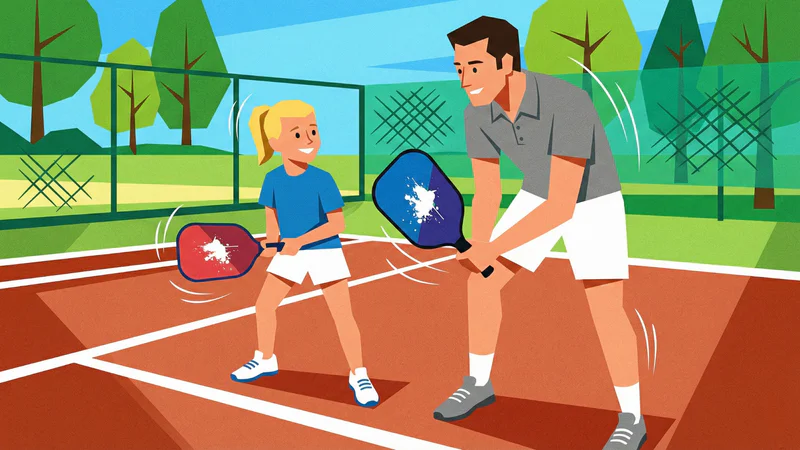
Find a Pickleball Coach Near You
Ready to get started? Browse local pickleball coaches and book your first lesson:
Los Angeles · San Diego · Las Vegas · Houston · Dallas · Toronto · Salt Lake City · See all cities →
Pickleball has been named the fastest-growing sport in the United States for four consecutive years (2021-2024), reaching 19.8 million participants in 2024. One million children started playing in 2023 alone, and youth ages 6-17 comprised 21.2% of players in 2021. You need clear guidance on coach selection, safety protocols, class structures, and age-appropriate instruction for your children.
Best Age to Start Pickleball Lessons
When Kids Are Ready to Begin
Most children can start pickleball around ages 4-5, though full gameplay typically becomes suitable around ages 8-10. Readiness varies by your child's coordination, interest, and physical development. Some kids embrace the sport immediately while others need time before they feel prepared to join in.
Organized competitions begin around ages 8-10, with serious junior tournament training starting between ages 10-12. Junior programs are typically designed for ages 5-13 depending on the facility.
Developmental Benefits for Children
Pickleball improves hand-eye coordination because the ball moves slowly enough for developing skills to succeed. The sport builds footwork, agility, and enhanced reflexes through court movement patterns. As a lower-impact activity, it protects growing joints and tendons compared to high-impact sports like basketball or soccer.
Beyond physical benefits, pickleball provides mental stimulation, mood stabilization, and an early introduction to teamwork. The smaller court size and slower ball speed give children confidence as they learn.
Understanding Pickleball Coach Certifications
Recognized Certification Organizations
USA Pickleball recognizes PPR, PCI, and RSPA as official education and certification partners. The Professional Pickleball Registry (PPR) is the largest international organization with over 15,000 certified coaches and serves as the official education partner of USA Pickleball. Pickleball Coaching International (PCI) offers 100% online programs ranging $149-$329, while the International Pickleball Teaching Professional Association (IPTPA) provides tiered certification levels globally.
What Certification Requires
Coaches must demonstrate competence in three areas: skills, teaching ability, and knowledge. IPTPA requires a 50-question written exam (80% minimum) and skills exam (80% minimum). Candidates must teach an observed one-hour lesson demonstrating instructional effectiveness.
Certified coaches understand rules, strokes, strategies, and proper shot selections. A minimum 3.5 skill rating is considered appropriate for teaching beginner students.
Why Certification Matters
Certification demonstrates recognized expertise and significantly strengthens instructor credibility. Certified coaches complete training covering essential coaching aspects and best practices. Certification provides you with baseline quality assurance for instruction, though it doesn't replace asking detailed questions about experience with children specifically.
Background Checks and Safety Vetting
Industry Standards for Youth Sports
Industry best practice requires checks for anyone interacting with minors annually. The National Council of Youth Sports endorses NCSI background checks meeting United States Olympic & Paralympic Committee requirements. Some states mandate background checks for organizations providing youth sports instruction as of December 2024.
What Background Checks Include
Basic checks include identity verification, sex offender registry, and national criminal search. County-level criminal records provide the most accurate and up-to-date information available. NCSI research found background checks uncovered 46% more criminal records than database-only searches.
Costs range from $10 per volunteer for basic checks. More comprehensive checks that include county-level searches cost more but provide better protection.
Questions Parents Should Ask
Verify if the coach has completed a background check and when the most recent check occurred. Ask about SafeSport or abuse prevention training completion status. Inquire about the organization's policy on check frequency (annual recommended).
Confirm emergency procedures and whether the coach holds current first aid certification. Important: TeachMe.To states "we do not verify every detail and we do not background check every coach," so you must verify credentials directly with instructors before booking.
Ideal Class Sizes and Coach-to-Student Ratios
Why Ratios Matter
Lower ratios enable personalized learning, deeper feedback, and real-time instruction adjustments. Younger students and those with learning challenges require more individual attention. The Tennessee STAR study found reducing class size by 32% increased achievement equivalent to 3 additional months of schooling.
When educators have fewer learners to support, they can respond to individual learning styles more effectively. This becomes especially important in a sport requiring coordination and spatial awareness.
Typical Pickleball Class Structures
Semi-private lessons with 1 instructor per 2 players provide an optimal teamwork learning environment. Small group lessons with 3-4 students per coach are the most common format. Larger group classes accommodate 4-8 students per instructor for clinics and group sessions.
Private one-on-one instruction is available for maximum personalized attention. Each format serves different learning needs and budgets.
Matching Ratio to Your Child's Needs
Younger children benefit from smaller ratios (1:2 or 1:4) for more attention. Confident learners may thrive in larger groups (1:6 to 1:8) for social interaction. Children with specific skill development needs benefit from private or semi-private instruction.
Ask coaches about actual court time per student to assess engagement opportunity. A class of eight students might mean your child spends significant time waiting in line rather than practicing.
Essential Safety Considerations
Proper Equipment for Kids
Junior paddles should weigh under 7 ounces with narrower, shorter grips for small hands. Fiberglass surface with polymer honeycomb core provides appropriate pop for children while staying lightweight. Balls with larger holes are easier for kids to hit and control.
Eye protection is highly recommended because hard polymer balls travel at high speeds. Many parents overlook this safety measure until they see how fast the ball moves during competitive play.
Footwear and Court Safety
Court shoes with non-marking soles and lateral movement support are essential; running shoes are insufficient. Cross-training or tennis-specific shoes provide the best ankle and foot protection. Courts must be clean of debris and completely dry before play.
Children should learn court line awareness and communication to prevent player collisions. Teaching kids to call "mine" or "yours" during doubles play prevents crashes.
Injury Prevention Protocols
A five-minute warmup including jogging raises body temperature before stretching exercises. Stretching after warmup targets ankles, Achilles tendon, calves, quadriceps, hamstrings, groin, low back, shoulders, and arms. Core strengthening exercises like squats, lunges, glute bridges, and planks improve performance and prevent injuries.
Dynamic stretches before play are more effective than static stretching. Simple movements like leg swings and arm circles prepare muscles better than holding stretches.
Hydration and Environmental Protection
Regular water breaks are essential; coaches should schedule breaks rather than wait for requests. Pairing children to watch each other for dehydration signs creates accountability. Sunscreen and protective clothing are necessary for outdoor play.
Monitor weather conditions and heat index before outdoor sessions. High heat combined with physical activity can quickly lead to heat exhaustion in children.
Indoor vs. Outdoor Pickleball for Kids
Indoor Play Advantages
Consistent conditions without wind or weather are ideal for beginners learning fundamentals. Indoor balls are softer and lighter with 26 larger holes, providing easier control. Climate-controlled environments offer year-round play without sun exposure or heat concerns.
Wooden or basketball court surfaces are predictable for footwork development. The consistency helps children build muscle memory without constantly adjusting to variables.
Outdoor Play Considerations
Asphalt or concrete surfaces create more wear on bodies, shoes, and equipment. Wind significantly affects ball trajectory, requiring constant adjustment and harder hits. Lighting varies by time of day; shadows and glare may require hats or sunglasses.
Outdoor balls are harder and more durable with 40 smaller holes to minimize wind effects. The harder ball can be intimidating for younger children just starting out.
Which Environment for Beginners
Indoor play is recommended for initial skill development due to consistency. Outdoor play introduces real-world variables after fundamentals are established. Both environments are safe when proper footwear, equipment, and supervision are provided.
Climate and facility availability often determine choice more than pedagogical preference. Many families start indoors during winter and transition outdoors in spring.
Private vs. Group Lessons: Making the Right Choice
Benefits of Private Instruction
Personalized attention allows focus on specific areas needing improvement. Your child progresses at their own pace without waiting in lines or for other students. Maintaining a child's attention span becomes easier with constant engagement.
Costs average $50-$100 per hour depending on coach experience and location. The investment pays off for children who need focused skill development or have specific learning needs.
Advantages of Group Classes
Cost-sharing reduces per-student expense; semi-private (2 students) costs $35-$50 per hour per player. The social learning environment is less stressful and more fun than one-on-one instruction. Group lessons (3+ players) cost $25-$50 per hour per player.
Children build confidence and friendships essential for personal growth. The social aspect can be a game-changer for kids who might otherwise lose interest in solo practice.
Hybrid Approach Strategy
Many families combine a monthly private lesson for specific skill work with weekly group clinics. Private lessons establish fundamentals while group sessions provide game play practice and socialization. Start with private or semi-private instruction to assess your child's interest before committing to a group program.
Adjust the format based on your child's learning style, social comfort, and skill progression. What works at age 6 might need adjustment by age 10.
Questions to Ask Before Booking
Coach Credentials and Experience
Request specific certifications (PPR, PCI, IPTPA, RSPA) and years of coaching experience. Ask about the coach's playing background and skill rating (minimum 3.5 for teaching beginners). Inquire about coaching philosophy and how they adapt to different learning styles.
Request references or success stories from other parents of young students. A coach's proudest moments and player success stories reveal their teaching effectiveness.
Teaching Structure and Methods
Confirm if the coach follows a lesson plan or structures sessions around student objectives. Ask how they balance skill drills with game play for engagement. Inquire about their positive reinforcement approach and how they handle frustration.
Clarify what's included in pricing (court time, equipment, materials). Some facilities charge separately for court time, which can significantly increase total costs.
Safety and Administrative Policies
Verify background check completion date and the organization's vetting policies. Ask about SafeSport or abuse prevention training status. Confirm coach-to-student ratio for group classes and actual court time per student.
Understand cancellation, refund, and makeup lesson policies before payment. Request emergency contact procedures and confirm first aid/CPR certification.
Typical Costs for Kids' Pickleball Lessons
Private Lesson Pricing
Average cost is $50-$100 per hour depending on coach credentials and location. Metropolitan areas and upscale clubs charge higher rates than community centers or public parks. PPR or IPTPA certified coaches with professional playing experience may charge $100+ per hour.
Some facilities include court time in the lesson fee while others charge separately. Always clarify total costs upfront to avoid surprises.
Group and Semi-Private Options
Semi-private lessons (2 players) cost $35-$50 per hour per player. Small group lessons (3-4 players) cost $25-$30 per person. Larger group sessions (4-8 players) range $10-$30 per person per hour.
Cost savings are significant with group instruction, though you sacrifice individual attention. The trade-off works well for children who are self-motivated and socially comfortable.
Clinics, Camps, and Packages
Single-session clinics and workshops cost $20-$50 per session. Full-day clinics range $100-$500 per person depending on duration and instructor. Kids' summer camps typically cost $200 per week plus tax.
Multi-session packages often provide per-lesson discounts compared to single bookings. Committing to a package makes sense once you've confirmed your child enjoys the sport and connects with the instructor.
Finding Quality Instructors on TeachMe.To
TeachMe.To connects families with private pickleball instructors for in-person lessons across the country. The platform delivered 61,312 lessons in 2024 with a 4.8 TrustScore from 601 reviews, demonstrating consistent quality and reliability. The marketplace simplifies your search process by consolidating instructor profiles, reviews, and booking in one place.
You can compare multiple instructors in your area without making dozens of phone calls. One parent noted on Trustpilot: "I am using service for tennis lessons for my kid. App is user free, easy to contact the coach and support team. Hanna, service team member is very responsive and supportive."
Using the Platform Effectively
Search by location to find instructors offering kids' pickleball classes nearby. Review instructor profiles for certifications, experience, and parent testimonials. Check instructor ratings and read detailed reviews from other families.
Message instructors directly to ask vetting questions before booking. The direct communication helps establish rapport and ensures the instructor understands your child's needs and skill level.
What to Look for in Profiles
PPR, PCI, IPTPA, or RSPA certification credentials should be listed clearly. Specific experience teaching children and age ranges they work with indicate specialized knowledge. A clear description of teaching philosophy and lesson structure approach helps you assess fit.
Transparent pricing showing what's included in stated rates prevents confusion. Look for instructors who specify whether court fees, equipment, or materials cost extra.
Verifying Credentials Independently
Ask instructors to provide proof of certification from recognized organizations. Request confirmation of background check completion and date. Verify SafeSport or abuse prevention training certificates directly.
Contact references from other parents whose children took lessons. Trust but verify all credentials since TeachMe.To does not conduct background checks or credential verification.
Making the Right Choice for Your Child's Pickleball Journey
Quality pickleball instruction combines certified coaches, appropriate class sizes, and comprehensive safety protocols. Verify credentials, background checks, and teaching approach directly with instructors before booking. TeachMe.To provides access to local instructors, but you must independently confirm qualifications and vetting.
The sport's rapid growth means more instructors are entering the market, making careful selection increasingly important. Taking time to ask questions and verify credentials protects your child and ensures they learn proper fundamentals from the start.