Let’s be real for a second. You aren’t twenty anymore.
You can’t roll out of bed, eat a greasy breakfast sandwich, skip the warm-up, and expect to smash a 300-yard drive down the middle of the fairway without consequences. Well, you can try, but your lower back is going to send you a very nasty invoice by the 14th hole.
But here is the good news: Your best golf isn’t behind you.
Most golfers think that once they hit 30, 40, or 50, it’s a slow decline into shorter drives and higher handicaps. They think the only way to score better is to buy a new driver with "forgiving face technology" or watch hours of YouTube tips about lag.
They’re wrong.
If you want to play your best golf in the second (or third) act of your career, you don’t need a swing overhaul. You need a body that works. You need to treat yourself like an athlete, even if you sit at a desk from 9 to 5.
Here is the blueprint for future-proofing your game, adding distance, and actually feeling good when you walk off the 18th green.
Strength Is Mandatory, Not Optional
If you are over 30 and you want real speed, stop looking for it in your wrists. You don’t need another lesson on "releasing the clubhead", you need legs and a stable core.
As we age, we lose muscle mass naturally. It’s a fact of life. If you aren’t actively building strength, you are actively losing power. That’s why that 7-iron doesn’t fly as far as it used to.
But strength after 30 isn’t about becoming a bodybuilder. It isn’t about "gym work" or vanity muscles. It is about durability.
The Protocol: Two Strength Days a Week
You don’t need to live in the gym. You just need two focused days doing the stuff that actually translates to the course:
Squats and Deadlifts: These are non-negotiable. The power in your swing comes from the ground up. If your glutes and hamstrings are weak, your swing is weak.
Rows: Posture is everything. Rows keep your shoulders back and your spine neutral, preventing that dreaded "hunch" over the ball.
Planks and Anti-Rotation Work: This is huge. Most golfers think "core" means crunches. Wrong. In golf, your core needs to resist movement to protect your spine while your hips fire. Anti-rotation exercises teach your body to be stable so you can be explosive.
The Protocol: One Power Day
Once a week, you need to remind your body how to move fast.
Light Med Ball Throws: Mimic the swing but with resistance.
Jump Squats: explosive power from the ground.
Rotational Slams: Wake up the nervous system.
Do this consistently, and you will pick up 10–20 yards without changing a single mechanic in your swing. You aren’t just hitting it further; you’re building a body that can handle the torque of a golf swing for decades to come.
Mobility: The Fountain of Youth for Golfers
Most golfers don’t lose ability as they age… they lose range.
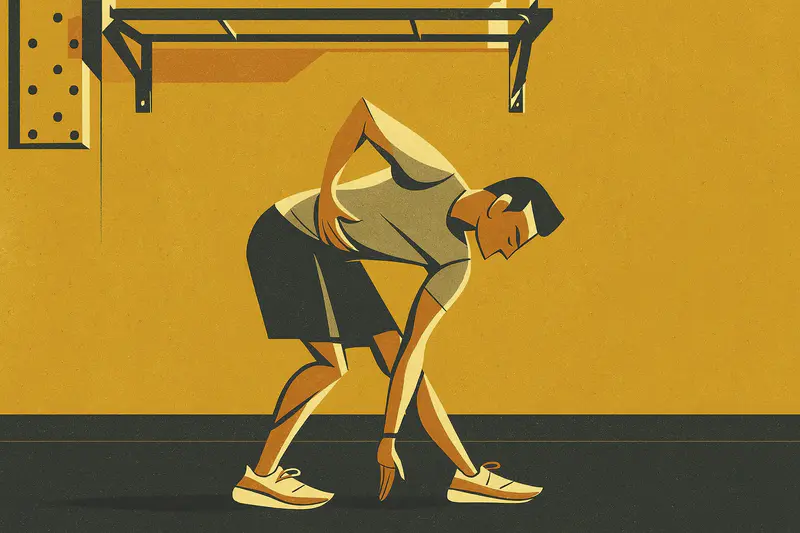
Think about your average Tuesday. You sit in a car, then you sit at a desk, then you sit at dinner, then you sit on the couch. Your hips tighten up. Your thoracic spine (upper back) gets stiff and stops turning.
When you get to the tee on Saturday, your brain says "turn," but your body says "nope."
So, what happens? Your body cheats. You stop turning with your big muscles and start compensating with your lower back or your arms. Your swing doesn’t necessarily get worse technically, it just gets smaller.
If you’ve ever felt your lower back tighten up on the back nine in July, this is why. You ran out of mobility.
The Fix
You can’t just stretch once a month. You need a routine.
5 Minutes Before Every Round: Do not skip this. A few leg swings and arm circles aren't enough. You need to activate the glutes and open the t-spine.
Off-Day Maintenance: Hip and T-spine work while you watch TV.
The 3-Minute Nightly Routine:
10 Bodyweight Squats (deep as you can go).
10 Hip Rotations (open up the gate).
5 Slow, Deliberate Practice Swings (focusing on the turn, not the speed).
Try this tomorrow. By hole 3, you will feel like you’ve taken two clubs' worth of tension out of your back.

Nutrition: Eat Like You Actually Care About the Back Nine
You don’t need a strict diet. You just need some common sense.
The "traditional" golf diet of a breakfast sandwich at the clubhouse, three beers, and a hot dog at the turn is a disaster for your scorecard. That hot dog might taste good on hole 10, but the sugar and carb crash is going to hit you on hole 14 exactly when you need to make a clutch par save.
When your blood sugar crashes, your focus goes with it. You get tired, you get lazy mentally, and you make bad decisions.
Fuel right, and the back nine stops feeling like a survival test.
Protein-First Breakfast: Start the day with eggs or a shake, not just a bagel.
Smart Snacks: Keep nuts, fruit, or beef jerky in your bag. Avoid the mystery meat at the halfway house.
Hydration: Drink water before you are thirsty. If you wait until you’re parched, it’s too late.
Sleep: The Cheat Code You’re Ignoring
If you want lower scores, turn Netflix off and go to bed.
We love to obsess over gear, balls, and launch monitor data, but we ignore the single biggest performance enhancer available to humans: Sleep.
Seven to nine hours is the sweet spot. When you are well-rested, everything changes:
Better Tempo: Your nervous system is calm.
Better Decision Making: You stop firing at pins you have no business aiming for.
Better Emotional Control: You don’t spiral after a double bogey.
You want instant performance? Fix your sleep schedule. It’s free, and it works better than a $600 driver.
The Mental Game: Age Becomes Your Superpower
This is where you actually have an advantage over the 22-year-old crushing it 320 yards into the woods.
After 30, you know who you are as a player. You (hopefully) have less ego. Now, you need to build a routine that protects your score.
When you are young, you try to muscle your way out of trouble. When you are experienced, you plot your way out.
One Clear Target: Don’t just aim "down there." Pick a specific tree or branch.
One Repeatable Sequence: Grip, stance, alignment. Same every time.
One Swing Thought: Just one. Not five.
One Deep Breath: Reset the computer before you pull the trigger.
This is the stuff that saves two to four shots a round. It’s boring, but boring scores well.
Injury Prevention = Golf Longevity
Back pain. Shoulder tightness. Elbow flare-ups. These aren’t a prison sentence just because you’re getting older… they are a signal.
They are your body telling you thatyou are doing something wrong. Maybe you aren’t warming up. Maybe your glutes are dormant. Maybe you’re swinging too hard with poor mechanics.
Golf after 30 is about staying fresh enough to train, not just survive the round.
Warm up properly.
Strengthen your glutes.
Mobilize your spine.
Listen to your body.
If you ignore the signals, you end up on the sideline. If you listen to them, you play forever.
Why You Can't Do This Alone
Here is the part most golfers skip: The Plan.
Reading this blog is great. Knowing you need to do deadlifts and eat almonds is great. But actually executing a plan that fits your specific body type, your schedule, and your swing flaws? That’s hard to do alone.
You might have a restriction in your lead hip that makes a "classic" squat dangerous for you. You might need a swing change to protect a bad shoulder.
This is where a coach comes in.
We aren't talking about a guy who just watches you hit balls for an hour and says "good shot." We’re talking about a partner in your game. A real coach looks at the whole picture: your fitness, your mechanics, and your goals, and builds a roadmap for you.
Ready to Actually Do This?
You can keep trying to figure it out by trial and error, guessing which exercises work and wondering why your back hurts. Or, you can bring in a pro.
At TeachMe.To, we connect you with top-rated local golf coaches who specialize in working with players of all ages. Whether you need a swing tune-up to match your current flexibility, or a full game assessment to break 80 this year, there is a coach waiting to help.
Also, if you want to get those reps in without battling the weather (or the embarrassment of the driving range), many of our coaches utilize golf simulators. These are perfect for dialing in your yardages and working on that new "power swing" in a controlled environment where you can see the data instantly.
Don't let age dictate your handicap. Develop a scratch attitude, build a durable body, and find a mentor who can get you there.