Scrolling through camp websites at 11 PM, trying to decode which program will actually help your kid improve—not just run them through drills for a week—is exhausting. Every camp claims "expert coaching" and "skill development," but the $200 registration fee doesn't come with a guarantee your child will learn proper technique or even enjoy the experience.
The youth football training landscape spans everything from weekend skill camps to year-round academies, private instruction to group sessions. Finding the right fit means understanding what each option offers, what credentials matter, and which red flags signal you should keep looking. TeachMe.To connects families with verified local football instructors, delivering 61,312 lessons in 2024 with a TrustScore of 4.8/5 based on 601 reviews—making it easier to find quality coaching without the guesswork.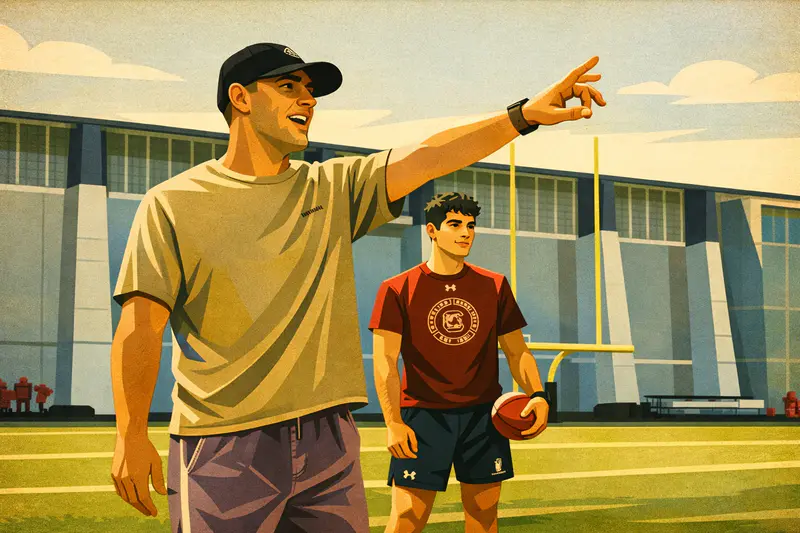
Understanding Youth Football Training Options
Football Camps
Most camps fall into three categories. Skill development camps focus on technique through position-specific drills, 1-on-1 challenges, and small group instruction—ideal for underclassmen building fundamentals. Showcase camps provide exposure to college coaches, though they're primarily valuable for rising seniors already on recruiting radars. Specialized position camps drill deep into quarterback mechanics, receiver route-running, or lineman blocking techniques.
Nike Football Skills Camps run non-contact programs emphasizing skill work on both sides of the ball. For younger players ages 7-14, Nike Flag Football Camps teach fundamentals without tackle contact. Contact camps introduce pads gradually, grouping participants by age, weight, and ability to ensure fair matchups.
Duration matters. Day camps run a few hours daily for a week, while overnight programs offer immersive experiences. Week-long programs typically cost $200-300, though NFL team camps like the Pittsburgh Steelers charge around $195 including preseason game tickets and meals.
Football Academies
Academies differ fundamentally from camps—they're long-term programs spanning months or years rather than concentrated weeks. Professional club academies are typically free, funded by organizations investing in future talent, but entry requires passing competitive trials or catching scouts' attention. Private academies charge fees ranging from modest to substantial, often bundling training with education and accommodation.
The commitment level separates casual participants from serious prospects. Academy players train multiple times weekly year-round, competing in structured leagues while developing under consistent coaching philosophies. This continuity builds technical mastery that short-term camps can't replicate.
For most youth players, academies represent a significant step up in intensity and time commitment. They work best for athletes showing clear passion and talent who want structured pathways toward competitive or collegiate play.
Private Football Lessons
One-on-one instruction delivers the most personalized attention available. Private sessions typically last 60-90 minutes and include position-specific drills, strength and conditioning work, and sometimes video analysis of technique. Coaches assess current skills first, then build customized programs targeting specific weaknesses.
Pricing ranges from $30 to over $200 per hour depending on location and instructor experience, with $60-80 representing the typical range. The immediate feedback and targeted skill development make private lessons particularly valuable for high school athletes pursuing collegiate opportunities—though less than 7% of high school players advance to college programs, and specialized training often provides the edge.
Flexible scheduling accommodates busy families better than fixed camp dates. You can focus an entire session on perfecting a three-step drop or reading zone coverage, rather than cycling through general drills with 30 other kids.
Group Training Programs
Small group sessions typically accommodate 4-6 players for up to 90 minutes, splitting the difference between private instruction and large camps. You get more individual attention than camp environments while building team chemistry and competitive dynamics that solo training can't replicate.
Cost runs $60-100 per session, with package discounts often bringing per-session prices down to $60-90. The format works well for position groups—quarterbacks and receivers running routes together, or linemen working combination blocks against each other.
Group training creates game-realistic scenarios. Receivers practice against actual defensive backs, not cones. Quarterbacks read live coverage, not air. This environment accelerates learning for players who thrive on competition.
Key Factors When Evaluating Football Programs
Coach Credentials and Experience
USA Football trains over 100,000 youth coaches annually, with more than 1.35 million completion records since 2012. This certification should be your baseline—many leagues including Pop Warner require it at $15 per coach. The curriculum covers age-appropriate skill development, health and safety protocols, concussion awareness, and injury prevention.
But certification alone doesn't guarantee quality. Ask about playing and coaching background. A former college player brings technical knowledge and credibility. Years of youth coaching experience demonstrates understanding of how kids learn differently than adults.
Watch for coaches who can explain why they teach techniques certain ways, not just demonstrate drills. The best instructors break down complex movements into learnable steps and adjust their approach when a player struggles.
Training Philosophy and Methodology
USA Football's Development Model structures teaching around age, skill level, and game type—flag versus tackle, recreational versus competitive. Quality programs follow this progression rather than treating 8-year-olds like miniature high schoolers. Fun and athleticism come first, with skills layered in systematically.
Offense-Defense camps emphasize "technique not tactics", focusing on proper fundamentals that translate across systems. This approach builds consistent performance rather than memorizing specific plays that won't apply to school teams. Ask programs how they structure progression—you want clear answers about skill sequencing, not vague promises about "making players better."
Red flag: coaches who talk primarily about winning championships or producing college prospects when discussing programs for 10-year-olds. Development takes priority over results at youth levels.
Safety Standards and Protocols
USA Football changed tackling recommendations to target the shoulder, working to remove the head from contact equations. Programs should demonstrate these modern techniques, not outdated methods that increase injury risk. Limiting full-contact practice and eliminating dangerous drills like the Oklahoma drill shows commitment to player safety.
Certification includes concussion protocols, hydration guidelines, and cardiac event procedures. Ask specifically how camps handle injuries and what emergency action plans exist. Adequate equipment matters too—properly fitted helmets and pads, not hand-me-downs that don't protect effectively.
Watch a practice if possible before committing. Do coaches enforce proper technique even when players resist? Is water readily available? These details reveal whether safety talk translates to action.
Program Structure and Curriculum
Balance matters more than volume. Quality programs mix skill work, conditioning, and game scenarios rather than running endless wind sprints or scrimmaging without instruction. Position-specific coaching should match your child's developmental stage—teaching 8-year-olds complex route trees wastes time better spent on catching fundamentals.
Ask for typical session breakdowns. You want structured progressions, not "we just play football." Warm-ups should include dynamic movement and agility work. Skill segments should build from individual technique to partner drills to group applications. Conditioning should serve football-specific fitness, not punishment.
Player-to-coach ratios matter significantly. One coach per 8-10 players allows adequate attention. Ratios beyond 15:1 mean kids spend more time waiting than learning.
Facility Quality and Equipment
Well-maintained fields prevent injuries from uneven surfaces or hidden hazards. Proper equipment availability—including adequate helmets, pads, and training tools—indicates program investment in quality. Equipment rental at camps typically costs $60-80 if you don't own gear, though you'll still need to provide mouthpieces, chin straps, and practice pants.
Fancy facilities don't guarantee good coaching, but they suggest organizational competence. Indoor options matter in regions with unpredictable weather. Adequate shade and water access become critical for summer programs.
Professional training tools like blocking sleds, tackling dummies, and agility equipment allow proper drill execution. Cones and imagination only go so far.
Comparing Training Formats: Private vs. Group
Benefits of Private Instruction
Personalized attention means immediate feedback on every rep. Your quarterback isn't waiting in line behind five others to throw three passes. The entire session targets their specific needs—fixing footwork on rollouts, reading cover-2 shells, or improving touch on deep balls.
Flexible scheduling accommodates school, other sports, and family commitments better than fixed camp dates. Sessions adapt to your child's energy and focus levels rather than following rigid camp schedules. Serious players preparing for showcase events or addressing specific technical gaps benefit most from this concentrated attention.
The investment makes sense when you have clear objectives. Fixing a mechanical flaw before the season starts justifies the cost better than general "get better at football" goals that group settings handle adequately.
Benefits of Group Training
Cost-effectiveness stands out immediately—$60-100 per session versus $60-200 for private instruction. For families managing tight budgets, group training delivers professional coaching at accessible prices. Package deals often reduce per-session costs further.
Team chemistry and competitive dynamics emerge naturally. Players push each other harder than they push themselves alone. Receivers competing for catches develop the competitive edge that translates to Friday nights. Communication skills improve through actual teamwork rather than solo drills.
Game-realistic scenarios prepare players for actual competition better than isolated skill work. Running routes against air teaches mechanics; running routes against a defensive back pressing coverage teaches football.
When to Choose Each Format
Choose private instruction when addressing specific technical deficiencies that group settings won't fix. A quarterback struggling with release mechanics needs focused repetition with immediate correction, not general throwing drills with 10 other kids. Position mastery—particularly for specialized roles like long snapper or holder—benefits from individualized attention.
Group training works better for developing game readiness, teamwork, and competitive instincts. Players learning positions benefit from practicing against actual opponents. The social element keeps training fun, which matters more than parents often recognize.
Combining both approaches develops well-rounded skill sets when budget and schedule allow. Use private sessions for technical refinement and group training for application and competition. This mix accelerates development faster than either format alone.
Age-Appropriate Program Selection
Programs for Ages 5-7 (Introductory)
Flag football provides the ideal entry point, teaching basic ball handling, running, and spatial awareness without contact concerns. Programs should emphasize fun over competition—kids this age are still developing attention spans and motor skills. Once-weekly practice matches their developmental capacity.
Look for coaches who keep instruction simple and positive. Five-year-olds don't need complex playbooks; they need to learn catching, throwing, and running without colliding with teammates. Games should involve everyone equally rather than featuring star players.
Red flag: programs pushing competitive intensity or extensive practice schedules for this age group. Burnout starts early when fun disappears.
Programs for Ages 8-12 (Development)
Position-specific skill introduction begins here, though players should still experience multiple positions. Moderate competition teaches handling pressure without overwhelming developing athletes. 1-2 practices weekly provide adequate development time without excessive commitment.
Weight and age divisions ensure fair matchups, preventing physical mismatches that create injury risks and discourage smaller players. The 8U division should remain instructional and fun, while 10U and 12U can introduce more competitive elements as emotional maturity increases.
Technique emphasis remains critical. Proper tackling form, blocking fundamentals, and position-specific skills build foundations for future success. Winning games matters less than learning correct methods.
Programs for Ages 13-18 (Competitive)
Advanced technique work and strength conditioning integration reflect increasing physical maturity. Showcase opportunities become relevant for serious athletes, particularly rising juniors and seniors pursuing college recruitment. Training frequency increases to 2-3 sessions weekly for competitive programs.
Specialization makes sense now if players show clear position aptitude and passion. Quarterbacks benefit from dedicated QB training. Linemen need position-specific strength work. The recreational versus elite track diverges clearly—some players want Friday night football with friends, others want college scholarships.
College recruiting preparation requires realistic assessment. Most players won't advance beyond high school, and that's perfectly fine. For legitimate prospects, specialized training and exposure camps become worthwhile investments.
Cost Considerations and Budgeting
Typical Camp Pricing
USA Football Talent ID Camps cost $69 registration plus $35 for required Youth Athlete ID. NFL team camps run around $195, typically including preseason game tickets, camp t-shirts, and meals. Week-long programs generally range $200-300 depending on location and amenities.
Parents average $671 annually on youth football expenses, though 21% spend $1,000 or more when factoring in multiple camps, travel, and supplemental training. These figures don't include equipment, which adds substantially to first-year costs.
Budget for the full picture. That $250 camp becomes $350 after equipment rental, travel, and incidentals. Multiple camps throughout the year compound quickly.
Private Lesson Costs
Expect $60-80 per hour for quality private instruction in most markets, though prices range from $30 in smaller communities to over $200 for elite-level coaches in major metros. Location drives pricing significantly—suburban instructors typically charge less than those in expensive urban markets.
Experience and credentials justify premium pricing. A former NFL player commands higher rates than a high school coach, though teaching ability matters more than playing resume. Group sessions at $60-100 per participant offer middle-ground pricing between camps and private instruction.
Package deals reduce per-session costs. Buying 10 sessions upfront often drops the per-hour rate by 10-20% compared to single-session pricing.
Equipment and Additional Expenses
First-year equipment costs add up quickly: cleats $30-100, uniforms $30-100, protective gear $20-50. Camps not providing equipment charge $60-80 rental fees for helmets and shoulder pads, though you'll still purchase mouthpieces, chin straps, girdles, and practice pants separately.
Growing kids need new cleats annually, sometimes mid-season. Protective gear wears out and requires replacement. Budget $100-200 annually for equipment maintenance and replacement beyond initial purchases.
Travel costs hit families attending showcase camps or tournaments. Hotel stays, meals, and gas add hundreds to camp registration fees. Factor these expenses when comparing local versus destination programs.
Finding Value Without Overspending
Prioritize certified coaching and safety standards over fancy facilities. A well-coached program on basic fields beats mediocre instruction in a state-of-the-art complex. Combining group training with occasional private sessions delivers better value than exclusively private instruction for most players.
Used equipment works fine for growing kids who'll outgrow gear quickly anyway. Buy quality helmets new for safety, but cleats and practice gear can come secondhand. League equipment exchanges help families recycle gear affordably.
Start with shorter commitments before investing in expensive academy programs. A week-long camp reveals whether your child enjoys the sport enough to justify year-round training costs.
Red Flags and Warning Signs
Poor Coaching Indicators
Parent coaches spending disproportionate time with their own children while neglecting others signal favoritism that undermines team culture. Unwarranted playing time advantages for coaches' kids breed resentment and discourage other players.
Excessive emphasis on winning over development manifests in bringing injured players back early or pushing kids beyond safe limits. Coaches who trash-talk other sports while pressuring athletes toward football specialization prioritize their program over player welfare.
Lack of clear development philosophy means coaches wing it rather than following structured progression. Ask how they teach specific skills—vague answers reveal absence of real methodology.
Safety Concerns
Outdated tackling techniques that lead with the head rather than shoulder indicate coaches haven't updated their knowledge. Programs avoiding full-contact practice limits and still running dangerous drills like the Oklahoma drill ignore modern safety research.
Inadequate equipment—poorly fitted helmets, worn pads, or insufficient gear for all participants—shows organizational neglect. Lack of clear concussion protocols or injury prevention procedures puts kids at unnecessary risk.
Ignoring obvious injuries or pressuring players to "tough it out" reveals dangerous coaching culture. Quality programs err on the side of caution, not toughness.
Organizational Problems
Poor communication with parents about schedules, costs, or program changes signals disorganization that affects everything else. Lack of transparency about additional fees beyond registration creates budget surprises families can't afford.
Toxic parent culture—40% of referees cite unhinged parents as their main job difficulty—poisons the environment for everyone. Organizations that don't address parent behavior problems enable dysfunction.
High coach turnover suggests deeper issues. Constant staff changes prevent consistent player development and often indicate organizational problems driving coaches away.
How to Find Quality Football Instructors
Using TeachMe.To Platform
TeachMe.To connects families with verified local instructors across multiple sports including football, delivering structured onboarding to ensure reliable experiences. The platform's 4.8/5 TrustScore based on 601 Trustpilot reviews reflects consistent quality across thousands of lessons.
Built by a team with experience from Airbnb, DoorDash, Yelp, Instacart, and Pinterest, the platform applies proven marketplace principles to private instruction. Reviews and ratings help families make informed decisions rather than gambling on unknown coaches.
The verification process screens instructors for credentials and background, reducing risks inherent in finding coaches through informal channels. Transparent pricing and booking eliminate awkward rate negotiations.
Vetting Credentials and Background
Verify USA Football certification as your baseline—coaches should provide proof readily. Check reviews and testimonials, but look beyond star ratings to specific feedback about teaching style, communication, and results. Generic praise means less than detailed accounts of how instructors helped players improve.
Ask for references from current or former clients, particularly families with players at similar ages and skill levels to your child. School and youth league coaches often recommend qualified instructors they know personally, providing trusted referrals.
Background checks matter when entrusting your child to any adult. Reputable instructors expect this question and have documentation ready.
Asking the Right Questions
Inquire about coaching philosophy specifically—how do they balance skill development, fun, and competition? What does typical progression look like over a season? Vague answers suggest absence of real methodology.
Ask about safety protocols in detail. How do they teach tackling? What happens if a player shows concussion symptoms? How do they prevent overuse injuries? Specific answers demonstrate genuine commitment versus lip service.
Clarify communication expectations. How often will you receive progress updates? Can you observe sessions? What's the policy on cancellations and makeups? Clear answers prevent future conflicts.
Trial Sessions and Evaluations
Most quality instructors offer initial assessments before committing to packages. Use this session to evaluate coaching style, rapport with your child, and whether the training approach fits your goals. Watch how the instructor explains concepts and corrects mistakes.
Your child's feedback matters most. Do they feel comfortable asking questions? Did they understand the instruction? Did they enjoy the session enough to want more? Forced enthusiasm signals poor fit.
Observe teaching methods during the trial. Does the instructor demonstrate skills clearly? Break down complex movements into learnable steps? Adjust their approach when your child struggles? These details reveal teaching ability.
Benefits of Quality Youth Football Training
Physical Development
Dynamic drills and exercises improve cardiovascular health, strength, agility, and coordination through movements specific to football demands. Unlike generic fitness, football training develops multi-directional speed, explosive power, and body control that transfers across sports.
Age-appropriate conditioning builds fitness without overtraining developing bodies. Proper progression prevents injuries while steadily increasing capacity. The variety keeps training engaging compared to repetitive exercises kids resist.
Football's physical demands create well-rounded athletes. Linemen develop strength and power. Skill position players build speed and agility. Everyone improves coordination through complex movement patterns.
Character Building and Life Skills
Organized sports teach discipline, time management, and perseverance through structured expectations and consistent effort requirements. 59% of surveyed parents cite discipline as a key benefit influencing their choice of tackle football over other activities.
Football's collaborative nature teaches teamwork and communication skills that extend beyond sports. Players learn to work toward common goals despite different backgrounds and personalities. Handling adversity—losses, mistakes, setbacks—builds resilience applicable to academic and personal challenges.
Sportsmanship lessons from quality programs shape character development. Learning to win graciously and lose with dignity creates better competitors and better people.
Social and Emotional Growth
Over 50% of parents report friendships with teammates contributed significantly to their child's love of the game. The social bonds formed through shared challenges and victories create belonging that boosts confidence and emotional wellbeing.
Team environments provide opportunities to interact with peers from diverse backgrounds, building social skills and cultural awareness. Communication requirements—calling plays, coordinating blocks, encouraging teammates—develop interpersonal abilities.
The structured nature provides purpose and routine that supports emotional stability. Belonging to something larger than themselves gives kids identity and community during formative years.
Making Your Final Decision
Matching Program to Your Child's Goals
Recreational players need fun-first approaches emphasizing participation and skill building without pressure. Competitive players require structured development programs with appropriate challenge levels. Elite prospects need exposure opportunities and advanced training preparing them for next-level competition.
Honest assessment of your child's passion and ability prevents mismatches. Pushing recreational players into elite programs breeds resentment. Limiting serious athletes to casual programs stunts development. Listen to your child's interests rather than projecting your own ambitions.
Goals evolve as kids mature. The right program at 10 may not fit at 14. Reassess regularly rather than assuming initial choices remain optimal.
Trial Period Strategy
Start with shorter commitments before investing in full-season or expensive academy programs. A week-long camp reveals whether your child enjoys the sport and responds to the coaching style. Single-month academy trials test fit before committing to year-long programs.
Use trial periods to evaluate all aspects—coaching quality, organizational competence, facility conditions, and your child's engagement level. Don't let sunk costs trap you in poor fits. Better to lose a deposit than waste a season in the wrong program.
Most quality programs welcome trial arrangements because they're confident in their product. Resistance to trial periods suggests programs know they can't retain families who experience alternatives.
Monitoring Progress and Fit
Regular assessment ensures programs continue meeting your child's needs as they develop. Does your child enjoy training sessions? Do they show measurable skill improvement? Do they feel supported by coaches and teammates? Does the program align with your family's values and priorities?
Watch for signs of burnout—declining enthusiasm, complaints about practice, or resistance to activities they previously enjoyed. Overtraining and excessive pressure damage long-term athletic development and enjoyment.
Communication with coaches helps track progress and address concerns early. Quality instructors welcome parent involvement and provide regular updates without prompting.
Frequently Asked Questions
What age should my child start football training?
Flag football works for kids as young as 4-5 years old, introducing basic skills through non-contact play. Tackle football typically begins when coordination allows, usually ages 8-10, though individual readiness varies based on physical and emotional maturity.
Starting earlier doesn't guarantee better outcomes. Kids who begin at 10 often catch up quickly to those who started at 6. Prioritize your child's interest and readiness over arbitrary age guidelines.
How do I know if a coach is qualified?
USA Football Youth Coach Certification represents the minimum standard, with over 1.35 million completion records since 2012 establishing credibility. Look beyond certification to playing and coaching experience, teaching philosophy, and references from other families.
Watch a practice session before committing. Quality coaches demonstrate clear communication, positive reinforcement, proper technique emphasis, and genuine engagement with all players—not just the stars.
What's better: private or group lessons?
Private instruction excels at technical mastery and addressing specific skill gaps through personalized attention. Group training develops game readiness, teamwork, and competitive instincts in realistic scenarios. Combination approaches deliver the best results when budget and your child's motivation allow both formats.
The ultimate driver is your child's interest. Forced training—private or group—wastes money and damages their relationship with the sport.
How much should I budget annually?
Parents average $671 annually on youth football, though 21% spend $1,000 or more including camp fees, equipment, travel, and supplemental training. First-year costs run higher due to initial equipment purchases.
Budget realistically for the full picture—registration, equipment, travel, and unexpected expenses. Underfunding creates stress when additional costs emerge mid-season.
What safety standards should camps meet?
USA Football tackling techniques targeting the shoulder rather than head, comprehensive concussion protocols, limited full-contact practice, proper equipment, and certified coaches with health and safety training represent baseline standards. Programs should articulate specific safety procedures clearly when asked.
Watch for alignment between stated policies and actual practice. Safety talk means nothing if coaches ignore protocols during training.
Find a Football Coach Near You
Ready to get started? Browse local football coaches and book your first lesson:
Houston · Chicago · Dallas · See all cities →
Conclusion
Choosing quality youth football training requires evaluating coach credentials, safety standards, program structure, and fit with your child's goals and developmental stage. USA Football certification, age-appropriate methodology, and clear communication separate quality programs from those just collecting registration fees.
TeachMe.To simplifies finding verified local football instructors through a platform that's delivered over 61,000 lessons with consistently high ratings. Whether you need private instruction for technical refinement or group training for game readiness, connecting with qualified coaches who prioritize proper development makes all the difference in your child's experience and growth.