You know the feeling. The weather finally turns, the frost delays lift, and you step onto the first tee for the season opener. You’ve got fresh excitement, maybe a new driver you bought over the holidays, and a head full of optimism.
Then you proceed to block your drive 40 yards right into the trees.
The "rust" excuse comes out. You tell your buddies, "I just haven't swung a club in three months." You grind your teeth, scrape together a double bogey, and spend the next four hours wondering why you aren’t magically better than you were last October.
Here is the hard truth: Hope is not a strategy.
If you look at the best players in the world, Scottie Scheffler, Rory McIlroy, Tiger Woods, they don’t show up to the first tournament of the year hoping the golf gods are in a good mood. They arrive with a body that’s primed, gear that is dialed to the millimeter, and a game plan that was architected months ago.
The gap between a PGA Tour pro and a scratch golfer isn’t just talent; it’s preparation.
The good news? You don’t need a Tour card, a physio team, or a private jet to steal their blueprint. You just need to stop treating your off-season like a vacation and start treating it like a training camp.
Here is how the pros prepare for a new season, and how you, the serious amateur, can adapt their methods to actually lower your handicap this year.
1. The Ruthless "Post-Mortem"
Before a pro hits a single ball for the new season, they look backward.
When the season ends, players like Viktor Hovland or Justin Thomas sit down with their team (caddie, swing coach, stats guy) and dissect the previous year. They don't rely on feelings. They rely on cold, hard data.
They look at Strokes Gained. They might see that they ranked 15th on Tour in driving but 140th in putting from 4-8 feet. That single data point dictates their entire off-season training schedule. They identify the "low-hanging fruit", the specific weakness that is costing them the most money.
How You Can Adapt It: Stop guessing why you didn't break 80. You probably think you need to hit the ball further (because that’s what marketing tells you), but your scorecard might tell a different story.
Do a ruthless audit of your last season.
The Data Dive: If you use Arccos, Shot Scope, or even just keep detailed stats on a spreadsheet, look at them. Where did you lose strokes? Was it penalty shots off the tee? Three-putts? Missed greens with a wedge in hand?
The Honest Mirror: If you don't have data, look at your mental game. Did you blow up after bad holes? Did you lose focus on the back nine?
The Fix: Pick one metric to improve. Just one. "I want to eliminate 3-putts" or "I want to hit 50% of fairways." This gives your upcoming practice sessions a specific purpose, rather than just beating balls aimlessly.
2. The Body is the Engine
We can thank Tiger Woods for this shift. In the old days, "off-season prep" meant nursing a hangover and smoking a cigar. Today, if you look at Rory McIlroy’s Instagram in December, he isn’t on a beach; he’s doing deadlifts.
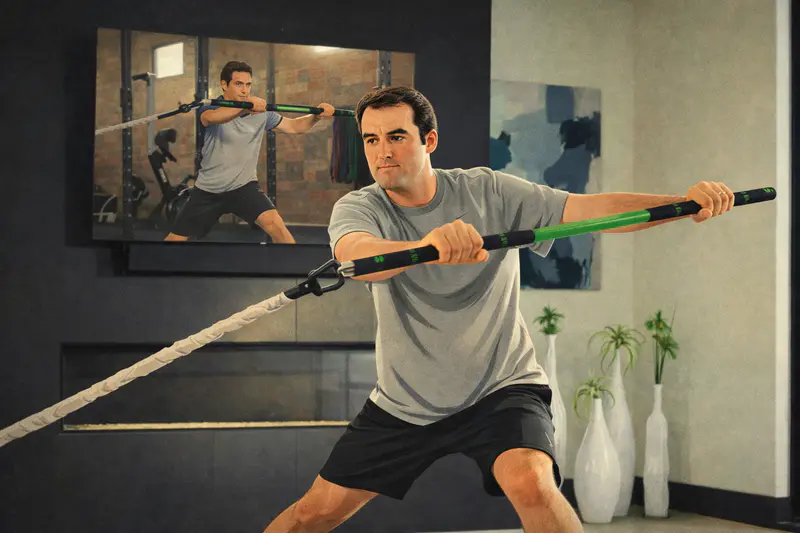
Pros understand that the golf swing is violent. It places massive torque on the lower back, hips, and knees. They use the off-season to build a "bulletproof" body. They aren't trying to become bodybuilders; they are trying to increase mobility and stability.
If your hips are tight, your swing gets shorter. If your glutes are weak, you lose power and hurt your back. Pros hit the gym to ensure their body can physically do what their swing coach is asking them to do.
How You Can Adapt It: You don’t need to train like Bryson DeChambeau, but you cannot sit on the couch for four months and expect to turn through the ball in April.
The "Old Man" Stretch: You need a mobility routine. Yoga is the serious golfer's secret weapon. Focus on hip internal rotation and thoracic spine (upper back) mobility. If you can’t turn your shoulders 90 degrees without pain, no driver on earth will help you hit it 300 yards.
Speed Training: If you are serious about distance, the off-season is the only time to train for it. This is where speed sticks (like SuperSpeed Golf) come in. You tear muscle fibers to rebuild them faster. It’s hard work, but it adds 5-10mph of clubhead speed.
3. The Gear Calibration (Not Just Shopping)
Amateurs love buying new clubs. Pros love checking their clubs.
At the start of the year, a pro’s equipment goes through a rigorous check. They check the lofts and lies of every iron. Why? Because hitting thousands of balls into mats or firm turf bends the metal over time. If your 7-iron is 2 degrees weak and your 8-iron is 1 degree strong, you basically have two clubs that go the exact same distance. That is a scorecard killer.
They also check their "gapping." They use a launch monitor (Trackman or Foresight) to ensure there is a consistent 10-15 yard gap between every club in the bag.
How You Can Adapt It: Stop blaming your swing for a ball that flies crooked.
Get a Loft/Lie Check: Take your irons to a local builder or big-box store. It costs a few bucks to get them bent back to spec. You will be shocked at how far off they are.
Fresh Rubber: Pros change grips every few weeks. You haven’t changed yours since the Obama administration. slick grips cause you to squeeze tighter, which kills tension and speed. Regrip your clubs. It’s the cheapest way to make your set feel brand new.
4. The "Boring" Practice
When pros return to practice, they don't start by trying to hit nasty hooks around trees. They start with the boring stuff. Alignment. Grip. Posture. Ball position.
Watch Scottie Scheffler on the range. He almost always has a training aid, a ruler on the ground, a ball between his arms, or an alignment stick. He is the best ball striker on the planet, and he is obsessed with the basics.
Amateurs, on the other hand, skip the warm-up, grab the driver, and try to smash the back net.
How You Can Adapt It: Buy alignment sticks. Use them. Every single time. Your eyes play tricks on you. You think you’re aiming at the flag, but you’re actually aiming 15 yards right. To compensate, you come "over the top" to pull the ball back on line. Suddenly, you have a slice, and you don't know why.
Spend the first two weeks of your season hitting half-shots with a wedge, focusing purely on contact and alignment. It’s boring. It’s not sexy. But it’s how you build a swing that holds up under pressure.

5. They Build a Team (And So Should You)
This is the biggest differentiator. No pro does it alone.
When a pro is struggling with their swing, they don't go to YouTube and search "how to fix a slice" and try three different tips from three different influencers in one range session. That is a recipe for disaster.
They have a coach. They have a plan. They have a second set of eyes.
The "Serious Amateur" often tries to be their own doctor. You video your swing, draw some lines on it, and convince yourself your wrist angle is wrong. But you can't see what you can't see.
How You Can Adapt It: You need a baseline. You need a plan. You need a coach.
If you are serious about getting better this year, stop relying on "feels" and random tips. You need a professional to look at your swing, identify the root cause of your issues (not just the symptom), and give you a roadmap for the season.
Maybe you don't need a swing overhaul. Maybe you just need a setup change. But you won't know until you get assessed.
The "TeachMe.To" Approach
This is where the rubber meets the road. You can do the gym work, you can buy the alignment sticks, and you can analyze your stats. But without technical guidance, you are just practicing bad habits more efficiently.
TeachMe.To connects you with top-rated local coaches who understand the difference between a "quick fix" and long-term development.
Imagine starting your season like this:
Lesson 1: The Assessment. The coach looks at your swing, your physical limitations, and your goals.
The Plan: They give you three specific drills to work on for the next month.
The Grind: You hit the range (or the simulator) and work on only those things.
The Check-In: You go back, verify the progress, and add the next layer.
That is how a pro works. That is how you break 80.
Summary: Your Pre-Season Checklist
If you want this year to be different, you have to do things differently. Here is your roadmap:
Analyze last year: Find the one area (putting, driving, wedges) that cost you the most strokes.
Get Mobile: Commit to 10 minutes of stretching a day.
Check your Specs: Get your lofts and lies checked and put on fresh grips.
Alignment Sticks: Put them in your bag and actually use them.
Get a Coach: Stop guessing.
The season is right around the corner. You can either show up hoping for a miracle, or you can show up prepared.
Ready to build your team? Don't wait until the mid-summer slump to fix your swing. Browse top-rated golf coaches in your area on TeachMe.To today and start building a game that travels.