How Much Do Basketball Lessons Cost in 2026? A Real-talk Guide
Let’s be honest: if you or your kid has caught the basketball bug, you’ve probably already realized that love for the game comes with a few price tags attached. Between the high-top sneakers, the travel team fees, and the endless replacement of worn-out basketballs, the costs add up.
But then comes the big question, the one that usually pops up after a tough game or when a player hits a plateau: "Do we need private lessons?"
And immediately following that: "Wait, how much is that going to cost?"
If you’re scrolling through 2026 looking for answers, you’re in the right place. The landscape of youth sports is changing, and while elite training can be pricey, the good news is that basketball training still fits a huge range of budgets. Whether you’re a parent looking to give your child a confidence boost or a teen trying to make varsity, there are affordable paths to getting better.
We’re going to break down exactly what you can expect to pay for basketball lessons this year, why the prices vary so wildly, and, most importantly, how to make sure you aren’t just throwing money at a hoop, but actually investing in real improvement.
The 2026 Snapshot: What Are We Looking At?
Before we get into the nitty-gritty, let’s look at the broad numbers. If you want to skip the details and just know if you can afford it, here is the cheat sheet for pricing in the U.S. right now:
Private 1-on-1 Lessons: Average $50 to $150 per hour.
Group Lessons / Clinics: Average $30 to $50 per player.
Semi-Private (Small Group): Average $30 to $75 per player.
Those are the averages. But as with anything, from buying a car to ordering a coffee, the "options" you choose change the final bill. Let’s break down the two main contenders: Private vs. Group training.
Option 1: The Private Route (One-on-One)
Cost Range: $50 – $150+ per hour
Private coaching is the gold standard for rapid improvement. It’s just you (or your child) and the coach. There’s nowhere to hide, which means every bad habit gets spotted and corrected instantly. Because you are renting the coach's undivided attention, this is naturally the most expensive option.
Within this category, there are usually three "tiers" of coaches you’ll run into:
1. The "Entry-Level" Coach ($30–$50/hour) These are often local college players, high school standouts, or younger coaches just building their client base. Don’t let the lower price tag fool you; these coaches can be fantastic for beginners. They bring high energy, they can demonstrate the drills perfectly because they are still playing, and they are often great mentors for younger kids.
2. The "Experienced" Pro ($60–$90/hour) This is the sweet spot for most serious high school athletes. These trainers have been in the game for a while. They have a proven track record, they know how to structure a long-term development plan, and they likely have certifications to back up their methods.
3. The "Elite" Specialist ($100–$150+/hour) If you are looking for someone who played in the pros or has trained NBA/WNBA talent, you are going to pay a premium. These coaches are essentially "specialists." You go to them to fix a specific mechanical issue in a jump shot or to learn high-level game IQ.
Is it worth it? If a player needs specific technical correction, like fixing a shooting form or working on footwork for the post, private lessons are unbeatable. You pay for the expertise, and you save time because the feedback loop is instant.
Option 2: The Group Dynamic
Cost Range: $30 – $50 per player
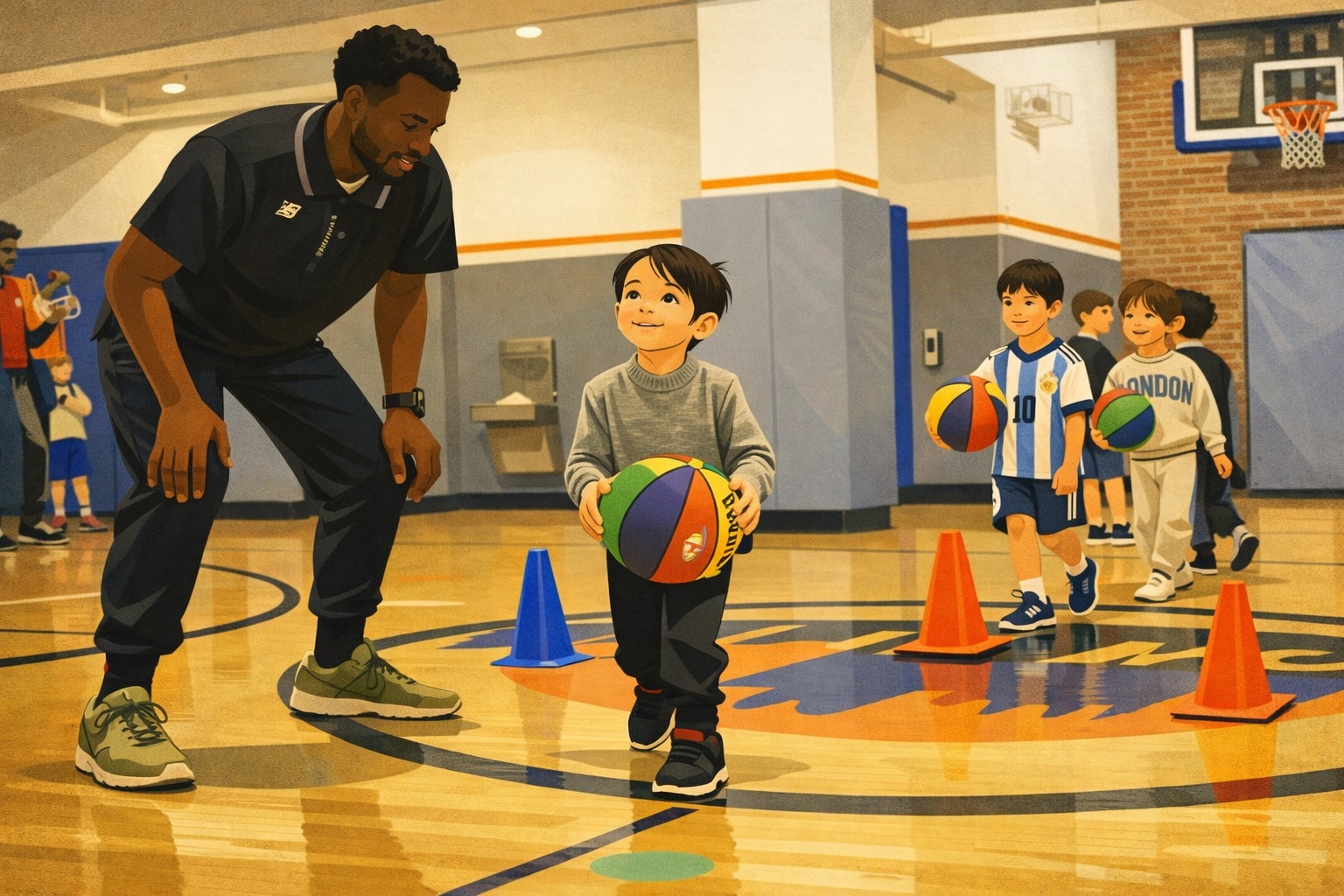
If the private lesson price tag made your wallet flinch, don’t worry. Group lessons are arguably just as valuable, especially for younger players.
In a group setting, the cost of the coach and the court is split among the participants. You might see:
Small Groups (2-5 players): Slightly pricier, usually $30–$50, but you still get some personal attention.
Large Clinics (10+ players): The most budget-friendly option, sometimes dropping to $20–$40 per session.
The Hidden Benefit of Groups Forget the money for a second, group lessons teach things private lessons can’t. You can’t learn to use a pick-and-roll against a cone. You need a defender. Group sessions allow for live drills, 1-on-1 scrimmages, and competitive pressure. Plus, for kids, it’s just more fun to sweat it out with friends.
Why Does One Coach Charge $40 and Another $100?
You might look at two coaches in the same city and wonder why their rates are miles apart. It usually boils down to three factors:
1. The Résumé (Experience & Credentials)
This is the biggest driver of cost. You are paying for the coach's background. A trainer who spent years playing overseas or in college has "game equity" that allows them to charge more. Conversely, a local enthusiast who loves the game but never played at a high level will charge less.
Think of it this way: You pay a premium for seasoned expertise because they’ve "been there, done that".
2. The Real Estate (Location & Facility)
Where is the lesson happening?
High Cost: If the coach rents a pristine, climate-controlled indoor gym in a major metro area like New York or Los Angeles, that overhead is baked into your hourly rate.
Low Cost: If the lesson is at a public outdoor court or a community center, the coach has fewer expenses to cover, which often means a cheaper rate for you.
3. The Niche (Skill Level & Goals)
Basic fundamental training is widely available, which keeps the price competitive. However, if you need "Advanced Plyometric Vertical Training" or specific "Point Guard IQ" breakdown, that is a specialized service. While coaches rarely have a "Beginner vs. Advanced" price sheet, the highly specialized coaches naturally gravitate toward the higher price brackets.
How to Get the Best Value (Without Going Broke)
Okay, so we know the costs. Now, how do we hack the system? If you want to maximize your ROI (Return on Investment) for your basketball budget, here are a few pro tips for 2026.
1. Buy in Bulk (The "Costco" Approach) Almost every coach or academy prefers commitment. If you buy a "10-pack" of lessons upfront, you can often knock the price down significantly.
The Math: Instead of paying $50 per lesson pay-as-you-go, a 10-pack might cost $400. That’s a $100 savings, essentially two free lessons.
The Bonus: Paying upfront mentally commits you (or your kid) to showing up. It forces consistency, which is the secret sauce to getting better anyway.
2. Hunt for the "First Lesson Free" Deal Finding a coach is like dating, you need to see if the chemistry is there before you commit to a long-term relationship. Many coaches offer a discounted or free first session to new students.
TeachMe.To, for example, has a specific policy for this. We offer a Free First Lesson guarantee and a satisfaction promise, so you can test the waters risk-free.
3. The "Homework" Multiplier This is the single biggest secret to value. If you pay for a one-hour lesson, that is 60 minutes of instruction. But if the player takes the drills from that lesson and practices them on their own for the next six days, the value of that one lesson just skyrocketed.
Stephen Curry said it best: "I want to practice to the point where it’s almost uncomfortable how fast you shoot, so that in the game, things kind of slow down".
Pro Tip: Ask the coach for "homework" at the end of every session. If they give you a drill, do it. You shouldn’t be paying a coach $80/hour to watch you do basic cardio; pay them to teach you the technique, then do the reps on your own time.
The ROI That Isn't Measured in Dollars
We’ve talked a lot about money, but let’s zoom out for a second. Why are we doing this? Why do parents spend thousands on sports lessons?
It’s rarely just about making the NBA. The odds of that are slim. But the value of sports lessons goes way beyond the court.
1. Unshakeable Confidence There is nothing like the feeling of mastering a skill that felt impossible two weeks ago. When a player sees that Effort = Results, their self-confidence soars. That confidence follows them into the classroom and eventually the workplace.
2. Discipline & Work Ethic Basketball lessons teach kids to show up on time, listen to authority, and grind through the boring stuff (like defensive slides) to get to the fun stuff. As NBA star Damian Lillard put it: "If you want to look good in front of thousands, you have to outwork thousands in front of nobody".
3. Physical & Mental Health In a world that is increasingly glued to screens, paying for an hour of intense physical activity, agility training, and endurance work is an investment in long-term health.
4. Pure Joy As WNBA legend Sue Bird says, basketball isn't just a game; "it’s a lifestyle". As skills improve, the game becomes more fun. That joy can turn into a lifelong passion that keeps them active and social for decades.
Find a Basketball Coach Near You
Ready to get started? Browse local basketball coaches and book your first lesson:
Chicago · Los Angeles · Houston · New York · See all cities →
Ready to Ball?
Whether you have a budget of $30 or $150, there is a coach out there who can help you level up your game. The most important thing is just to start.
Don't let the fear of the cost keep you on the bench. Look for group clinics, ask about package deals, or split a semi-private session with a teammate.
And if you’re looking for the easiest way to find vetted, affordable, and high-quality local coaches?
Check out TeachMe.To. We make it incredibly simple to browse coaches in your area, see their pricing upfront, and read reviews from other parents and players.