Finding the right football coach can feel like searching for a needle in a haystack. You're juggling questions about cost, credentials, and whether your kid (or you) should start with private sessions or join a group. The good news: quality football instruction exists at every skill level, from 4-year-olds learning flag football basics to high school quarterbacks preparing for college recruitment.
This guide breaks down what you need to know about football lessons, from pricing structures to coach qualifications, so you can make an informed decision without wasting time or money on the wrong fit.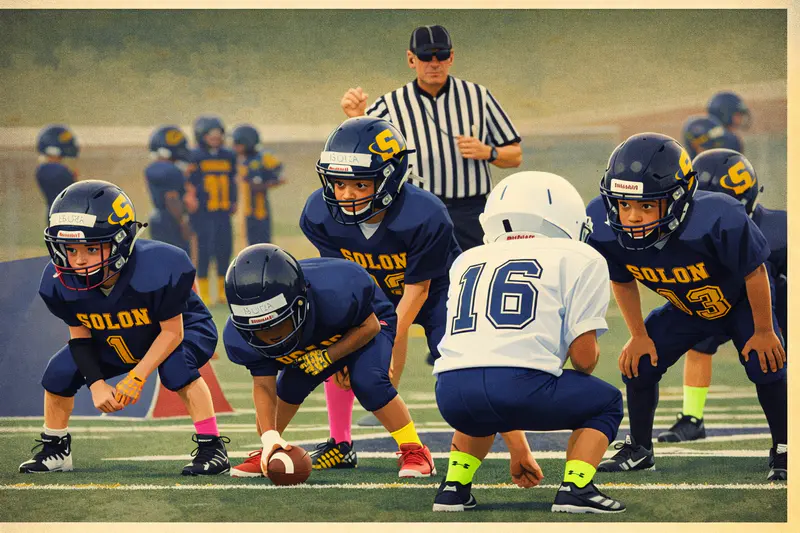
Types of Football Lessons & Training Programs
Private Football Coaching
Private coaching delivers one-on-one attention tailored to your specific position and goals. Instead of splitting time with 20 teammates, you get focused sessions that address your exact weaknesses while maximizing your strengths.
This format works best for players with clear objectives. A wide receiver working on route precision, a linebacker refining coverage techniques, or a quarterback perfecting pocket presence will all benefit from the personalized training plans that private coaches create. You can ask unlimited questions and receive immediate feedback without waiting for your turn.
The intensity of private training accelerates skill development. Players can master specific techniques much faster than they would during team practices, where coaches must divide attention across the entire roster.
Group Football Training
Group sessions balance individual skill work with the teamwork dynamics you'll need on game day. These sessions build leadership, situational awareness, and collaboration in a setting that mimics actual gameplay better than solo drills ever could.
The collaborative environment offers unexpected benefits. You'll learn from watching other players make mistakes and corrections, gaining perspective you'd miss in private training. Group settings also create natural competition that pushes everyone to perform better.
For younger players especially, group sessions provide the social, team-oriented environment where fundamental skills develop alongside friendships and communication abilities.
Beginner Football Programs
Starting football can be intimidating. Beginner programs focus on basic skills, rules, and building confidence in supportive environments where mistakes become learning opportunities rather than embarrassments.
These programs typically cover the essentials: proper throwing and catching techniques, basic defensive positioning, understanding downs and field positions, and building the fitness foundation football requires. Coaches expect zero prior knowledge and design drills that make sense to complete newcomers.
The best beginner programs prioritize fun alongside fundamentals. When new players enjoy their first experiences with football, they're more likely to stick with the sport long enough to develop real skills.
Youth Football Training
Youth programs (ages 6-17) require specialized approaches because young athletes' muscles, bones, tendons, and ligaments haven't reached maturity. Safe, age-appropriate training makes all the difference between healthy development and potential injury.
Youth practices typically last 1-2 hours, focusing on teaching game basics, improving fitness, and building teamwork skills. The shorter duration matches younger attention spans while preventing overtraining fatigue.
Quality youth programs emphasize proper technique over competitive outcomes. Players learn correct tackling form, safe blocking methods, and injury prevention strategies that will protect them throughout their football careers.
Quarterback Training Programs
Quarterback training goes far beyond throwing spirals. Elite QB programs take a holistic approach covering throwing mechanics, footwork, mental preparation, leadership development, eye training, and combine skills preparation.
Position-specific instruction addresses the unique demands quarterbacks face. Small group sessions feature detailed movement and mechanics instruction with video analysis, plyo-ball training for optimized arm path, field vision and coverage recognition, and pocket presence development.
The mental game receives equal attention to physical skills. Quarterbacks must make split-second decisions under pressure, read defensive formations instantly, and demonstrate leadership that inspires teammates. Training should cover timing, chemistry-building, and endurance alongside throwing techniques.
Flag Football Training
Flag football removes contact from the equation, making it an ideal entry point for young players. NFL FLAG serves youth athletes ages 4-17 across the country, giving boys and girls of all abilities a chance to develop fundamental football skills in a positive, inclusive environment.
The no-contact format lets players focus on strategy, positioning, and ball-handling skills without the intimidation factor of tackles. 72% of surveyed parents agree that flag football is useful or necessary before transitioning to tackle football.
Flag programs often group players by age and ability, ensuring appropriate challenge levels. This structure helps beginners build confidence while advanced flag players can refine techniques before moving to tackle if they choose.
How Much Do Football Lessons Cost?
Private Coaching Rates
Private football lessons range from $40-100 per hour on average across the United States, though several factors influence the final price. Geography matters: major metropolitan areas average $75-100 per hour while smaller communities typically charge $40-65 per hour.
Coach credentials create significant price variation. Entry-level coaches like high school or college players often charge $30-50 per hour, while coaches with professional or college playing experience may command $120-200 per hour for their expertise.
Position-specific training sometimes costs more than general skills work. Specialized quarterback coaches with proven track records of developing college-level players typically charge premium rates for their knowledge.
Group Session Pricing
Group sessions reduce costs to $30-60 per athlete per lesson by spreading the coach's fee across multiple participants. This cost-sharing makes quality instruction accessible to more families without sacrificing too much individual attention.
Semi-private arrangements (2-4 players) offer a middle ground. You'll pay more than large group rates but less than private sessions, while still receiving substantial personalized feedback.
The value equation changes based on your goals. If you need intensive work on a specific weakness, the higher private rate may deliver better results per dollar than splitting attention in a group.
Package Deals & Discounts
Most coaches offer package pricing that reduces per-session costs. Purchasing a 10-session package typically saves 10-15% compared to booking individual lessons, making long-term training more affordable.
Packages also demonstrate commitment, which coaches appreciate. When they know you're invested in a training relationship, they often provide additional resources like video analysis, practice plans, or text message support between sessions.
Watch for seasonal promotions. Many coaches offer discounts during off-season months when demand drops, letting you lock in quality instruction at reduced rates.
How to Find Football Coaches Near You
Online Coaching Platforms
Platforms like teachme.to connect you with vetted football instructors in your area. These services handle the screening process, verifying credentials and collecting reviews so you can compare coaches based on actual client experiences rather than marketing claims.
Online platforms make it easy to find coaches available for in-person practices and often include filters for position specialization, experience level, and price range. You can browse profiles, read detailed bios, and contact multiple coaches before committing.
The review systems provide transparency you won't find through informal referrals. Reading how a coach worked with players similar to you reveals teaching style, communication approach, and whether they deliver promised results.
Local League & School Recommendations
School and youth league coaches often offer private sessions during the off-season to supplement their income. They already know the local football landscape and can recommend qualified instructors if their schedules are full.
These referrals come with built-in credibility. When a respected high school coach vouches for a private instructor, you're getting insider knowledge about teaching ability and character that online profiles can't capture.
Don't hesitate to ask your current coach directly. Most appreciate parents and players who seek additional development and will gladly point you toward trustworthy instructors.
Football Camps & Clinics
Camps employ experienced coaches who may be available for one-on-one training, and attending gives you a chance to see their teaching styles firsthand. You'll observe how they communicate, structure drills, and interact with players before committing to private sessions.
The networking opportunities at camps extend beyond coaches. You'll meet other serious players and their families, who can share recommendations based on their own coaching experiences.
Summer camps also help you identify what you need. After a week of intensive training, you'll have a clearer picture of which skills need the most work and what type of coaching personality meshes with your learning style.
What to Look for in a Football Coach
Certifications & Qualifications
USA Football certifications ensure coaches teach proper techniques, particularly for blocking and tackling. Over 100,000 youth football coaches are trained annually through USA Football's programs, with more than 1.35 million records of completion since 2012.
Pop Warner requires coaches to complete USA Football Youth Coach Certification to ensure all coaches can teach proper techniques in safer ways. This standardization raises the baseline quality across youth football programs nationwide.
Certifications matter because they demonstrate a coach's commitment to staying current with best practices. Football techniques evolve as research reveals safer methods, and certified coaches learn these updates through continuing education.
Coaching Experience & Background
Playing experience provides valuable perspective, but coaching tenure matters more for instruction quality. A former college player who's coached for ten years will typically teach more effectively than a former NFL player with only two years of coaching experience.
Position-specific expertise becomes critical at higher levels. If you're a defensive back preparing for college recruitment, you need a coach who understands secondary play deeply, not just general football knowledge.
Ask about coaching philosophy and success stories. The best coaches can articulate their teaching approach clearly and share specific examples of players they've helped develop.
Communication & Teaching Style
Effective coaches demonstrate leadership, clear instruction, approachability, and relationship-building ability. Technical knowledge means nothing if a coach can't explain concepts in ways that click for different learning styles.
Watch how potential coaches interact with players during trial sessions. Do they provide specific, actionable feedback or generic encouragement? Do they adjust explanations when a player doesn't understand the first time?
Communication extends beyond the field. Coaches should keep you informed about progress, areas needing work, and realistic timelines for improvement. This transparency helps you stay motivated and adjust expectations appropriately.
Safety & Player Development Focus
Qualified coaches prioritize proper technique, injury prevention, and holistic development over winning at all costs. They understand that shortcuts in fundamentals lead to injuries and performance plateaus down the road.
Look for coaches who emphasize the mental and character aspects of football alongside physical skills. The discipline, resilience, and work ethic football teaches matter more in the long run than any single game outcome.
Red flags include coaches who dismiss injury concerns, encourage playing through pain, or prioritize aggressive play over proper form. These approaches may produce short-term results but create long-term problems.
Private vs Group Football Lessons: Which is Right for You?
When to Choose Private Lessons
Private coaching works best for tight deadlines, like preparing for a combine, mastering a specific skill before tryouts, or fixing a technical flaw that's holding you back. The focused attention accelerates improvement when time is limited.
Advanced players eyeing college recruitment benefit most from private sessions. At this level, small technical refinements make significant competitive differences, and personalized attention helps maximize strengths while addressing weaknesses that could limit opportunities.
Private lessons also suit players with unique learning needs or schedules. If you need extra explanation, prefer one-on-one interaction, or have limited availability, private coaching provides the flexibility group sessions can't match.
When to Choose Group Lessons
Group coaching offers affordability that makes it ideal for general skill-building. When you're developing fundamentals rather than refining advanced techniques, the cost savings let you train more frequently on the same budget.
Younger players benefit from the social, team-oriented environment where they learn communication, teamwork, and leadership alongside physical skills. These soft skills prove just as valuable as technical abilities.
Group settings provide natural motivation through peer comparison. Training alongside others pushes you to work harder than you might alone, and watching teammates overcome challenges builds your own confidence.
Evaluating Your Goals & Learning Style
Start by defining your objectives clearly. Do you need to master a specific technique for an upcoming showcase, or are you building a foundation for long-term development? The timeline and specificity of your goals should guide your format choice.
Consider how you learn best. Some players thrive with individual attention and direct feedback, while others learn more effectively by observing peers and benefiting from shared instruction.
Budget constraints matter too. If private lessons mean training once weekly but group sessions allow three times weekly, the increased frequency might deliver better results despite less individual attention per session.
What to Expect in Football Training Sessions
Typical Session Duration & Structure
The ideal football training session lasts 1.5-2 hours, balancing sufficient practice time with avoiding fatigue that reduces training effectiveness. Longer sessions risk diminishing returns as concentration and physical performance decline.
Youth sessions (ages 6-14) typically run 1-2 hours, focusing on basics, fitness, and teamwork. College and professional practices extend to 3-5 hours, allowing for intense workouts, detailed strategy sessions, and recovery periods.
Most sessions follow a consistent structure: dynamic warm-up, skill-specific drills, conditioning work, situational practice, and cool-down. This progression prepares the body, develops techniques, builds fitness, and applies skills in game-like scenarios.
Essential Skills & Drills Covered
Position-specific techniques form the core of most training. Quarterbacks work on throwing mechanics and footwork, receivers practice route running and catching, linemen develop blocking techniques, and defensive players refine tackling form and coverage skills.
Fundamental skills like passing, catching, and tackling receive attention regardless of position. Every player benefits from improved ball-handling, better body control, and stronger conditioning.
Game strategy and situational awareness round out technical work. Understanding when to use specific techniques, reading opponent formations, and making smart decisions under pressure separate good players from great ones.
Training Frequency Recommendations
Two to three sessions weekly for 30-45 minutes each provides optimal skill progression without overtraining fatigue. This frequency allows recovery between sessions while maintaining consistency that builds muscle memory.
More isn't always better. Training seven days weekly often leads to burnout, increased injury risk, and diminishing returns as tired bodies and minds can't absorb new information effectively.
Balance football-specific training with general fitness work, rest days, and other activities. Well-rounded athletes who avoid overspecialization often develop better overall athleticism and stay healthier long-term.
Benefits of Football Training for All Ages
Physical Development
Football provides a full-body workout promoting muscle growth, bone density, and joint flexibility. The constant movement develops cardiovascular fitness, stamina, and agility through running, cutting, jumping, and quick direction changes.
Regular participation aids weight management and reduces obesity-related health risks. The combination of aerobic conditioning and strength development burns calories while building lean muscle mass.
Running, dribbling, passing, and catching require strength, balance, and coordination, contributing to overall motor skill development that benefits young athletes across all physical activities.
Mental & Social Skills
Team sports like football teach teamwork, communication, leadership, and time management. Players must coordinate with teammates, communicate effectively under pressure, and balance athletic commitments with academic and personal responsibilities.
Among surveyed parents, teamwork was the #1 benefit of youth football, with 59% citing discipline as a key advantage. These life skills extend far beyond the field into academic and professional settings.
Football programs provide opportunities to make friends and interact with peers from diverse backgrounds. These social connections often become lasting relationships built on shared challenges and achievements.
Character Building
Competition teaches work ethic, handling adversity, accountability, and sportsmanship. Players learn that success requires consistent effort, setbacks are temporary, and individual actions affect the entire team.
Through structured training and competition, children develop discipline, resilience, and strong work ethic. These traits prove valuable in all life areas, from academic pursuits to career development.
Football's physical and mental demands build confidence as players overcome challenges they initially thought impossible. This self-assurance transfers to other difficult situations, creating more resilient individuals.
Find a Football Coach Near You
Ready to get started? Browse local football coaches and book your first lesson:
Houston · Chicago · Dallas · See all cities →
Get Started with Football Lessons on teachme.to
Ready to find your ideal football coach? teachme.to makes the search simple by connecting you with qualified instructors in your area who match your specific needs, whether you're looking for private quarterback training, group sessions for beginners, or specialized position coaching.
The platform lets you compare coaches based on credentials, experience, teaching style, and pricing. Read reviews from other players and families to understand each coach's strengths and approach before reaching out.
Search by location, position specialization, skill level, and availability to find coaches who fit your schedule and goals. Once you've identified potential matches, you can message coaches directly, ask questions, and book trial sessions to ensure the right fit.
The transparent pricing and booking system eliminates awkward conversations about rates. You'll see costs upfront and can schedule sessions that work with your calendar, making it easy to commit to consistent training that drives real improvement.
Frequently Asked Questions
How much do football lessons typically cost?
Private lessons range $40-120 hourly depending on coach experience, credentials, and location. Entry-level coaches charge $30-50 per hour, while those with professional playing experience may command $120-200 per hour. Group sessions reduce costs to $30-60 per athlete by sharing the coach's fee across multiple participants.
Should I choose private or group football lessons?
Private coaching works best for tight deadlines and specialized goals, like preparing for combines or fixing specific technical issues. Group coaching offers affordability and collaborative learning ideal for building fundamentals and teamwork skills. Consider your timeline, budget, and whether you learn better individually or collaboratively.
How long does a typical football training session last?
Youth sessions (ages 6-14) typically run 1-2 hours, focusing on basics and building teamwork. Advanced training extends to 2-3 hours for detailed skill work and conditioning. For skill-specific practice, 30-45 minute sessions two to three times weekly provide optimal progression without overtraining.
Where can I find qualified football coaches near me?
Use teachme.to to connect with vetted instructors offering in-person and remote training. USA Football's League Finder showcases local organizations and programs following best practices. Ask school and youth league coaches for recommendations, as many offer private sessions during off-season or know qualified instructors.
What qualifications should I look for in a football coach?
USA Football certification ensures coaches teach proper blocking and tackling techniques with emphasis on safety. Look for relevant playing and coaching experience in your position of interest. Effective coaches demonstrate leadership, clear communication, approachability, and relationship-building skills alongside technical knowledge.
What are the benefits of youth football training?
Football provides full-body conditioning improving cardiovascular fitness, strength, coordination, and agility. Team sports teach teamwork, communication, leadership, discipline, and time management. Among surveyed parents, teamwork was the top benefit, with 59% citing discipline as a key advantage.
Is flag football a good starting point for beginners?
Yes. NFL FLAG serves ages 4-17 with no-contact programs that teach fundamental skills in positive, inclusive environments. 72% of surveyed parents agree flag football is useful or necessary before transitioning to tackle. The format lets players focus on strategy, positioning, and ball-handling without the intimidation factor of contact.