The driving range looks intimidating from the parking lot. You're clutching rental clubs you barely know how to hold, watching experienced golfers stripe balls down the fairway with effortless precision. That knot in your stomach? Every golfer has felt it before their first lesson.
Your first golf lesson isn't a performance evaluation. It's a foundation-building session where an instructor assesses your current abilities, introduces fundamental mechanics, and creates a personalized learning plan. This guide walks through what happens during that initial hour, how to prepare physically and mentally, what equipment you actually need, and how to find the right instructor for your goals.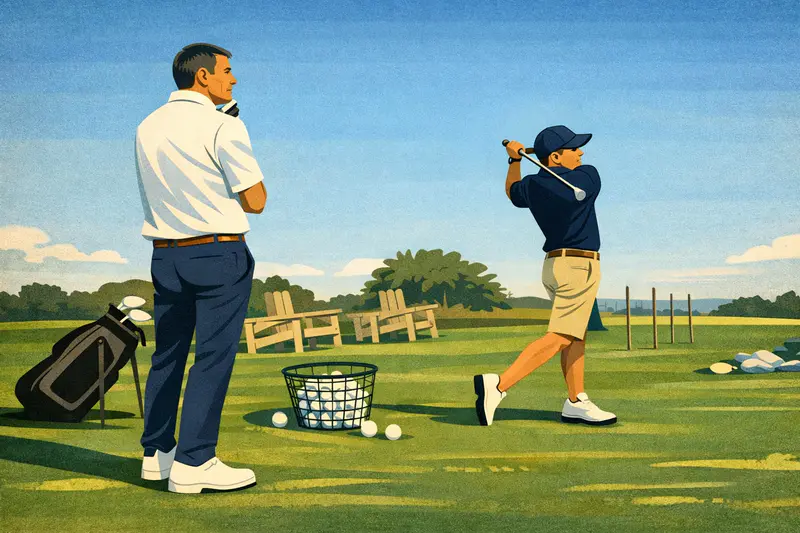
What to Expect During Your First Golf Lesson
Typical First Lesson Structure (45-60 Minutes)
Your instructor will spend the first 10-15 minutes learning about your golf background and what you hope to accomplish. This conversation shapes the entire lesson plan and helps your instructor tailor their approach to your specific needs.
After the consultation, expect your instructor to watch you hit several balls while often recording video for analysis. Most first lessons focus on fundamental mechanics: grip, stance, posture, and alignment. You'll spend time on the range receiving immediate feedback as you make technique adjustments.
The session typically ends with a recap of what you learned and specific practice recommendations. Some instructors, like those at Hicksgolf, send a voice-over recap after the lesson to ensure clarity on the changes you need to work on.
The Assessment and Goal-Setting Process
Your instructor needs to know where you've been as a golfer and where you want to go. Sharing details about any injuries, surgeries, or medical issues helps your instructor adapt the lesson to your physical capabilities.
Be honest about your experience level, physical limitations, and goals. This transparency allows your instructor to meet you exactly where you are rather than making assumptions about your abilities.
One valuable service your coach provides is helping you formulate realistic, achievable goals. Whether you want to play socially with friends or develop a competitive game, clear objectives guide your learning path.
How Instructors Teach and Communicate
Good instructors identify your learning style early. Some students absorb information verbally, others need visual demonstrations, and some learn best through feel. Understanding how you process information allows your instructor to communicate more effectively.
Immediate improvements often occur once you receive correct information. Your instructor will explain why the ball currently behaves as it does and what adjustments create your desired ball flight.
Video analysis highlights both positive aspects of your swing and areas needing improvement. Seeing yourself on camera provides perspective that verbal feedback alone can't match.
How to Prepare for Your First Golf Lesson
Physical Preparation and Warm-Up
Arrive 15-20 minutes early to perform dynamic stretches targeting your shoulders, back, hips, and wrists. Golf demands more physically than many beginners realize, and proper warm-up prevents injury while improving your capacity to learn.
Use those extra minutes to familiarize yourself with the facility surroundings. Meeting your instructor while feeling rushed adds unnecessary stress to an already nerve-wracking experience.
Mental Preparation and Mindset
Approach your lesson with an open, positive mindset. Some techniques your coach introduces may surprise you, and staying coachable accelerates your progress.
Professionals dedicate thousands of hours to perfecting their skills. Your first lesson marks the beginning of a journey, so focus on absorbing fundamentals rather than achieving immediate performance results.
Patience matters during the learning process. Expecting perfection on day one sets you up for frustration rather than growth.
Basic Golf Terminology to Know
Understanding common terms like "address position," "backswing," and "follow-through" helps you focus on technique during instruction. Knowing the difference between your front foot and back foot, or what the leading edge of your club is, makes you more comfortable when your instructor references these concepts.
You don't need to memorize a comprehensive glossary before your first lesson. Familiarizing yourself with basic vocabulary simply allows smoother communication.
What to Bring and Communicate
Pack water, sun protection (hat, sunscreen, sunglasses), reading glasses if needed, and a small notepad. Compile a list of frustrations in your game, areas where you want improvement, and aspects you already enjoy.
Be honest with your instructor about your actual knowledge level. They can't help you effectively if they don't know your true starting point.
Essential Equipment for Beginner Golf Lessons
Do You Need Your Own Golf Clubs?
A full 14-club set is unnecessary for your first lesson. Many facilities provide rental clubs and balls, so you can try golf without a significant upfront investment.
If you own clubs, bring them. Your instructor will assess equipment fit before watching you swing, ensuring your clubs aren't hindering your progress.
Most professionals can provide a temporary rental club or two if you own no equipment. Don't let lack of gear prevent you from booking that first lesson.
Starter Club Recommendations for Beginners
Beginners need 7-10 clubs to start practice. A minimum set includes a driver, 5 or 7 wood, 6-iron, pitching wedge, and putter.
Consider purchasing used clubs in excellent condition initially. You can find quality used equipment on eBay or at local golf shops without the premium price tag.
Schedule a club fitting session when you're ready to invest in your own set. Properly fitted clubs make learning easier and prevent developing compensations for ill-fitting equipment.
Footwear and Attire Requirements
Golf shoes aren't mandatory. Comfortable athletic footwear that provides stability works perfectly for your first lesson. Many beginners wear tennis shoes without any issues.
Wear non-restrictive, comfortable clothing that allows free movement. Golf-specific apparel isn't required, but avoid anything that limits your ability to rotate your shoulders and hips.
Understanding Golf Lesson Costs and Pricing
Average Cost of Golf Lessons
The average cost for golf lessons is $55 per hour, with most instructors charging between $30 and $70 per session. In the United States, expect to pay $50-$60 for a typical 30-45 minute lesson.
Private lessons range from $50-$150 per hour, with elite coaches charging $300 or more. Group lessons offer more affordable options at $25-$75 per person, making professional guidance accessible for budget-conscious beginners.
Multi-day golf schools can reach $5,000 or more. These intensive programs suit serious students but aren't necessary for most recreational golfers.
Lesson Packages and Multi-Session Pricing
Five 1-hour lesson packages typically cost $200-$500. For beginners, starting with 3-5 lessons builds a solid foundation, with this initial investment of $150-300 paying dividends throughout your golf journey.
You'll generally pay $400-600 for 6-10 private 30-minute lessons. Package pricing offers better value than paying per session while committing you to continued practice.
Factors That Affect Lesson Pricing
Instructor experience level significantly impacts cost. PGA-certified professionals with decades of teaching experience command higher rates than newer instructors.
Location matters considerably. Golf hotspots like South Florida, Scottsdale, and Southern California have higher rates due to demand and facility quality. Lessons at private or resort clubs cost more than those at municipal ranges or public practice centers.
Session length, facility quality, and whether driving range fees are included all affect final pricing. Ask about these details when booking to avoid surprise charges.
Private vs Group Golf Lessons: Which is Right for You?
Benefits of Private Golf Instruction
Private lessons offer individualized attention focused entirely on your unique swing, stance, and technique. Immediate, real-time feedback accelerates your learning process compared to waiting your turn in a group setting.
Detailed swing analysis and strategy discussions happen naturally in one-on-one sessions. Your instructor can dive deep into specific issues without worrying about other students waiting.
Greater scheduling flexibility benefits busy professionals or those with irregular schedules. You book times that work for your calendar rather than fitting into predetermined group slots.
Advantages of Group Golf Lessons
Lower price points make group lessons attractive for budget-conscious golfers. Shared costs provide professional guidance at a fraction of private lesson rates, especially appealing to beginners still exploring their interest.
Group settings feel less intimidating for many beginners. Learning alongside others at similar skill levels creates a supportive environment where everyone struggles with the same fundamentals.
Group lessons provide broad understanding before diving into technical details. You learn general concepts applicable to all golfers before personalizing your approach.
Combining Both Lesson Formats
Many golfers find success using both formats. Start with group lessons to learn fundamentals affordably, then transition to private instruction for specific refinement.
Consider your goals, budget, and learning preferences when deciding. Some students thrive in social learning environments, while others need focused individual attention to progress.
Finding and Choosing a Qualified Golf Instructor
Golf Instructor Certifications and Qualifications
PGA certification is the standard professional credential, with most qualified teachers holding this designation. Becoming a full PGA member costs between $4,500-$10,000, with a median investment of $7,500.
Alternative certifications include PGTAA Class "A" and USGTF credentials. College or team coaches also qualify as experienced instructors even without PGA membership.
Certification matters, but teaching ability matters more. Some certified instructors struggle to communicate effectively, while others without formal credentials excel at helping beginners improve.
What Makes a Good Golf Instructor
A good teacher takes time during your first lesson to know you. They determine how you best learn and process information rather than applying a one-size-fits-all approach.
Quality instructors value open-minded, patient, engaged students regardless of ability level. As one instructor noted, "The best type of student to teach has nothing to do with ability".
Good coaches relieve guilt about practice frequency. They understand that recreational golfers have busy lives and create realistic practice plans that fit your schedule.
How to Find Golf Instructors Near You
TeachMe.To connects learners with verified, reviewed instructors in your area. The platform delivered 61,312 lessons last year and maintains a 4.8 TrustScore with 601 Trustpilot reviews.
Search platforms allow you to filter instructors by experience level, teaching style, and specialization. Look for instructors with specific experience teaching beginners rather than those focused primarily on advanced players.
Reading reviews from other students provides insight into teaching style and communication effectiveness. Pay attention to comments from other beginners about their first lesson experience.
Common Beginner Concerns and How to Overcome Them
Mental Barriers and Performance Anxiety
Fear and nervousness are common in first lessons. That desire to do your best without looking silly creates stress that actually hinders learning.
"Am I your worst student?" is a question instructors hear almost daily. The answer is always no, because instructors expect beginners to feel overwhelmed initially.
Instructors understand that you're learning. They've seen thousands of first swings and know exactly what to expect from someone picking up a club for the first time.
Common Technical Mistakes Beginners Make
An open clubface from a weak grip causes the dreaded slice. Poor grip leads to poor alignment, with many beginners naturally pointing their shoulders and hips left of the target line for right-handed players.
Skipping warm-up increases injury risk from your first swing. Many beginners have pulled muscles when performing their first swing of the day without preparation.
Your instructor will identify and correct these patterns early. Catching bad habits before they become ingrained saves months of frustration later.
Setting Realistic Expectations for Progress
Initial lessons focus on fundamentals rather than advanced techniques. There's no need to worry about your current skill level or how you compare to others.
Immediate improvements in swing and ball flight often occur once you receive correct information. These quick wins build confidence and motivation to continue practicing.
Feeling overwhelmed during the early learning stage is completely normal. Celebrate progress rather than expecting perfection during your beginner phase.
Golf Swing Fundamentals You'll Learn
Proper Grip Technique
The grip is your only contact point between you and the club. A neutral grip promotes proper wrist hinge and clubface control throughout your swing.
Your grip should be firm but not tight. Tension-free hold allows control without hindering swing movement, with a near-perfect grip enhancing feel and promoting balance.
Stance and Posture Basics
Stand with feet shoulder-width apart, knees slightly bent, and weight evenly distributed between both feet. Your spine should be straight with a slight forward tilt from the hips, with arms hanging naturally from your shoulders.
Tiger Woods identified posture as the most important fundamental. Proper posture allows your arms to swing freely while enabling your body to rotate at maximum speed.
Alignment and Ball Position
Position your feet, knees, hips, and shoulders parallel to the target line. Carelessness in alignment easily creeps into amateur setups, creating compensations throughout your swing.
Consistent ball strike requires the club striking the ground in the same relative position each time. Proper alignment provides the foundation for developing this consistency.
Timeline: How Long Does It Take to Get Good at Golf?
Beginner Phase (First Few Months)
Your first six months focus on fundamental skill building. You'll learn grip, posture, setup, and swing mechanics while experiencing inconsistent results.
This timeline assumes a recreational golfer playing and practicing a few times weekly. More frequent practice accelerates progress, while sporadic practice extends the learning curve.
Celebrate progress rather than perfection during this foundation period. Small improvements in contact quality and ball flight indicate you're moving in the right direction.
Intermediate Progress (6 Months - 1 Year)
You'll develop consistency in mechanics and swing movements during this phase. Applying basic course management strategies helps lower scores even as you continue refining technique.
Set realistic goals and enjoy incremental improvements. Most golfers require 18-24 months of regular practice before they truly get the hang of the game.
Long-Term Development and Mastery
Becoming proficient typically takes around two years. True consistency and lower scores often require a year or more of focused effort.
Timeline depends on practice frequency, natural talent, and learning style. Working with a certified instructor dramatically shortens your learning curve compared to self-teaching through videos and articles.
Learning Golf as an Adult Beginner
Is It Too Late to Start Golf as an Adult?
No age limit exists for taking up golf, whether you're 28 or 78. The low-impact nature makes golf perfect for older people seeking outdoor activity and social connection.
Golf relies on muscle memory developed through practice. Adults can master proper form just as effectively as children, though younger players often improve faster due to more available practice time.
Many adult beginners become skilled golfers by setting realistic goals and practicing consistently. Starting later simply means adjusting expectations for how quickly you'll progress.
Advantages and Challenges for Adult Learners
Younger players often improve faster due to quicker muscle memory development. Adults succeed by setting realistic goals and maintaining consistent practice schedules that fit their lifestyle.
Learning properly from the start beats muddling through and hoping you'll stumble upon correct technique. Professional instruction prevents developing bad habits that require months to unlearn.
Consult your doctor before starting if you're managing health conditions. An exercise physiologist can assess your strength and fitness to prevent overuse injuries.
After Your First Lesson: Next Steps and Practice
How Often Should You Take Golf Lessons?
Lesson frequency should never exceed one month between sessions. Long-term students typically take 12 lessons yearly, scheduling one per month to maintain progress and enthusiasm.
Beginners benefit from more frequent lessons initially. Once you've established solid fundamentals, monthly sessions provide sufficient guidance for continued improvement.
Practice Recommendations Between Lessons
Hit 50 balls twice weekly with deliberate practice focus. Play 9-18 holes every other week to apply what you're learning in actual playing conditions.
Practicing consistently matters more than practicing intensely. Two focused 30-minute sessions beat one exhausting two-hour marathon that leaves you frustrated.
Hit no fewer than 50 balls per practice session. Quality repetitions build muscle memory faster than mindlessly beating hundreds of balls without purpose.
Tailored Drills and Exercises
Your coach will provide specific exercises for refinement between lessons. These targeted drills address weaknesses identified during your session rather than generic practice routines.
Continuous improvement requires working on specific aspects of your game. Your instructor helps set realistic, tangible goals that guide your practice sessions.
Frequently Asked Questions
Do I need my own golf clubs for my first lesson?
Not required. Many facilities provide rental equipment, so you can try golf without upfront investment. If you own clubs, bring them for an equipment assessment.
How should I dress for my first golf lesson?
Comfortable, non-restrictive athletic attire works perfectly. Golf shoes aren't necessary; stable athletic footwear like tennis shoes is acceptable for your first session.
Should I take private or group lessons as a beginner?
Depends on your goals. Group lessons suit social learners and offer affordable instruction, while private lessons provide personalized attention for faster progress. Many golfers benefit from starting with group lessons before transitioning to private instruction.
Do I need to know the rules of golf beforehand?
No rules knowledge required for your first lesson. Focus remains on fundamentals rather than rules, with rules education happening progressively as you advance.
How long before I can play an actual round?
Get Golf Ready programs prepare students for on-course play in five lessons. Timeline varies by individual and practice consistency, but most beginners can play a casual round within their first few months.
Will I see immediate improvement after my first lesson?
Often, yes. Immediate swing and ball flight improvements frequently occur once you receive correct information. First lessons focus on foundation rather than performance benchmarks, but visible progress often happens quickly.
What makes a good golf instructor?
A good instructor takes time to know you and determines how you best learn. They value open-minded, patient students regardless of ability level and communicate effectively to make lessons enjoyable.
Find a Golf Coach Near You
Ready to get started? Browse local golf coaches and book your first lesson:
Los Angeles · San Francisco · Miami · Houston · San Diego · Austin · Toronto · Dallas · See all cities →
Ready to Start Your Golf Journey?
Your first golf lesson is an assessment and foundation-building session, not a test of your current abilities. Proper preparation eliminates most beginner anxiety, allowing you to focus on learning rather than worrying about looking inexperienced.
The fundamentals you learn in that initial hour shape your entire golf journey. Finding the right instructor who understands your goals and communicates in ways you understand makes all the difference.
TeachMe.To connects you with qualified instructors who specialize in teaching beginners. Browse verified instructors in your area, read reviews from other students, and book your first lesson with confidence knowing you're prepared for what comes next.