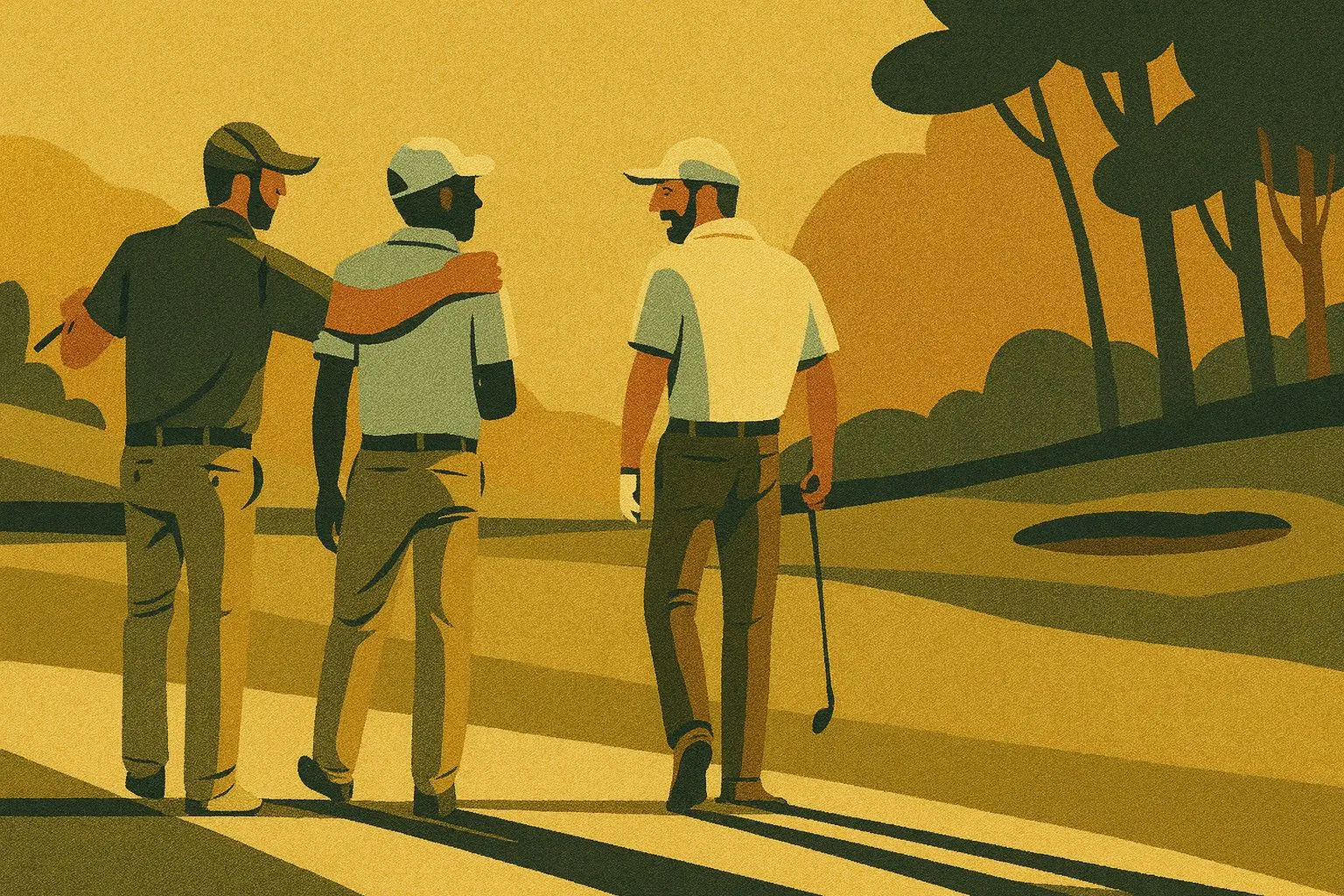
Stepping onto a golf course for the first time can feel like you’ve wandered into a new country with its own language and customs. If you’re a beginner, you might be a little nervous about accidentally breaking an unwritten rule. Don’t worry, every golfer on the planet started exactly where you are: unsure which way to go after teeing off, wondering if it’s okay to laugh at a bad shot, and hoping not to embarrass themselves.
Respect the Pace of Play
One of the biggest complaints on any golf course is slow play. As a beginner, you want to be mindful of the pace so that everyone keeps enjoying their day. This doesn’t mean you have to sprint between shots or take only 10 seconds to swing, it just means play efficiently. Keep up with the group ahead of you and don’t let big gaps form.
Play “ready golf.”
In casual play, it’s totally fine to hit out of turn if you’re ready and it’s safe. You don’t always have to stick to the strict “farthest ball goes first” order. If you’re prepared to hit and the coast is clear, go for it. This keeps things moving and trust us, the group behind you will appreciate it. Also, limit those epic pre-shot routines. One or two practice swings are enough.
Keep it moving after your shot too. No lengthy post-mortems about why the ball sliced into the trees, save the detailed swing analysis for the 19th hole. Golf is indeed a leisurely game, but even experienced golfers prefer a steady, unhurried flow, not long halts on every hole.
Stand Still and Stay Quiet
Ever watch a pro golf tournament on TV and notice how the crowd goes silent before a shot? That’s the vibe you want when someone in your group is hitting. Golf is a social game, but it also demands concentration. When a fellow golfer is setting up their shot, whether on the tee, in the fairway, or on the green, it’s time to zip it and stand still. No talking, no jingling change in your pocket, no opening Velcro straps, and definitely no sudden coughs or sneezes right in the backswing. It might feel a little awkwardly quiet at first, but your playing partners will love you for it.
Equally important is where you stand. Don’t lurk directly behind someone or in their peripheral vision as they swing, it can be distracting and dangerous. A good rule is to stand off to the side, a safe distance away, ideally where you’re not in the golfer’s line of sight or swing path. On the tee box, for example, stand to one side while others tee off. In the fairway or rough, avoid getting ahead of the person hitting, you don’t want to accidentally become the target of their 100-mph line drive! And on the green, be mindful not to walk through another player’s putting line or cast a shadow over it.
Care for the Course
Golf is played on some pretty beautiful landscapes, lush fairways, smooth greens, and pristine bunkers. Part of basic etiquette is leaving the course as good as you found it, if not better. This means repairing and cleaning up after yourself as you play. Did your monster 7-iron swing take out a divot from the fairway? Walk over, pick up the turf, and replace it back in the divot spot, gently tamp it down with your foot so it can re-root. Some courses provide sand mix on the carts or tees; if you see a bottle of sand, you can use that to fill the divot instead.
On the green, always fix your ball marks. When your ball lands on the green, especially on high shots, it can leave a little dent where it hit. Use a divot repair tool to gently fix that pitch mark. It’s easy: you insert the tool around the edges of the mark and lever the turf back up to surface level, then tap it flat with your putter.
And ah, the bunkers, those sandy traps that attract golf balls like magnets. If your ball finds the sand, no worries. After you play your shot out of a bunker, grab the rake and rake the sand where you walked and hit. Smooth it over so it’s nice and even for the next poor soul who ends up there. Pro tip: when raking, try to exit the bunker where you entered so you don’t stomp new footprints across; rake your way out.
Taking care of the course also means following any posted rules. If you see a sign that says “Cart Path Only” or “90° Rule in effect,” pay attention, it’s there to protect the turf. Under a cart-path-only rule, keep your golf cart on the paved paths at all times, no matter what. Under a 90-degree rule, you should drive on the cart path until you’re even with your ball, then make a right angle (90° turn) to drive across the fairway to your ball, then back out to the path. Both rules basically minimize how much the carts roll over the grass.
Handling Lost Balls
Golf and lost balls go together like peanut butter and jelly, or maybe more like lost keys and panic. As a new golfer, you’ll inevitably hit a shot that veers off into the woods, high grass, or perhaps an alternate dimension never to be seen again. When that happens, here’s the etiquette: take a quick look, but don’t spend eternity searching. The official Rules of Golf give you a maximum of three minutes to search for a lost ball. Three minutes goes by faster than you think! If you can’t find it after a thorough look around, it’s time to take the loss and move on.
A smart move for beginners is the provisional ball. If you hit a shot that might be lost or out of bounds, announce, “I’ll hit a provisional just in case.” Then hit another ball. If you find the first one in play, great, pick up the provisional. If you can’t find the first, your provisional ball becomes the one in play (with a penalty). This way, you don’t have to trudge back to the tee or slow things down.
Know When to Pick Up Your Ball
When you’re just starting out, some holes will go spectacularly wrong. We’re talking double digits on the scorecard, digging more turf than a landscaper, the ball dribbling a few feet at a time, it’s okay, it happens! But part of beginner etiquette is knowing when to wave the white flag on a hole. There’s no shame in picking up your ball if you’ve hit the shot count of infinity and your partners are all on the green waiting. In casual golf, a common guideline is to pick up after double par, for example, 6 strokes on a par 3, 8 strokes on a par 4, 10 on a par 5.
Be Polite to Other Players
Golf has a reputation as a polite game, and it’s true, manners go a long way. When you’re paired with other players, a little courtesy makes the round enjoyable for everyone. Start with a friendly introduction on the first tee if you’re playing with people you just met. A simple, “Hi, I’m ____, nice to meet you,” plus maybe a handshake or fist bump, sets a good tone. You’ll quickly find golf is a social sport, and most folks are welcoming to beginners who are courteous.
During the round, be a good sport. Cheer on or compliment good shots from others, a simple “Great shot!” or “Nice putt!” is always appreciated. Conversely, if you hit a terrible shot, avoid the urge to throw a tantrum. Sure, you can be frustrated (golf is hard!), but don’t be that guy who hurls a club or yells a string of expletives for all to hear. It’s awkward and disrupts the peaceful vibe. As the saying goes, “keep your cool.”
Another important aspect: no unsolicited swing advice. As a beginner, you might not be giving advice, but sometimes newer golfers feel the need to explain their own mis-hits or get tips from friends. Unless someone asks for help, it’s usually best to keep swing critiques to yourself. It can come off as know-it-all or annoying, even if well-intentioned. Focus on your own game and let others play theirs.
If you’re playing faster than the group in front, or a group behind is playing faster than you, handle it politely. We touched on playing through earlier: if you’re holding up people behind, it’s good etiquette to offer to let them play through. Simply wave them up or ask, “Would you like to play through?” at a suitable time. Likewise, if you’re behind a slow group and there's an open hole ahead of them, you might politely ask if you can play through. This isn’t an insult or a race, it’s just about matching speeds. Most golfers won’t mind if approached nicely. Use a friendly tone, something like: “Hey folks, looks like we’re moving a bit quicker, mind if we play through?” And always say “thank you” if someone lets you through. Do the pass efficiently, don’t suddenly turn into a slowpoke once you’re in front of them!
Also, be aware of other groups around you. If your ball strays into another group’s area, don’t just barge in while they’re hitting. Wait until they acknowledge you or finish their shots, and then retrieve your ball with a wave or a quick “Sorry about that!” Similarly, if another player’s ball comes toward your group, help them out. Point out where it went or toss it back to them if appropriate, and ensure no one hits it by mistake.
At the end of the round, shake hands or fist bump (whatever everyone’s comfortable with) and thank your fellow players for the round. Even if you played terribly, a gracious attitude is remembered. Something like, “Thanks for the round, I really enjoyed it,” goes a long way. Golf is as much about camaraderie as competition.

Find a Golf Coach Near You
Ready to get started? Browse local golf coaches and book your first lesson:
Los Angeles · San Francisco · Miami · Houston · San Diego · Austin · Toronto · Dallas · See all cities →
Final Thoughts
Starting out in golf can feel overwhelming with all the rules and etiquette, but remember: every golfer was once a beginner. You’re not expected to be perfect. What counts is that you show consideration and try your best to follow these basic guidelines. If you accidentally walk on someone’s line or forget to yell “Fore!”, simply apologize, learn from it, and carry on. Golfers are generally friendly and happy to see newcomers embrace the game (we love new golf buddies!).
Etiquette is really about common sense and kindness: keep things moving, be safe, take care of the course, and treat others how you’d like to be treated on the links. Do that, and you’ll fit right in. And hey, don’t forget to have fun! Golf is called a game for a reason, it’s meant to be enjoyed. Laugh at your bad shots (there will be plenty), celebrate the good ones, and soak in the beautiful surroundings. With each round, you’ll get more comfortable with the dos and don’ts. Before you know it, you’ll be the one kindly guiding the next newbie about why they shouldn’t drive the cart onto the green.
So, enjoy the journey. Golf’s learning curve is part of what makes it rewarding. Keep an open mind, don’t beat yourself up over mistakes, and remember that a round of golf is basically a long walk (or ride) with friends, hopefully with a few great shots sprinkled in. Now that you’ve got the basic etiquette down, you can focus on your swing and, most importantly, having a great time out there. Welcome to the club, and happy golfing!