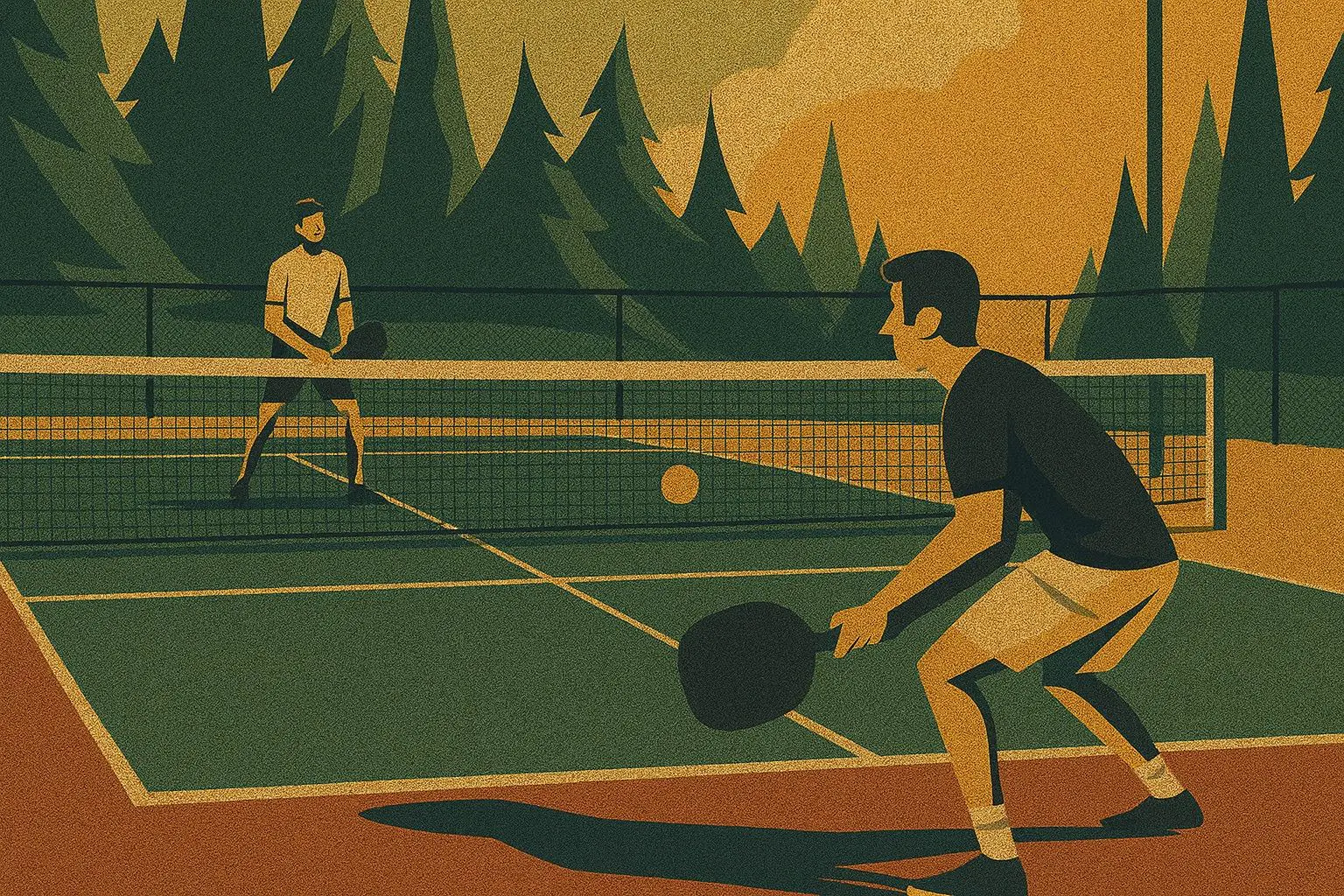
Pickleball is easy to learn but tough to master, especially when you’re picking up bad habits. Whether you’re a casual weekend player or an intermediate looking to step up your game, there are some classic mistakes that can sneak into your play. We’ve all been there: whiffing an easy shot, getting caught flat-footed, or smacking the ball out of bounds and wondering what went wrong. The good news is recognizing these slip-ups is the first step to fixing them. Below, we break down five of the most common pickleball mistakes made by beginners and intermediate players, why they happen, and how to improve.
Mistake #1: Standing Still
In pickleball, as in life, standing still is a big no-no. Yet many newcomers find their feet “glued” to the court when a fast ball is coming their way, leaving them reaching and lunging awkwardly. Poor footwork is one of the most overlooked aspects of the game, it makes it harder to get into position and often leads to missed shots or weak returns. Why does this happen? Beginners are often so focused on hitting the ball that they forget to move their feet. You might catch yourself standing upright and flat-footed, like a statue, hoping your paddle can magically cover for your lack of movement. Spoiler: it won’t. If your feet aren’t in the right place, even the best paddle swing won’t save the shot.
How to Fix It
Make your feet your secret weapon. Start with a good ready stance, knees bent, weight on the balls of your feet, and paddle up. Move your body to the ball. Take quick shuffle steps and use split-steps to stay mobile and prepared for any direction. If you hit a shot, get back to a balanced position, anticipating the next return. Practice drills that emphasize footwork: for example, have a friend rally with you while you consciously shuffle into proper position for each shot. Over time, this will become second nature. The goal is to always be moving rather than rooted to one spot. With better footwork, you’ll find yourself reaching fewer balls late and making more solid shots.
Mistake #2: Smashing Every Ball
Who doesn’t love a good smash? Hitting a pickleball as hard as you can can be downright cathartic, and in the heat of a casual game, it’s tempting to try to blast your way to victory. Many players swing for the fences on every shot, thinking power = winning. The reality? Overhitting is a recipe for disaster. If every swing is a full-on Hulk smash, you’ll rack up unforced errors faster than points. Overly aggressive hitters frequently send the ball flying into the net or out of bounds. Relying too much on power can backfire, taking the delicate “soft game” (dinks, drops, finesse shots) completely out of your arsenal.
How to Fix It
Embrace the mantra: placement over power. The best players know that a balanced mix of finesse and power wins matches. Of course, there’s a time to hit hard, but there’s also a time to hit smart. Focus on improving your control: try aiming shots to the open court or at your opponent’s weaker side, instead of just blindly crushing the ball. If you temper your swing a bit, you’ll reduce those wild errors. Work on your soft shots too, dinks and third-shot drops that land just over the net. Developing a softer touch will round out your game. A great habit is to vary your shots: mix a couple of power drives with some gentle drop shots or lobs to keep your opponents guessing. Not only does this make you more unpredictable, it also forces you to learn when to dial it back and when to go for the kill.
Mistake #3: Hanging Back from the Net
If you’ve ever been confused when someone yells “stay out of the kitchen!”, you’re not alone. The kitchen, or Non-Volley Zone (NVZ), is the 7-foot zone on each side of the net, and it comes with quirky rules that trip up a lot of beginners. One common mistake is avoiding the net altogether, some players linger near the baseline or in the dreaded mid-court “no-man’s land,” afraid of that kitchen line. Hanging back feels safer, but it actually puts you at a disadvantage. When you camp out too far from the net, you leave a huge gap for your opponents to exploit with drop shots and dinks. You’ll find yourself sprinting forward, trying to reach a short ball that’s already bouncing twice before you get there. Not good!
How to Fix It
First, learn the kitchen basics. You can step into the kitchen anytime as long as you’re not volleying the ball, meaning, don’t hit it out of the air while you’re in that zone. If the ball bounces in the kitchen, you’re free to step in and hit it. Knowing this helps you play without fear of the line. Next, work on your positioning. After your team returns serve, make it a habit to move up to the net and join your partner at the kitchen line. In doubles, you and your partner should advance together in unison, keeping side-by-side to avoid leaving gaps. Why up at the net? Because from there, you can block or intercept shots quickly instead of letting them drop at your feet. Try to avoid that mid-court no-man’s land except when you’re transitioning forward or forced to briefly. Practically speaking, this might mean after you hit a third-shot drop, you follow it in toward the net. It might feel uncomfortable at first, you’ll be closer to the opponents and the action is faster, but stick with it. You’ll soon see that being near the kitchen line lets you dictate points rather than scramble.
Mistake #4: The Silent Treatment in Doubles
Pickleball is often a doubles game, which means teamwork. Yet a huge mistake among beginner and even intermediate doubles teams is failing to communicate. We’re talking about those points where both players yell “Mine!” and collide, or worse, neither calls the ball and you watch it plop sadly between you. Lack of communication leads to all sorts of chaos: confusion about who should take the shot, unnecessary missed shots, and sometimes even friendly-fire paddle collisions. It’s no fun when you and your partner are playing as two separate individuals rather than a coordinated duo. Doubles is all about synergy. When you don’t talk, you’ll inevitably leave parts of the court uncovered or find both of you scrambling for the same ball. It’s basically the pickleball version of a bad dance routine, everyone stepping on each other’s toes.
How to Fix It
The cure is simple: use your words. Make it a rule with your partner that every shot down the middle or any questionable ball must be claimed. A loud “Got it!” or “Yours!” can save a lot of heartache on the court. It might feel a bit awkward to holler during a point, but clear calls are the hallmark of good doubles teams. Also, develop some basic strategy with your partner before you play. Decide who will cover lobs over your heads, how you’ll handle shots down the centerline, and if you have any preferred sides or positions. Having a plan means fewer split-second decisions to make on the fly. During play, keep an eye on your partner’s position and adjust, if they get pulled out wide, you should slide over to cover the middle, and vice versa. Some teams even use hand signals behind their back to indicate serve or return positions. The bottom line is to stay connected.
Mistake #5: Playing Without a Game Plan
When you’re new to pickleball, just keeping the ball in play can feel like a victory. Many beginners and casual players fall into a pattern of “hit and hope”, swatting the ball back over without much thought, simply reacting to whatever comes their way. This lack of strategy often leads to rushed shots and missed opportunities. You might recognize this in your own game: maybe you always serve straight to the opponent without a target, or you engage in a furious volley exchange with no plan except to hit it hard and back at them. Intermediate players aiming to be more competitive often hit a plateau because they haven’t added any tactical thinking to their game. Why does this happen? It’s natural at first, there’s a lot happening in a pickleball rally, and it’s easy to go into autopilot mode. Beginners might not yet know the strategic options, so they just imitate what they see or rely on athleticism. Without someone to guide you, you might not realize that pickleball has depth beyond just ping-ponging the ball over the net. But playing on instinct alone will only get you so far. At higher levels of play, strategy is what separates the winners. If you find yourself losing to players who don’t seem faster or stronger than you, they probably have a game plan while you’re just winging it.
How to Fix It
Time to add some brains to your brawn. Start by thinking one shot ahead during points. For example, if you’re serving, have a plan: maybe serve deep to your opponent’s backhand and get ready for a weaker return. If you’re at the net, decide to either dink softly to move your opponents around or speed it up at the right moment, but do it with intention, not randomly. A great habit is to identify your opponent’s weaknesses early in a game. Mix up your plays: throw in lobs, drop shots, drives, and dinks as needed, rather than the same hit every time. Variety keeps your rivals on their toes. In doubles, come up with simple strategies with your partner, like “let’s target the weaker player” or “let’s both get to the net ASAP and dink.” You don’t need an elaborate playbook, just a couple of tactics you consciously use. Also, value the soft game, not every rally should be a slugfest. Sometimes a well-placed soft shot is the perfect setup for winning the point. Finally, keep learning: watch some pickleball matches online or take lessons from expert coaches at your local courts.
Conclusion
We’ve all made these mistakes, the important thing is we don’t stay stuck in them. By focusing on your footwork, finding the right balance of power and finesse, mastering the kitchen line, communicating with your partner, and adding some strategy to your game, you’ll see a huge improvement in your play. Even more importantly, you’ll have more fun out there on the court. After all, pickleball is a blast, and it only gets better as you up your skills. So next time you flub a shot or catch yourself in a bad habit, just smile, shake it off, and remember the tips above. Mistakes are just opportunities to learn. Keep practicing, keep laughing, and enjoy the ride from beginner to confident competitor. Happy playing!
